A History of
Utah Deaf Sports
Compiled & Written by Jodi Christel Becker
Edited by Valerie G. Kinney
Published in 2014
Updated in 2026
Edited by Valerie G. Kinney
Published in 2014
Updated in 2026
Author's Note
The Utah School for the Deaf has played an important role in promoting athletic programs since the early 1900s. By providing opportunities for students to compete with other state schools for the deaf throughout the United States, the school helped establish a strong tradition of Deaf athletics (Roberts, 1994).
Over the years, the achievements of Utah School for the Deaf athletes contributed to increased participation in sports within both the Utah Deaf community and the broader Deaf athletic movement. These programs provided students with opportunities to develop athletic skills, teamwork, leadership, and school pride while fostering lasting friendships and community connections.
Although I am not an athlete myself, I have a deep appreciation for the history of Deaf sports in Utah and the important role they have played in community life. Through athletic competition, Deaf students gained opportunities to build confidence, leadership skills, and connections with Deaf peers from across the country.
The longstanding commitment of the Utah School for the Deaf to athletics reflects the school's broader role in supporting the educational, social, and personal development of Deaf students. The history of Deaf sports remains an important part of Utah Deaf history and continues to inspire interest in athletics and community involvement today.
In my historical work, I use first names for everyone, including men, women, and LGBTQ+ individuals, to recognize their contributions and challenge the patriarchal tradition of identifying women primarily through their spouses' surnames. This approach acknowledges individual achievements while respecting personal identity. Using first names helps make each person feel valued and recognized while highlighting the important roles women and other underrepresented individuals have played in our community's history.
Furthermore, our organization was previously known as the Utah Association for the Deaf before changing its name to the Utah Association of the Deaf in 2012. Historically, the organization was known as the Utah Association of the Deaf from 1909 to 1962. In 1963, the name changed to the Utah Association for the Deaf, and in 2012 it returned to its original name. To accurately reflect each historical period, I use both "of" and "for" throughout this website when referring to the organization.
Thank you for taking an interest in this topic.
Enjoy!
Jodi Christel Becker
Utah Deaf Sports Organizations, Events, and Leaders
Since its founding, the Utah School for the Deaf has offered athletic programs that have played a vital role in the lives of Deaf individuals. The Deaf community in Utah has a rich history of sports participation, marked by outstanding achievements and memorable successes. Sports help individuals develop physical fitness, social connections, leadership abilities, and teamwork skills. Through athletic participation, Deaf athletes strengthen their communication, build lasting friendships, and learn to work collaboratively toward shared goals. Sports also foster strategic thinking, discipline, and problem-solving skills. Most importantly, participation helps build confidence, while athletic accomplishments provide a sense of pride and achievement that further enhances self-esteem.
This webpage explores six organizations, events, and individuals that have made significant contributions to Deaf sports in Utah. Each has played an important role in providing opportunities for Deaf athletes to compete, develop their skills, and strengthen community connections.
The following topics are featured on this webpage:
- The Athletic Programs at the Utah School for the Deaf;
- The Legacy of the Utah Athletic Club of the Deaf;
- The Legacy of the Golden Spike Athletic Club of the Deaf;
- The Formation of the Wasatch Golf Association of the Deaf;
- Dennis R. Platt as an Olympic Torchbearer;
- Deaflympics
- Utah Deaf Athletes
The Athletic Programs at the
Utah School for the Deaf
The Utah School for the Deaf (USD) has offered athletic programs since the early 1900s, much like other state schools for the deaf across the nation (Roberts, 1994). Sports have long been an important part of the Deaf community in Utah and throughout the United States.
In 1921, Arthur W. Wenger, a sports enthusiast and a 1913 graduate of the Utah School for the Deaf, founded the Arthur Wenger Athletic Association. Wenger observed that students at the school possessed a wide range of abilities and personalities. Some were overly aggressive or awkward in social situations, while others were shy and hesitant. He believed that sports helped students interact with one another, build friendships, and develop confidence. Arthur also noted that some students came from rural backgrounds and had little experience with organized athletics. However, through participation in sports, they learned new skills and improved their coordination. The USD offered a variety of sports, including baseball, volleyball, soccer, basketball, and medicine ball, as shown in the photographs below (Wenger, Silent Worker, January 1921).
In 1921, Arthur W. Wenger, a sports enthusiast and a 1913 graduate of the Utah School for the Deaf, founded the Arthur Wenger Athletic Association. Wenger observed that students at the school possessed a wide range of abilities and personalities. Some were overly aggressive or awkward in social situations, while others were shy and hesitant. He believed that sports helped students interact with one another, build friendships, and develop confidence. Arthur also noted that some students came from rural backgrounds and had little experience with organized athletics. However, through participation in sports, they learned new skills and improved their coordination. The USD offered a variety of sports, including baseball, volleyball, soccer, basketball, and medicine ball, as shown in the photographs below (Wenger, Silent Worker, January 1921).

Arthur W. Wenger. Source: FamilySearch.org
Arthur strongly advocated for athletic programs that challenged students to think, react, and adapt to changing situations during play. He compared a fast-moving game to a piano, requiring skill, judgment, and coordination, rather than a music box that simply repeats the same motions. Through athletics and the dedication of educators and administrators, students developed balance, self-control, confidence, and good sportsmanship (Wenger, Silent Worker, January 1921, p. 3).
A Photographic History of
Utah School for the Deaf Athletics, 1903 to 1958

Football team at the Utah School for the Deaf in 1902. L-R, front: Arthur BeBee, Rile Carter, Billy Coles, Fred Low, center: Ole Pettit, Verdie Smith, Joe Keeley; back: James Frogner, Hazel Clark, Joe Cameron, John Alvey, Elgin Jacobsen, Joe Bush. Photo courtesy of the Special Collections at the J. Willard Marriott Library, University of Utah

Football team at the Utah School for the Deaf in 1902. Source: The Utah Eagle, December 15, 1902
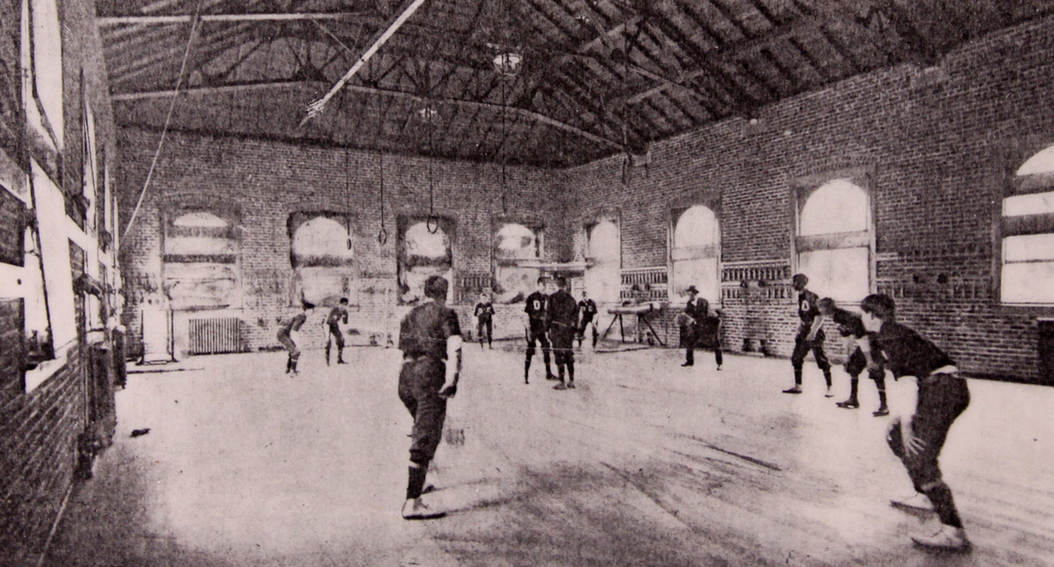
The Utah School for the Deaf students played basketball at the gym in 1903. Photo courtesy of the Kenneth C. Burdett Bulletin Board
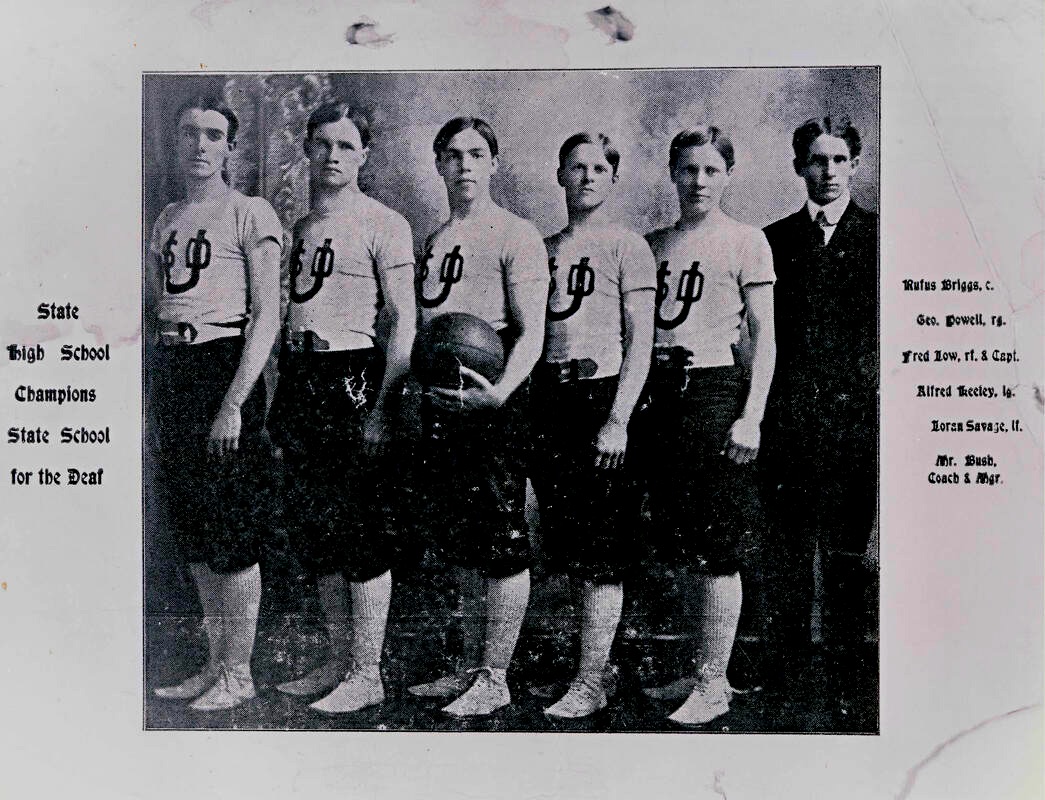
The basketball team at the Utah School for the Deaf in 1907. L-R: Rufus Briggs, center; George Powell, guard; Fred Low, forward; Alfred Keeley, guard, and Loran Savage, forward. John Bush was coach. Photo courtesy of the Special Collections at the J. Willard Marriott Library, University of Utah
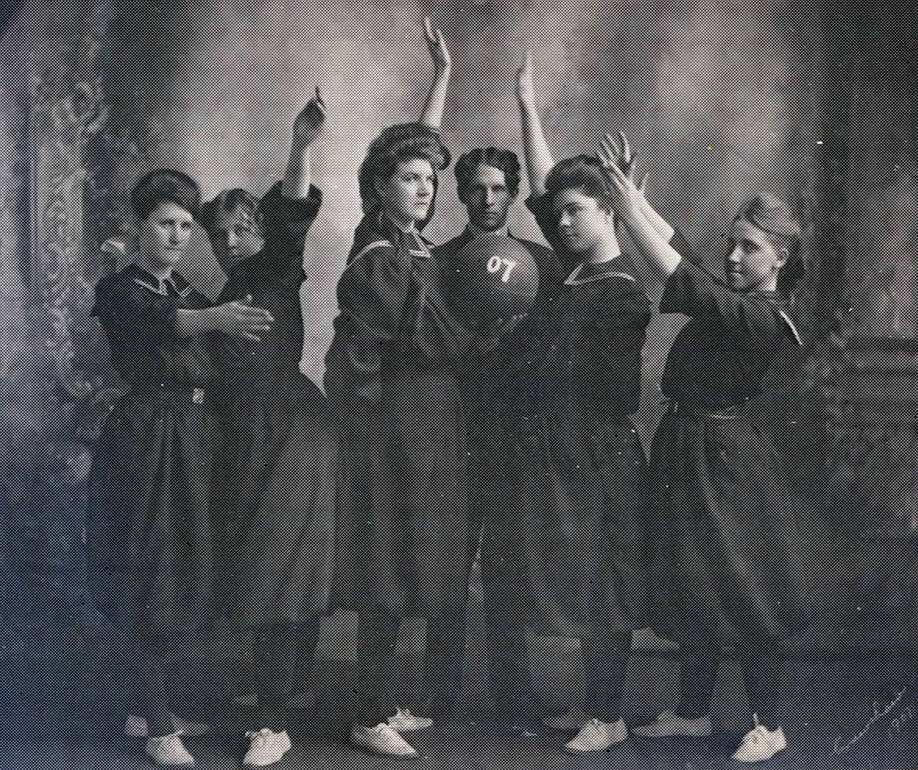
Basketball team at the Utah School for the Deaf in 1907. L-R: Nettie West (Carter), Emma Emmertson (Jorgenson), Elsie M. Christiansen, John P. Bush - Coach, Elizabeth Eggingston (Buck), Ivy Griggs (Low)

Basketball team at the Utah School for the Deaf in 1911. Front row L-R: Ray Wenger, Loran Savage, and Arthur Wenger. Second Row L-R: Alfred Keeley and Leonard Daraney. Back row L-R: Mr. Lewis, Otto Farley, and Mr. Thurman

Basketball team at the Utah School for the Deaf in 1913. First Row L-R: Earl Lewis, ___, Kenneth Olsen, ____, Alma Wild. Back Row L-R: Loran Savage, Ray Wenger, Allen Holden, Supt Frank M. Driggs, Arther Wenger, Cyril Jones

Basketball team at the Utah School for the Deaf in 1913. First row L-R: Loran Savage, Ray Wenger, Kenneth Olsen, Alma Wild. Back Row: L-R: Allen Holden, Supt. Frank M. Driggs, Arthur Wenger

Basketball team at the Utah School for the Deaf in 1916. Back Row L-R: Milo Cutler, Ora Duce (of Canada), Cyril Jones, Carlos Seegmiller, Earl Lewis, ___Thurman. Front Row L-R: Alma Wild, ______, Kenneth Olsen

Basketball team at the Utah School for the Deaf Basketball Team in 1918
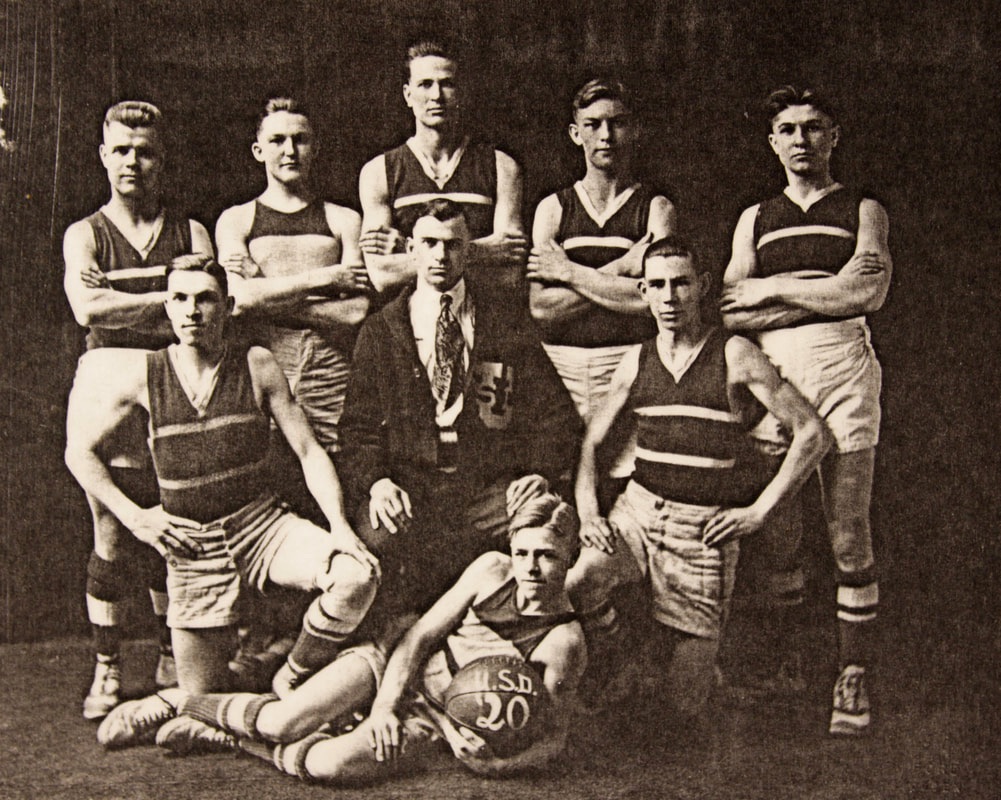
Basketball team at the Utah School for the Deaf in 1920
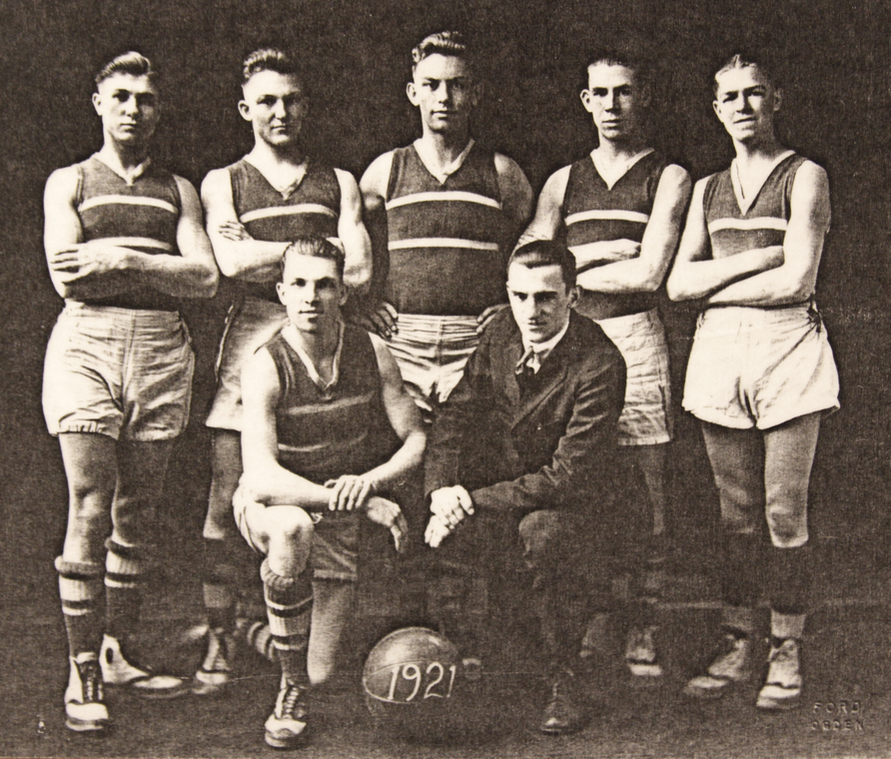
Basketball team at the Utah School for the Deaf in 1921

Basketball team at the Utah School for the Deaf in 1924
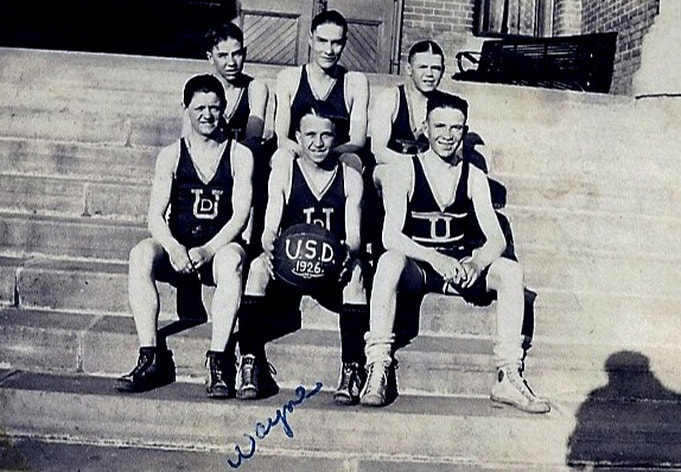
Basketball team at the Utah School for the Deaf in 1926. Photo courtesy of Keith E. Stewart
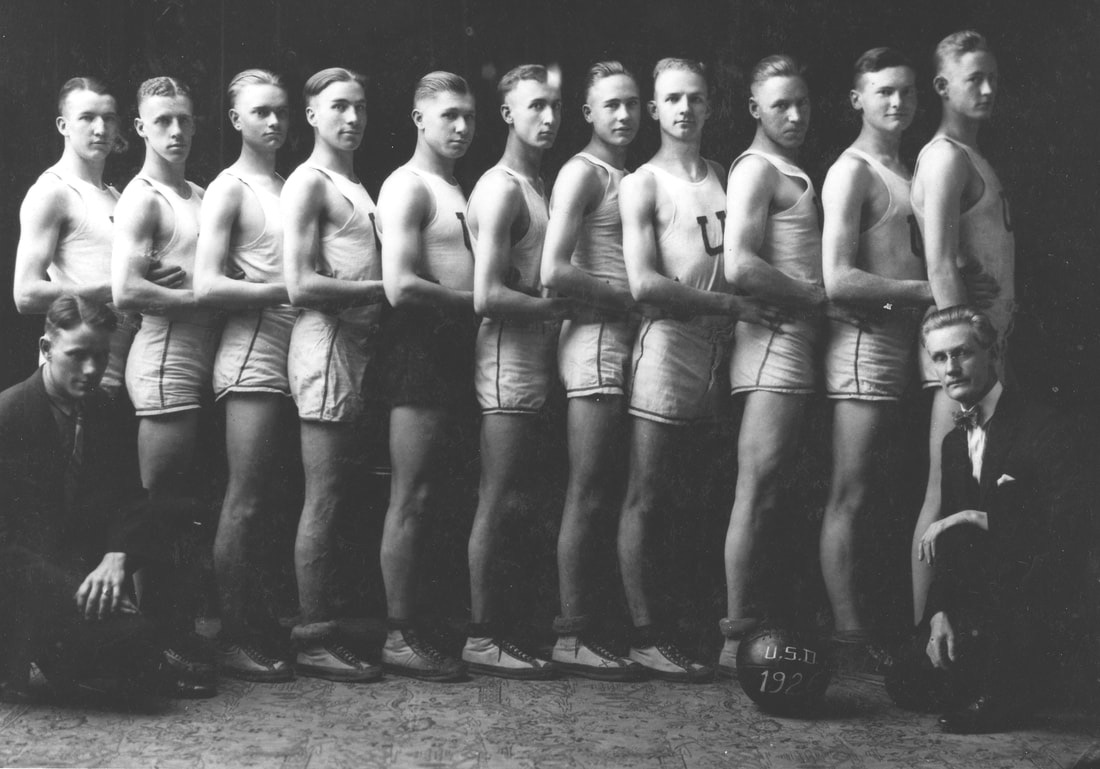
Basketball team at the Utah School for the Deaf in 1926. Kneeling L:-R: Coach A. LeRoy Stour and Manager Max W. Woodbury. Standing L-R: _ Despain, Wheelock Freston, Ferdinand Billiter, Arnold Moon, Andrew Loga, Charles Fowbae, Kenneth Burdett, Heber Christensen, Donald Robinson, George Laramie, Ross Thurston (Won 16 games. Lost two)
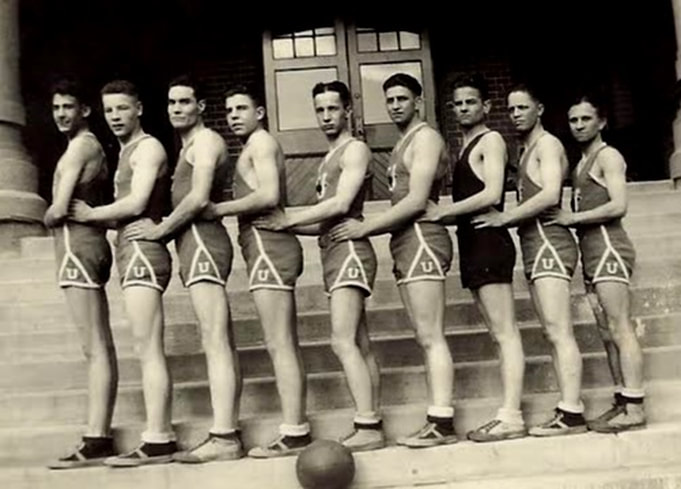
Basketball team at the Utah School for the Deaf in 1926. L-R: Joseph Burnett, Verl Throup, Virgil Greenwood, Alton Fisher, John (Jack) White, Earl Smith, Arvel Christensen, William Woodward, Wayne Stewart. Photo courtesy of John F. "Jack" White

Basketball team at the Utah School for the Deaf in 1929. L-R: John F. White was the captain of the team. Photo courtesy of John F. "Jack" White
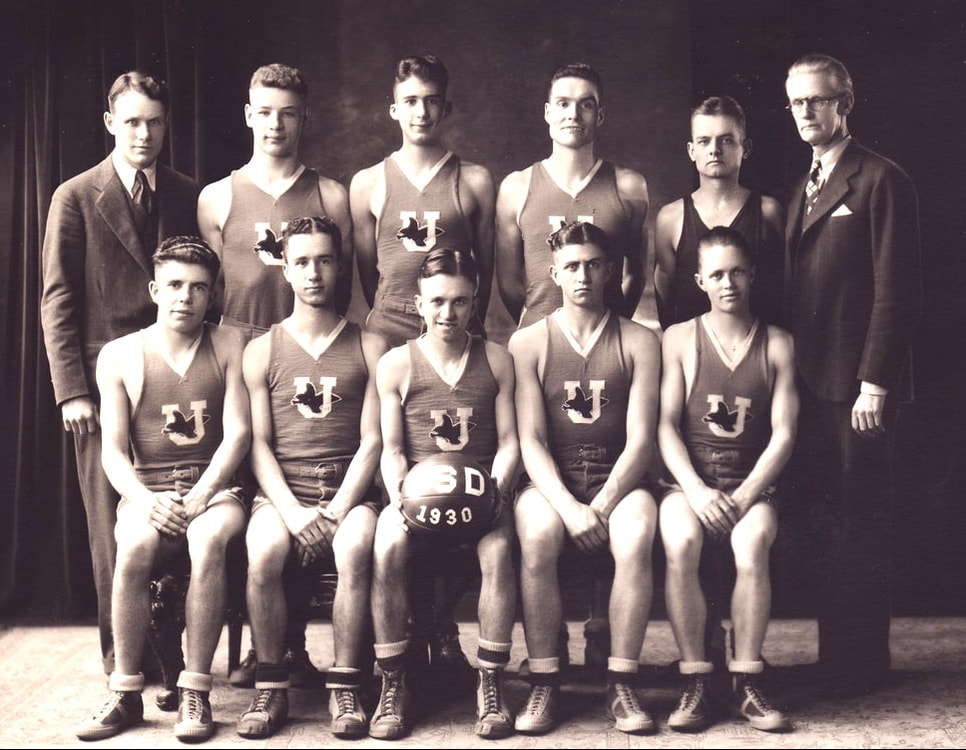
Basketball team at the Utah School for the Deaf in 1930. L-R: Coach____, Verl Throup, Joseph Burnett, Virgil Greenwood, Arvel, Christensen, Max Woodbury (Coach). Front L-R: Alton Fisher, John (Jack) White, Wayne Stewart, Earl Smith, William Woodward. Photo courtesy of John F. "Jack" White
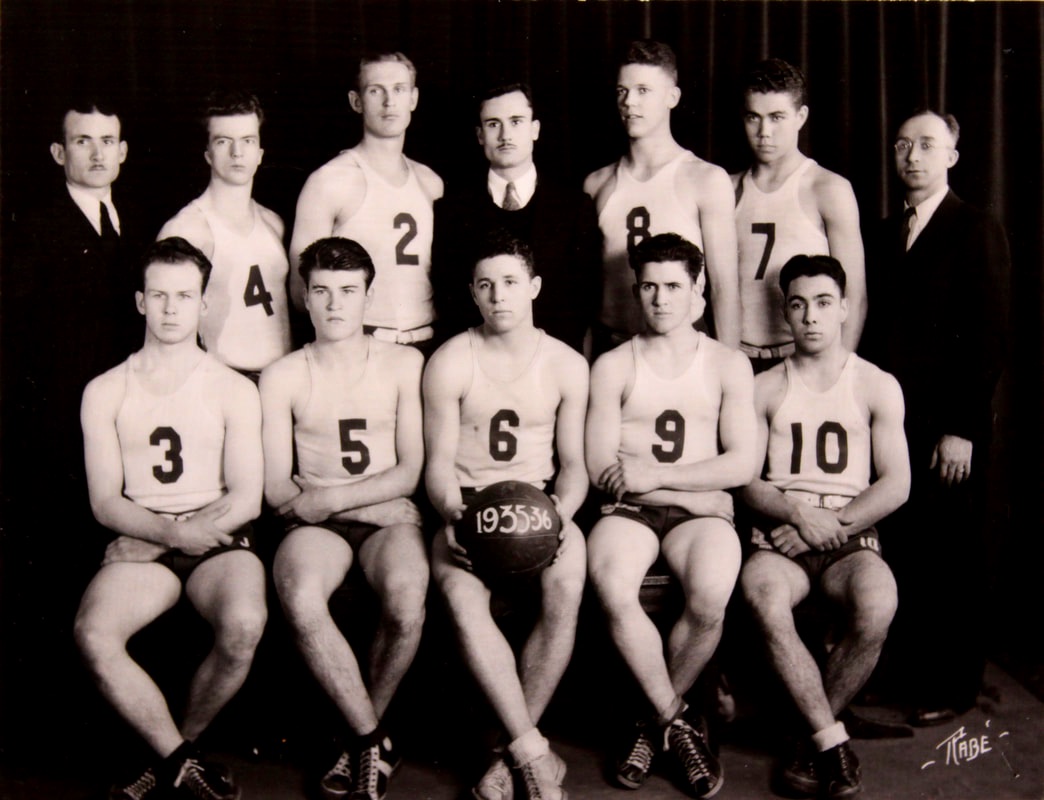
Basketball team at the Utah School for the Deaf in 1935-36
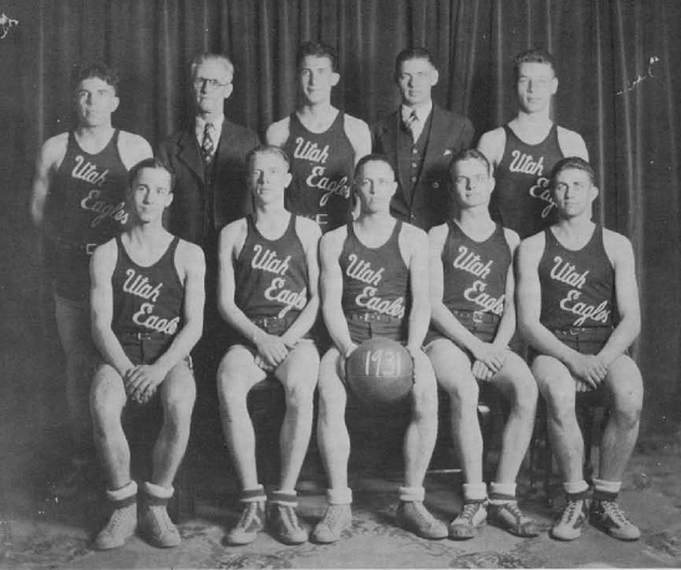
Basketball team at the Utah School for the Deaf in 1931. Front, L-R: John White, captain, Wesley Perry, Wm. Woodward, Arvel Christensen, Earl Smith. Back L-R: Alton Fisher, Max W. Woodbury, manager, Elmer Farrar, coach, Verl Thorup
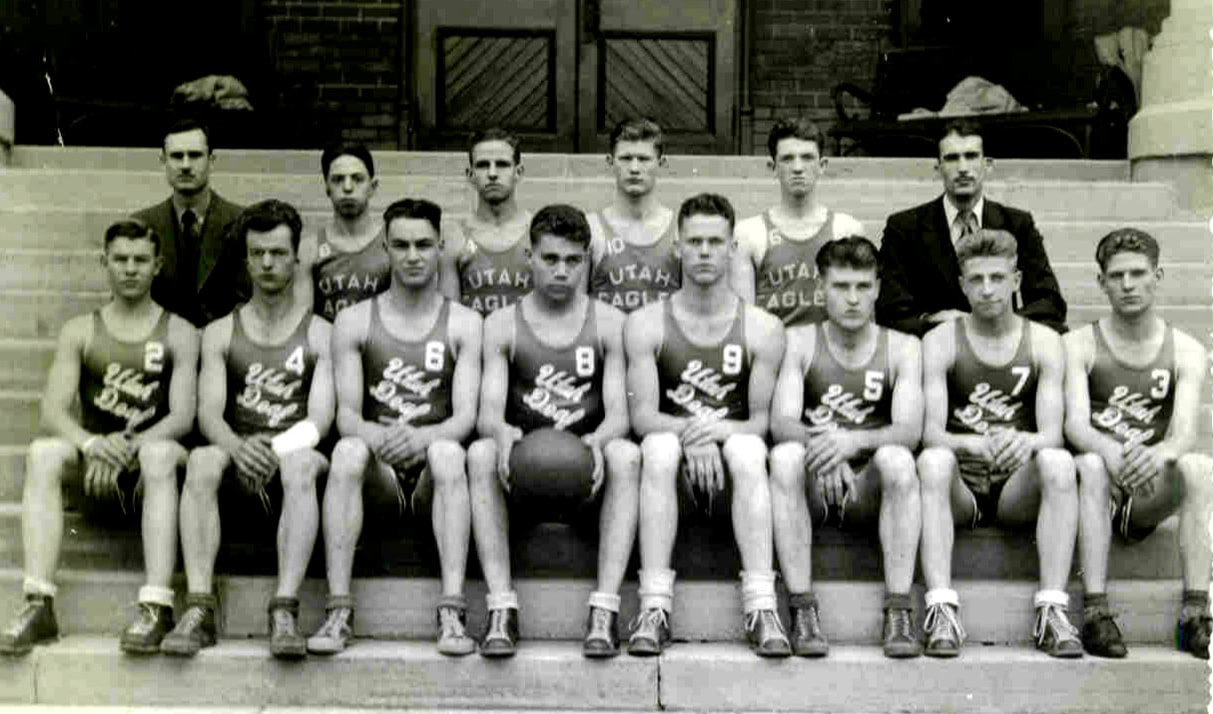
Basketball team at the Utah School for the Deaf in 1937-38. Front Row, L-R: Paul Baldridge, Forward; Paul Wood, Guard; Jesse Hales, Guard; Bill Watson, Caption, Forward; Phil Thornton, Center; David Wallace, Guard; Victor Lyon, Forward; Paul Gines, Forward,. Back Row, L-R: Kenneth C. Burdett, Coach; Eugene Plumby, Forward; Wayne Christiansen, Guard; Done Jacobs, Guard; Monroe Pedersen, Center; Joseph B. Burdett, Manager
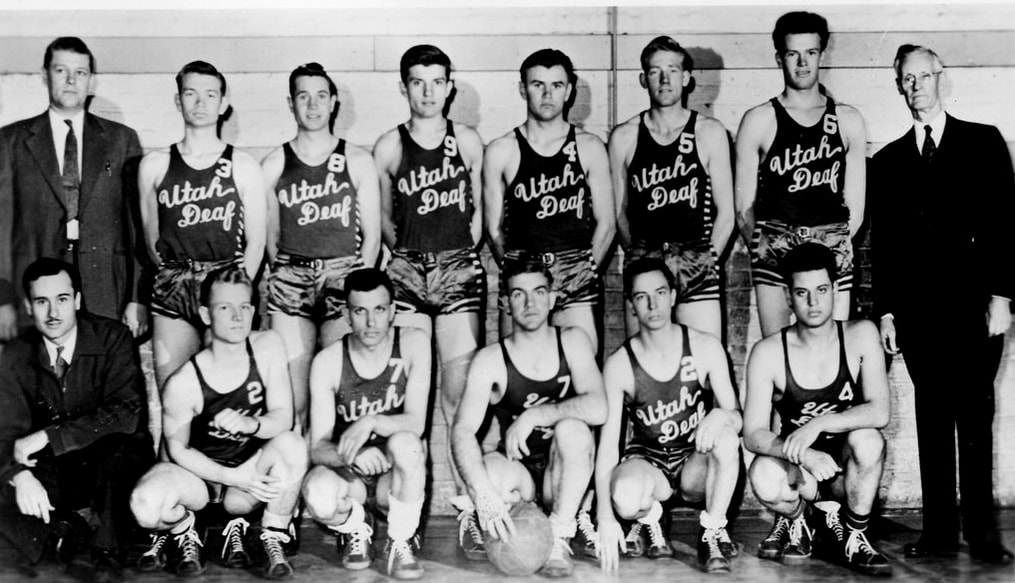
Basketball team at the Utah School for the Deaf in 1944. In the front row: Kenneth Burdett, coach, kneeling at the left side, front row; Superintendent Boyd Nelson standing behind Kenneth Burdett Player 2 Marlo Honey Player 7 Mike Patterakis Player 7 Kirk Allred Player 2 Merrill Bauer Player 4 Pete Koukasatkis In the back row, Superintendent Boyd Nelson, standing at left side; Max Woodbury, standing at right side Player 3 Bruce Eyre Player 8 Lloyd Perkins Player 9 Tony Jelaco Player 4 Paul Loveland Player 5 Melwin Sorenson Player 6 Sam Judd

Basketball team at the Utah School for the Deaf in 1948. Source: The Utahan, 1948
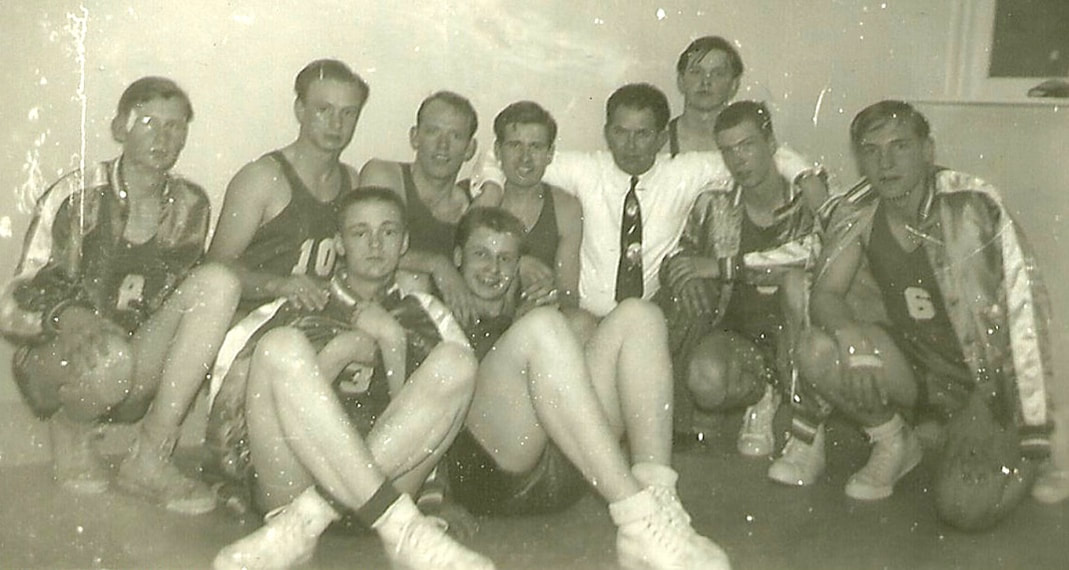
Basketball team at the Utah School for the Deaf in 1953

Cheerleading team at the Utah School for the Deaf in the 1950s
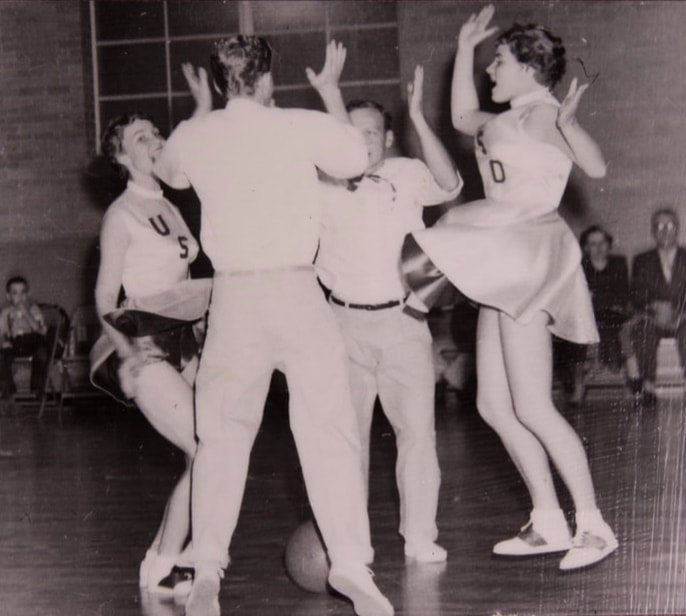
Cheerleading team at the Utah School for the Deaf in 1953
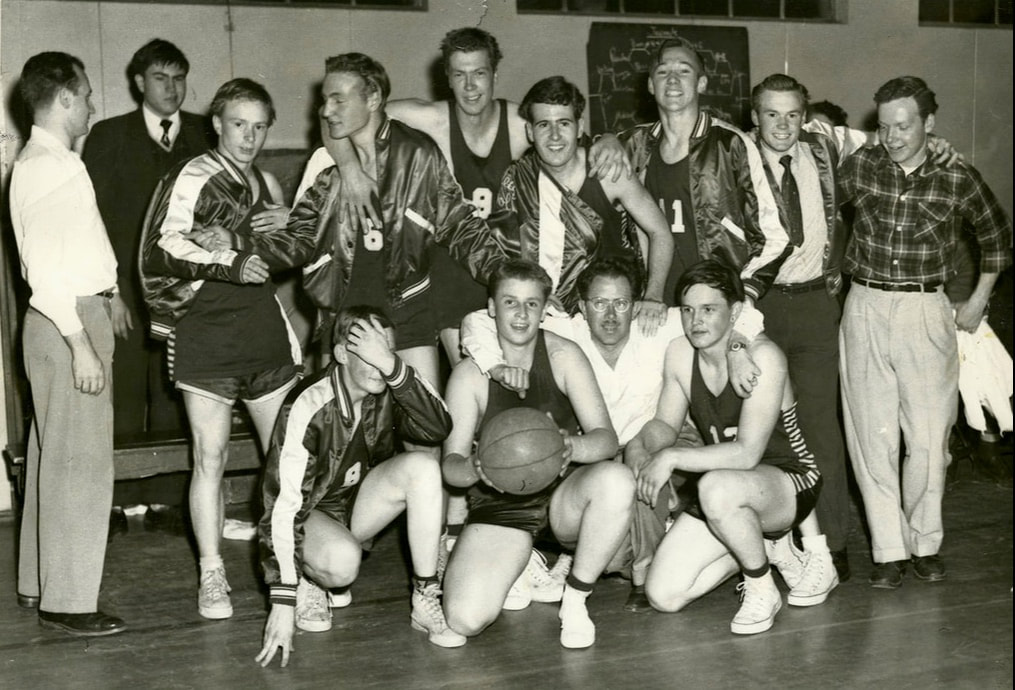
Basketball team at the Utah School for the Deaf in 1954
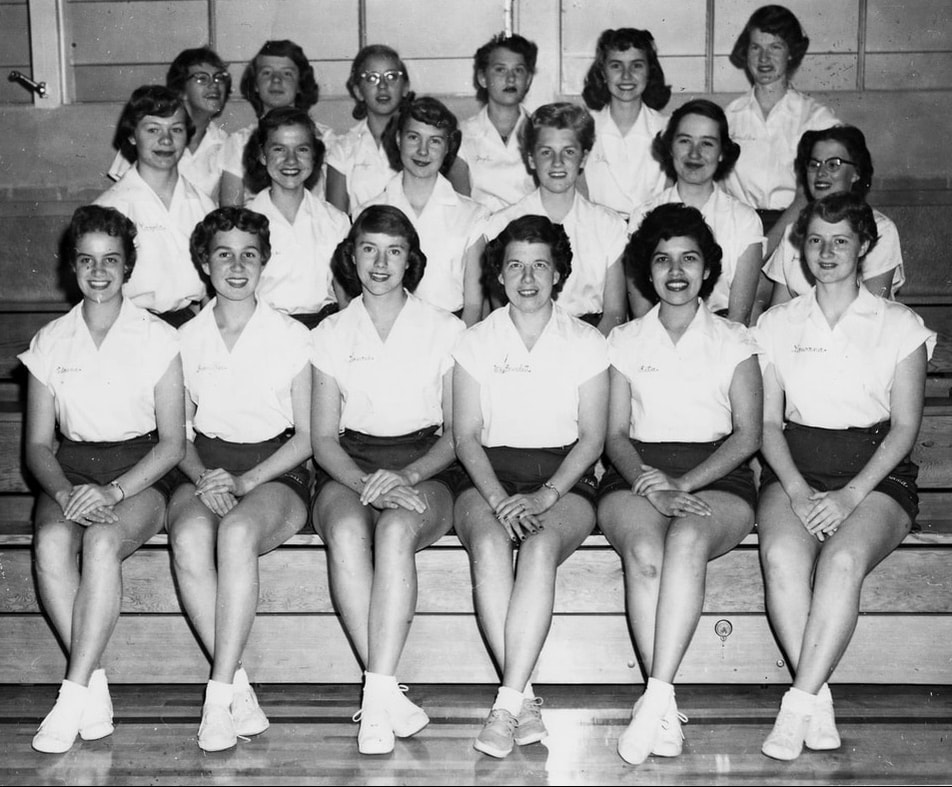
Volleyball team at the Utah School for the Deaf in 1955. First row, L-R: Elaine Sprouse, Dixie Lee Larson, Laura Williams, Afton Curtis Burdett, Instructor; Romona Vasquez, Lawana Simmons. Second Row, L-R: Carola Sell, Lois Williams, Virginia Brown, Darlene Green, Beverly Squire, Dorothy Mahoney. Third Row, L-R: Sue Wessman, Betty Jo Alldredge, Judy Jenkins, Gayle Marlow, Ilene Coles, Lucile Simmons. Photo courtesy of Kenneth and Ilene Kinner
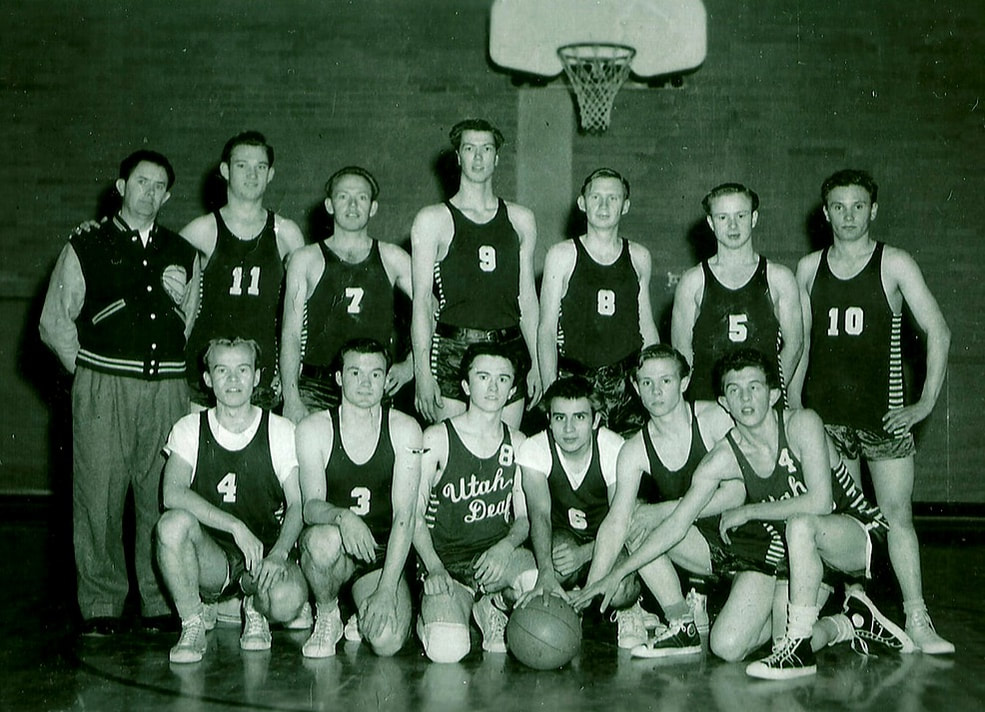
Basketball team at the Utah School for the Deaf in 1955-56
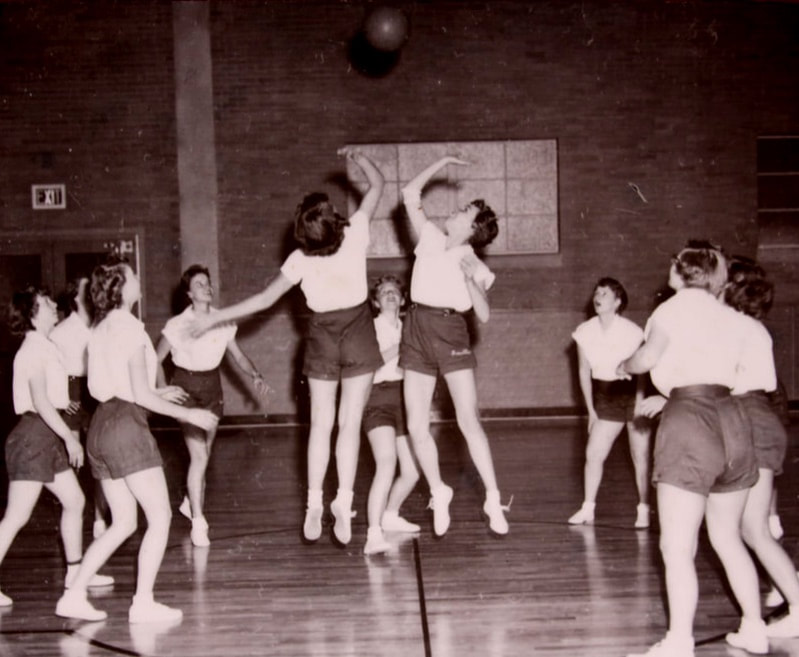
Basketball team at the Utah School for the Deaf in 1957

Basketball team at the Utah School for the Deaf in 1958. Source: Utah Eagle, January 1958
Jerry Taylor Strengthens Athletics
at the Utah School for the Deaf
For several years, the Utah Association of the Deaf (UAD) expressed concern over the lack of qualified athletic coaches at the Utah School for the Deaf. In April 1959, the school addressed those concerns by hiring Jerry Taylor as its physical education teacher and athletic coach. Jerry had recently graduated from Gallaudet College with a degree in physical education.
The Utah Association of the Deaf welcomed Jerry's appointment and viewed it as an important step forward for the school's athletic programs. The association believed that successful sports programs depended on skilled coaching and proper equipment. At the time, neighboring states such as Idaho and Colorado had strong Deaf athletic programs supported by excellent coaches and talented athletes. Despite these challenges, Jerry's enthusiasm, dedication, and vision for improvement quickly earned the respect of the Deaf community. As athletic director, he successfully guided and strengthened the Utah School for the Deaf's athletic programs.
Over the years, the USD has offered a variety of sports and activities, including cross-country, volleyball, basketball, baseball, football, soccer, cheerleading, track and field, and pep club, as shown in the photographs below. To ensure that Deaf athletes could participate fully in games and competitions, officials often used the vibrations of a drum to signal the start of play.

Jerry Taylor. Source: The Utah Eagle
Did You Know?
In the late 1800s, the Utah School for the Deaf became affiliated with the University of Utah. During this period, Deaf students and university students participated in several football games together. Because the two schools shared the same campus, athletic events became one of the primary ways students from the Utah School for the Deaf and the University of Utah interacted with one another.
After the Utah School for the Deaf relocated to Ogden, the boys continued playing football among themselves. On at least one occasion, they invited a team from the Agricultural College in Logan, Utah, to travel to Ogden and compete against them (Roberts, 1994).
After the Utah School for the Deaf relocated to Ogden, the boys continued playing football among themselves. On at least one occasion, they invited a team from the Agricultural College in Logan, Utah, to travel to Ogden and compete against them (Roberts, 1994).
The Impact of the "Y" System on Athletic
Programs at the Utah School for the Deaf
Under the leadership of Dr. Grant B. Bitter, a strong advocate of oral and mainstream education, Utah began a movement in the 1960s to mainstream Deaf children into public schools. His influence on Deaf education earned him the title "Father of Mainstreaming." This philosophy represented a significant departure from the vision of Dr. Martha Hughes Cannon, a member of the Board of Trustees of the Utah School for the Deaf and Blind and the nation's first female state senator. In 1896, she successfully championed legislation requiring Deaf and Blind children in Utah to attend the Utah School for the Deaf and Blind in Ogden (Martha Hughes Cannon, Wikipedia, April 20, 2024). Her efforts marked a turning point in educational opportunities for Deaf and Blind children. Decades later, Grant Bitter's advocacy helped pave the way for the widespread acceptance of mainstream education, particularly following the passage of Public Law 94-142 in 1975, now known as the Individuals with Disabilities Education Act (IDEA).

Martha Hughes Cannon. Source: Utah State Historical Society, Deseret News Archives
|

Dr. Grant B. Bitter. Source: The Utah Eagle, October 1962
|
In the fall of 1962, the Utah Deaf community was surprised by major educational reforms at the Utah School for the Deaf, which introduced the dual-track program, also commonly known as the "Y" system. The unexpected change had a profound impact on the education of Deaf children, evoking concern throughout the Deaf community. The Utah Association of the Deaf, which advocated for sign language, was unaware that the Utah Council for the Deaf had spearheaded the change, advocating for speech-based instruction and successfully pushing for its implementation at the Utah School for the Deaf in Ogden, Utah (The UAD Bulletin, Fall-Winter 1962). It is believed that Dr. Grant B. Bitter was a member of this council.
The dual-track program provided an oral program in one department and a simultaneous communication program in another department, which was later replaced by a combined system. However, the dual-track policy mandated that all Deaf children begin with the oral program (The Utah Eagle, February 1968; Gannon, 1981).
The Utah State Board of Education approved this policy reform on June 14, 1962, with endorsement from the Special Study Committee on Deaf Education (The Ogden Standard-Examiner, June 14, 1962; Wight, The Ogden Standard-Examiner, October 19, 1970). The newly hired superintendent, Robert W. Tegeder, accepted the parents' proposals and initiated changes to the school system (The UAD Bulletin, Fall-Winter 1962; Grant Bitter: Everett L. Cooley Oral History Project, March 17, 1987). This new program not only affected the lives of Deaf children but also their families.
The "Y" system, part of the dual-track program, imposed significant restrictions and challenges on students and their families. This system separated learning into two distinct channels: the oral department, which focused on speech, lipreading, amplified sound, and reading, and the simultaneous communication department, which emphasized instruction through the manual alphabet, signs, speech, and reading. Initially, all Deaf children were required to enroll in the oral program for the first six years of their schooling (The Utah Eagle, February 1968). Following this period, a committee would assess each child's progress and determine their placement (The Utah Eagle, February 1968). The "Y" system favored the oral approach over the sign language approach, limiting families' choices within the school system. The school's preference for oral instruction was based on the belief that speech was crucial for Deaf children's integration into the hearing world. Parents and Deaf students did not have the freedom to choose the program until the child entered the 6th or 7th grade, at which point they could either continue in the oral department or transition to the simultaneous communication department (The Utah Eagle, February 1968; Dr. Grant B. Bitter's Paper, 1970s; Deanne Kinner Montgomery, personal communication, May 4, 2024).
The placement of transferred students in the signing program labeled them as "oral failures" (The UAD Bulletin, Spring 1965). There has been discussion regarding the age at which students could transfer to the simultaneous communication program. According to the First Reunion of the Utah School for the Deaf Alumni Program Book (1976), students generally transferred when they were between 10 and 12 years old or when they entered the sixth grade. However, according to the February 1968 issue of The Utah Eagle, students were required to remain in the oral program for their first six years of school, which could place them in either the 6th or 7th grade. Therefore, this webpage uses placement between the 6th and 7th grades rather than relying solely on age, since a student's birth date, academic progression, and other factors could affect placement (First Reunion of the Utah School for the Deaf Alumni Program Book, 1976; The Utah Eagle, February 1968).
On June 14, 1962, the Utah State Board of Education approved the dual-track program, which led to the division of the Ogden campus into two parts during the summer break (The Ogden Standard-Examiner, June 14, 1962). The dual-track program also divided Ogden's residential campus into an oral department and a simultaneous communication department, each with its own classrooms, dining halls, dormitory facilities, recess periods, and extracurricular activities. The school prohibited interaction between oral and sign language students (The Utah Eagle, February 1968; Wight, The Ogden Standard-Examiner, October 19, 1970). However, due to low enrollment in competitive sports, the athletic program combined students from both departments. The team utilized both oral and sign language coaches to communicate effectively with their respective students (The Utah Eagle, February 1968; Ruth Taylor, e-mail message to Jodi Christel Becker, February 11, 2015). This unique arrangement highlights the challenges and complexities of implementing the dual-track program.
At the time, Jerry Taylor was the coach of the signing team, while Bert Chaston, a staff member of the oral department, served as the head coach of the oral team (Ruth Taylor, e-mail message to Jodi Christel Becker, February 11, 2015).

Dr. Robert G. Sanderson. Source: The UAD Bulletin, Winter 1965
The 1962 and 1969 protests were sparked by dissatisfaction with the dual-track program's "Y" segregation system, the separation of oral and sign language students, and the school administration's dismissal of community concerns (Sanderson, The UAD Bulletin, Summer 1963; UAD Bulletin, Fall-Winter 1962, p. 2; Kenneth L. Kinner, personal communication, May 14, 2011).
Following the 1962 protest against social segregation between oral and sign language students on Ogden's residential campus, Dr. Grant B. Bitter and his oral supporters suspected that the Utah Association of the Deaf had organized the student strike. However, an investigation conducted by the Utah State Board of Education found no evidence linking the students to the Utah Association of the Deaf (Sanderson, The UAD Bulletin, Summer 1963; Kenneth L. Kinner, personal communication, May 14, 2011).
Dr. Robert G. Sanderson, who served as president of the Utah Association of the Deaf from 1960 to 1963, denied any involvement in organizing the strike. He maintained that the demonstration was a spontaneous reaction by students who felt that the conditions, restrictions, and personalities associated with the dual-track program had become intolerable (Sanderson, The UAD Bulletin, Summer 1963).
In its Fall-Winter 1962 issue of the UAD Bulletin, the Utah Association of the Deaf expressed support for testing the dual-track program in the classroom. However, the organization strongly opposed complete social isolation, interference with religious activities, damage to the athletic program, and pressure placed on oral students to comply with the "no signing" policy (UAD Bulletin, Fall-Winter 1962, p. 2). The implementation of the dual-track program marked a dark chapter in the history of Deaf education in Utah.
Kenneth L. Kinner, a 1954 Utah School for the Deaf graduate and father of two Deaf children, Deanne (Class of 1979) and Duane (Class of 1991 from the Idaho School for the Deaf), shared an incident from the 1970s. The mother of an oral girl insisted on her daughter's transfer to Ben Lomond High School, part of the USD extension program. Other parents likewise wanted their children to participate in daily social activities and sports alongside their hearing peers and encouraged their best-prepared children to integrate into mainstream society. As the Utah Association of the Deaf had predicted, this trend contributed to the weakening of the Utah School for the Deaf's athletic programs, representing a significant loss for Deaf students and the Utah Deaf community (Kenneth L. Kinner, personal communication, 2010).

Kenneth L. Kinner. Photo courtesy of Kenneth and Ilene Kinner
When Ben Lomond High School became overcrowded, some students transferred to Ogden High School for two years, from 1973 to 1975. Some oral students participated in hearing sports teams, while others did not. Only Bruce Aldridge, an oral student, received his parents' permission to continue participating in Utah School for the Deaf athletics, illustrating the growing shift away from USD's athletic programs during the mainstreaming era (Kenneth L. Kinner, personal communication, 2010).
Despite these challenges, athletic programs at the Utah School for the Deaf continued to provide valuable opportunities for competition, teamwork, leadership, and community involvement. Their survival during a period of significant educational and social change reflects the resilience of Deaf students, coaches, families, and community members who remained committed to preserving Utah's Deaf athletic traditions.
Despite these challenges, athletic programs at the Utah School for the Deaf continued to provide valuable opportunities for competition, teamwork, leadership, and community involvement. Their survival during a period of significant educational and social change reflects the resilience of Deaf students, coaches, families, and community members who remained committed to preserving Utah's Deaf athletic traditions.

Bruce Aldridge. Photo courtesy of J. Willard Marriott of the University of Utah
A Photographic History of
Utah School for the Deaf Athletics, 1959-1976
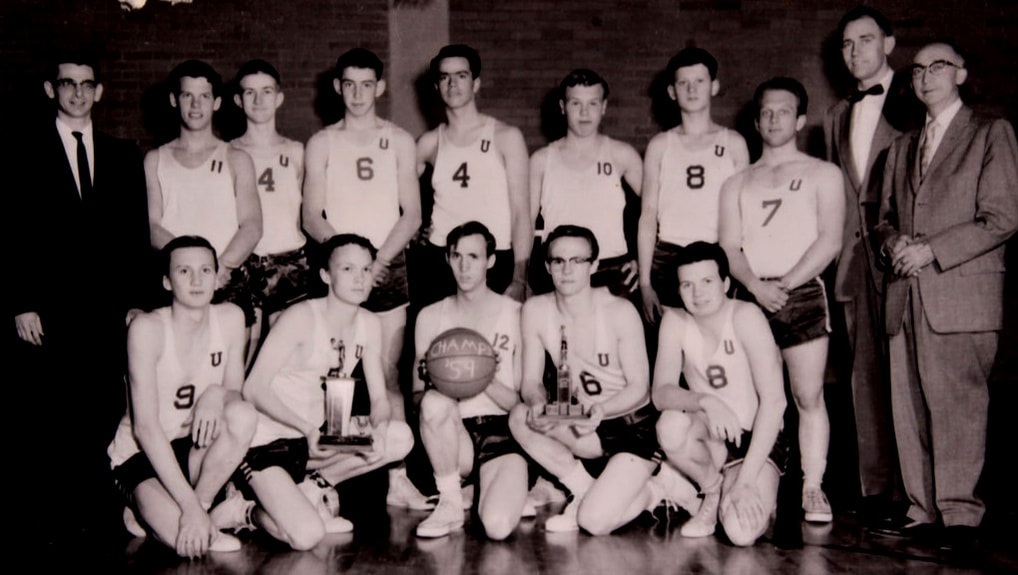
Basketball team at the Utah School for the Deaf in 1959
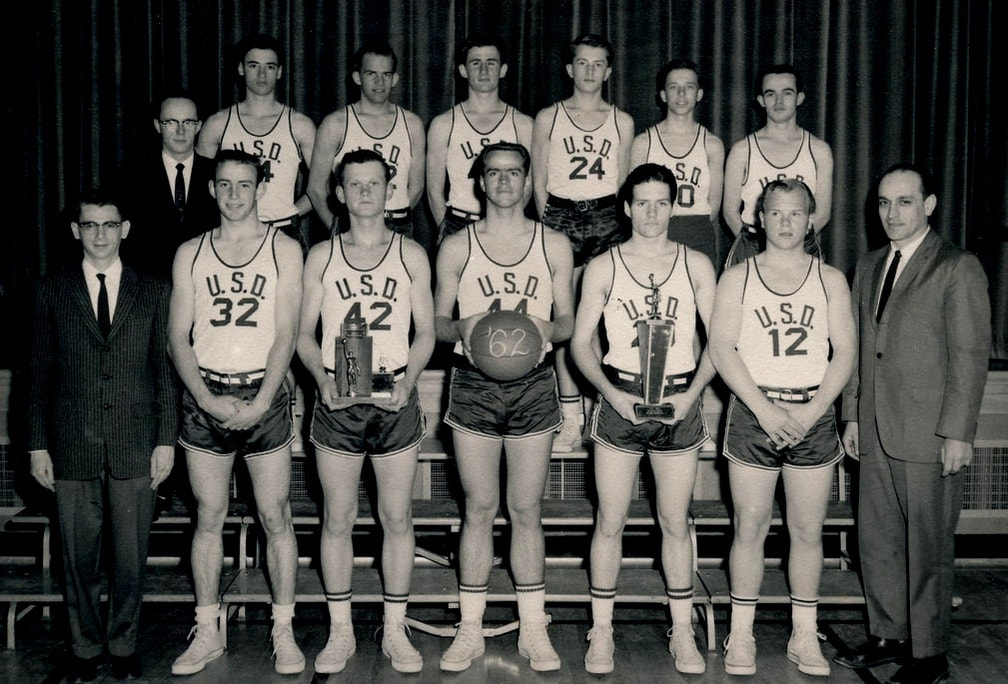
Basketball team at the Utah School for the Deaf in 1961-62
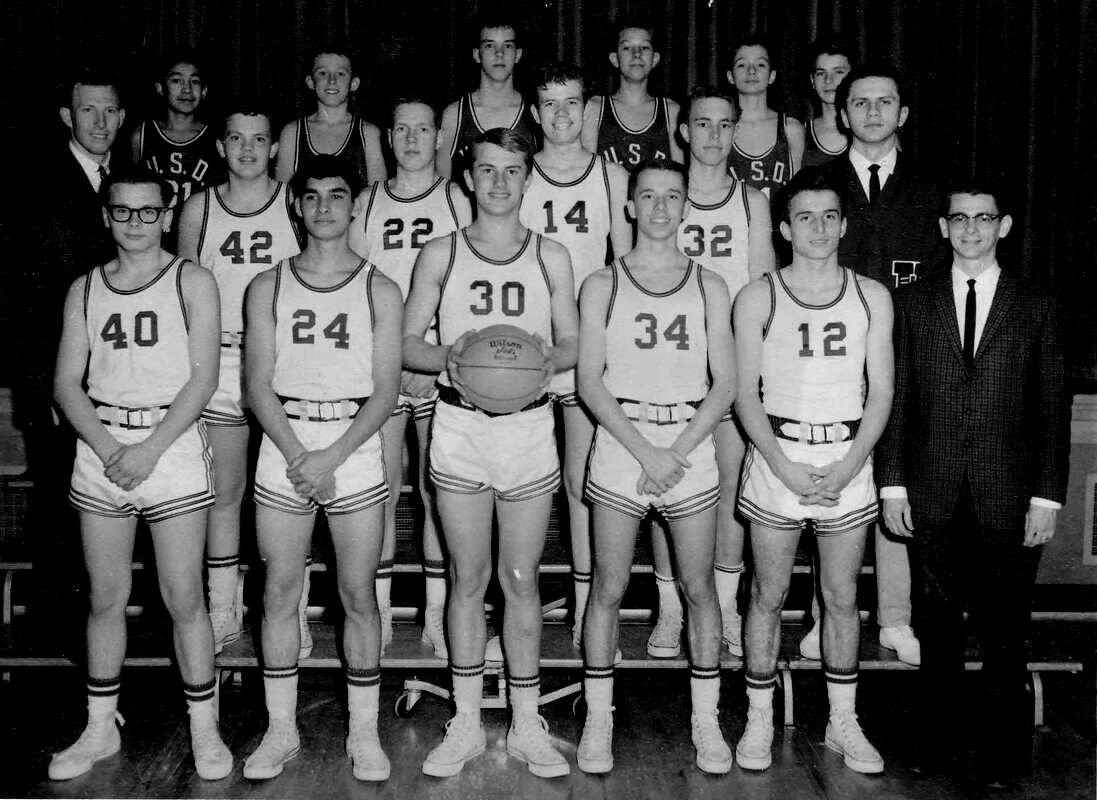
Basketball team at the Utah School for the Deaf in 1962-63
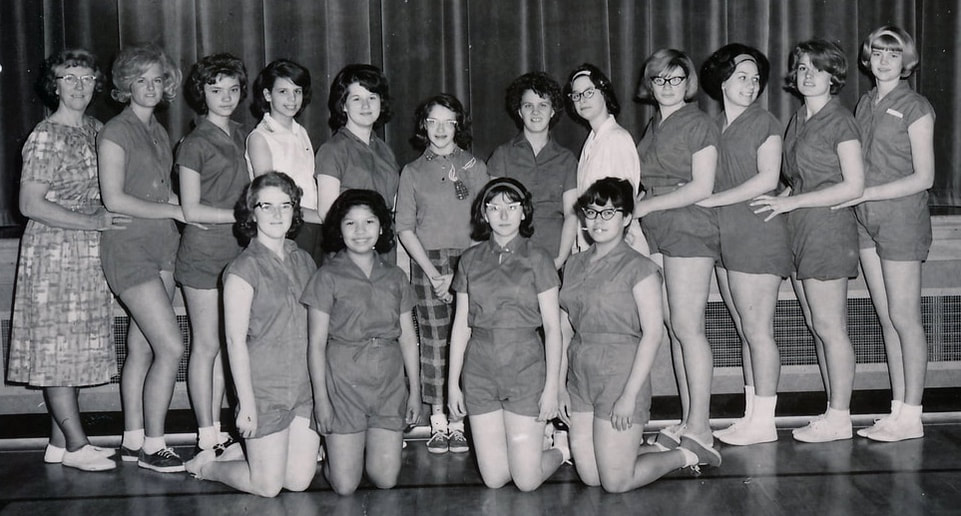
Basketball team at the Utah School for the Deaf in 1963-64
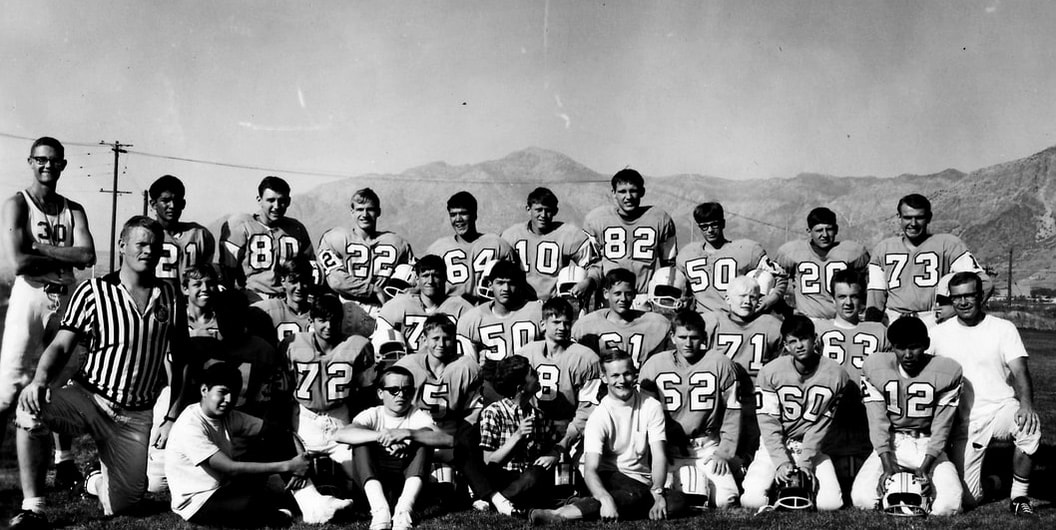
Football team at the Utah School for the Deaf in 1967
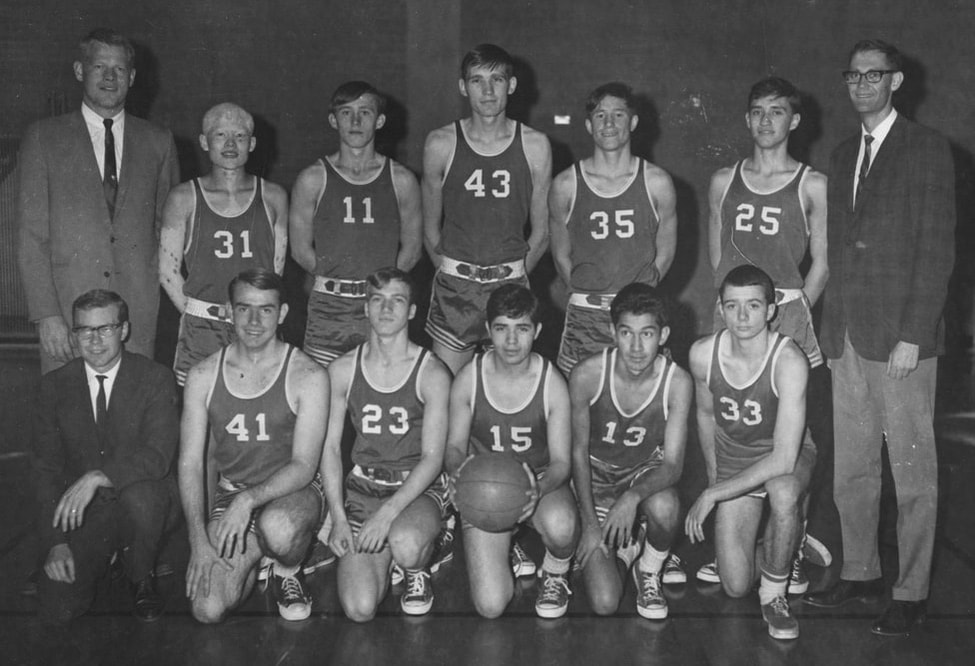
Basketball team at the Utah School for the Deaf in 1967-68
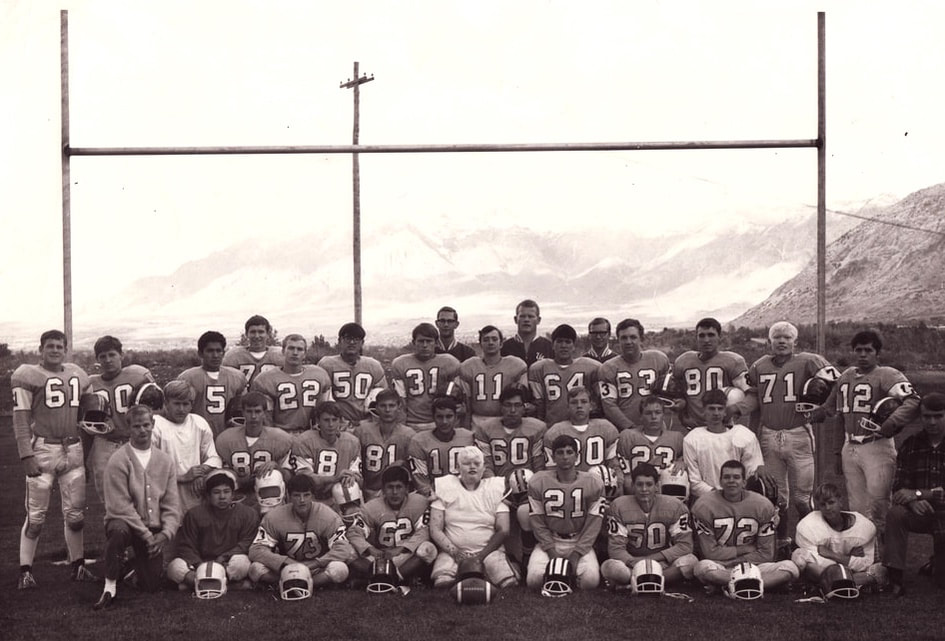
Football team at the Utah School for the Deaf in 1968
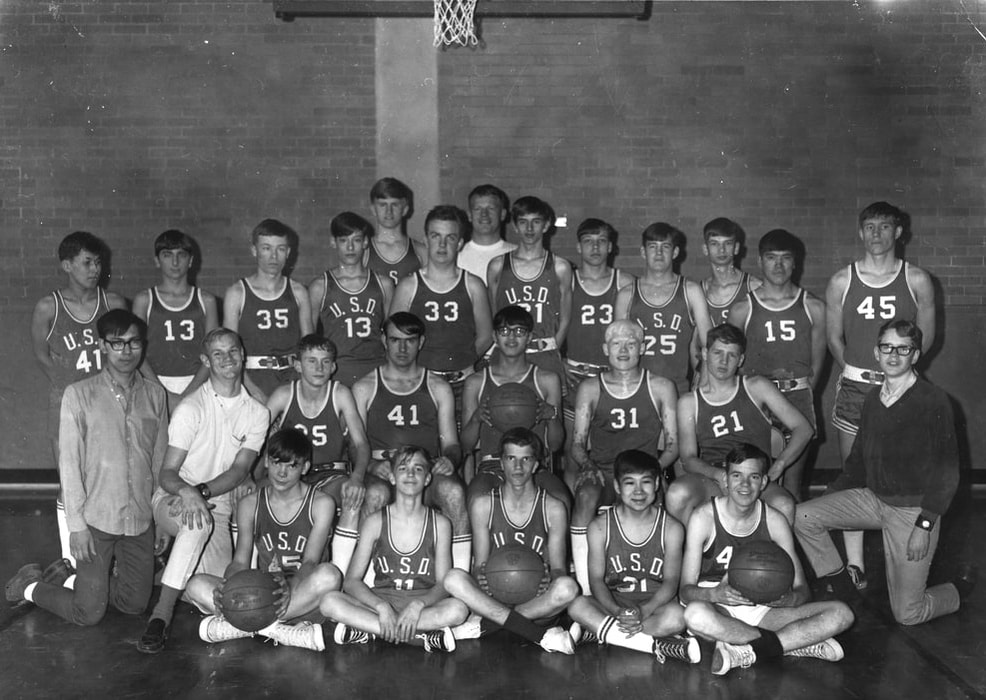
Basketball team at the Utah School for the Deaf in 1968-69
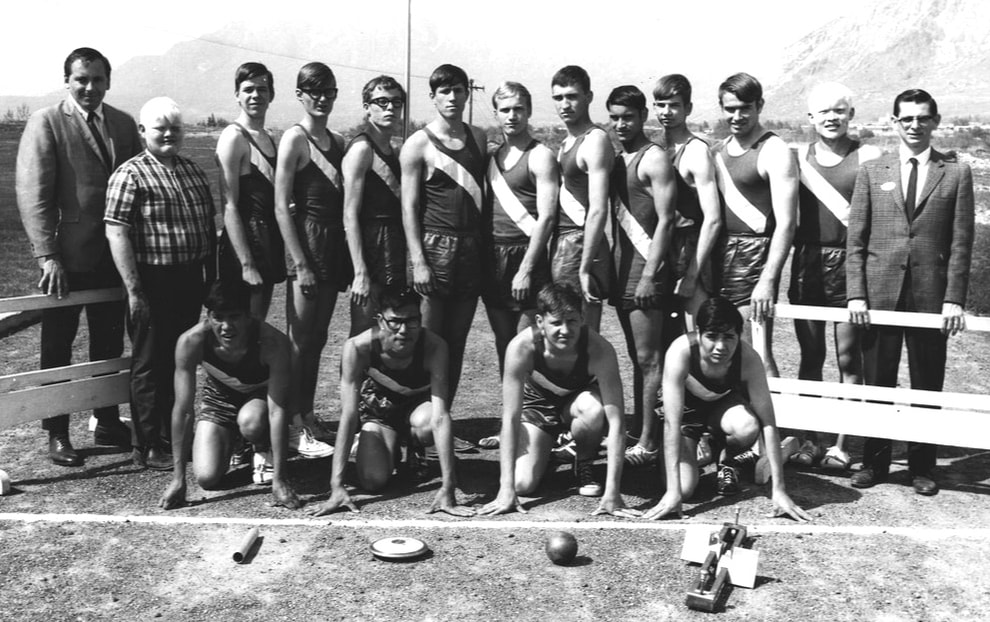
Basketball team at the Utah School for the Deaf in 1969
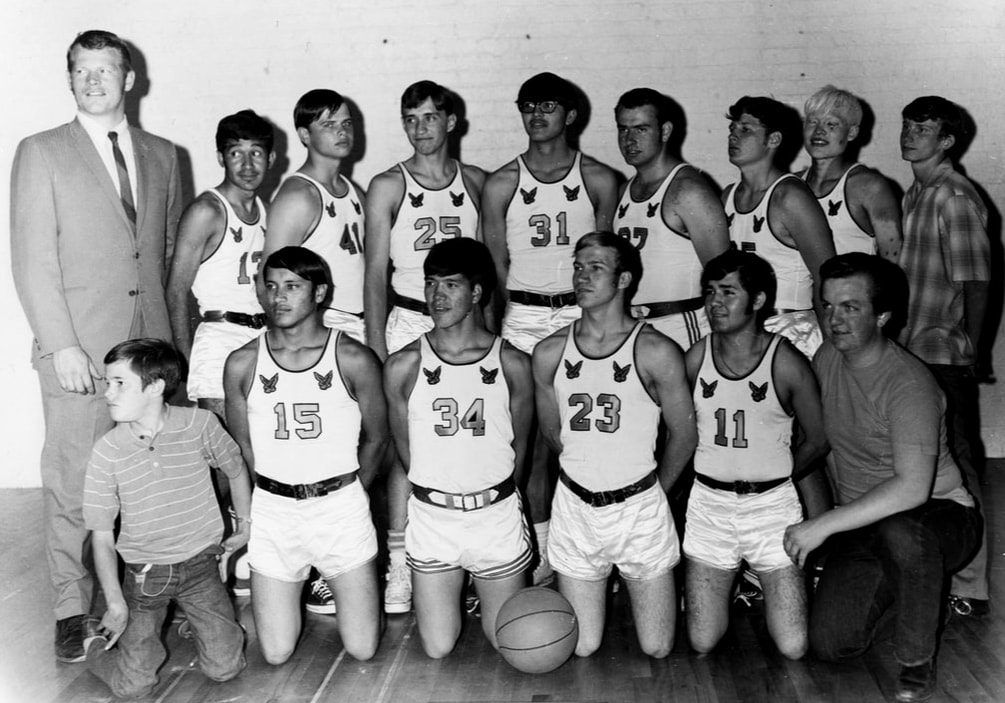
Basketball team at the Utah School for the Deaf in 1969-70
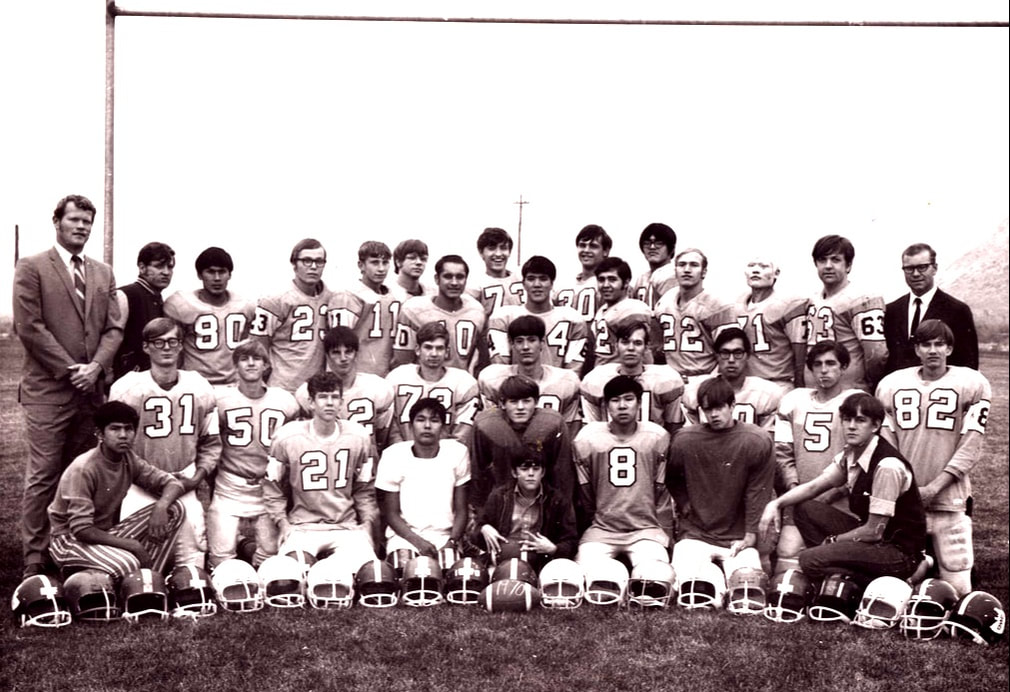
Football team at the Utah School for the Deaf in 1970, won 2nd place
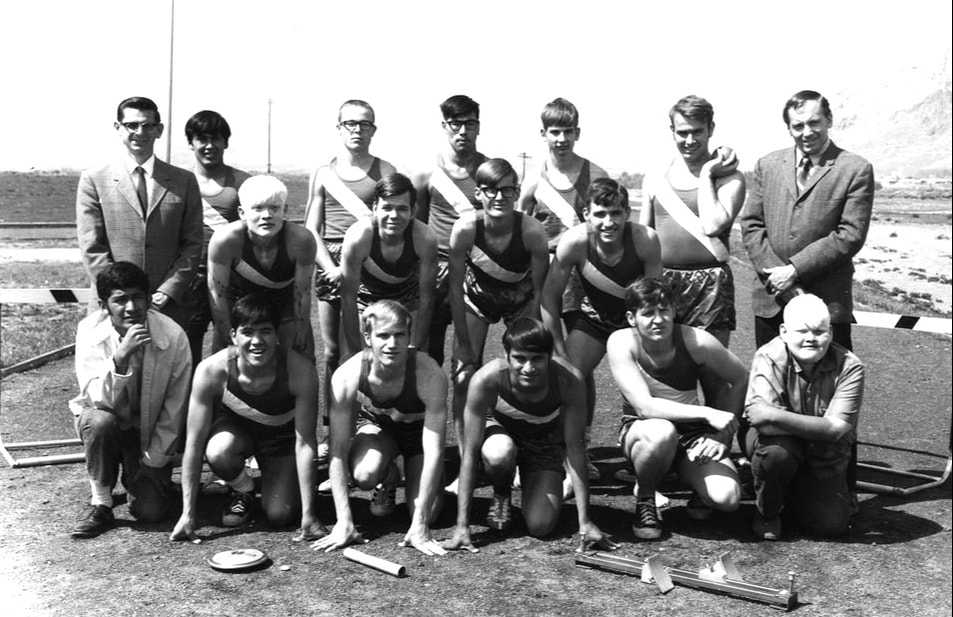
Track team at the Utah School for the Deaf in 1970. Jerry Taylor (L), Total Communication Coach and Bert Chaston (R), Oral Coach
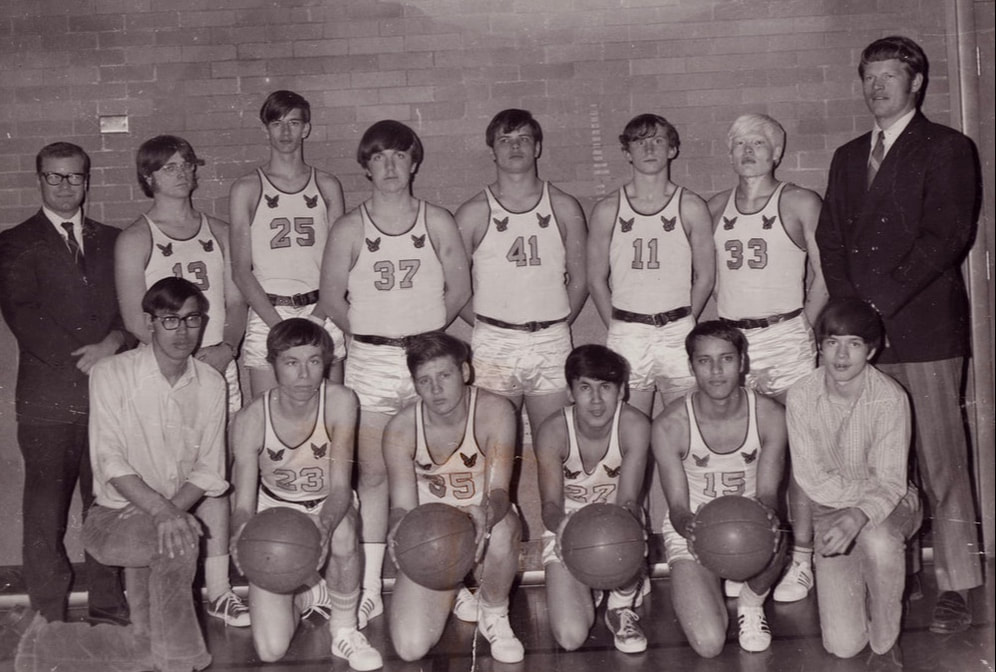
Basketball team at the Utah School for the Deaf in 1970-71
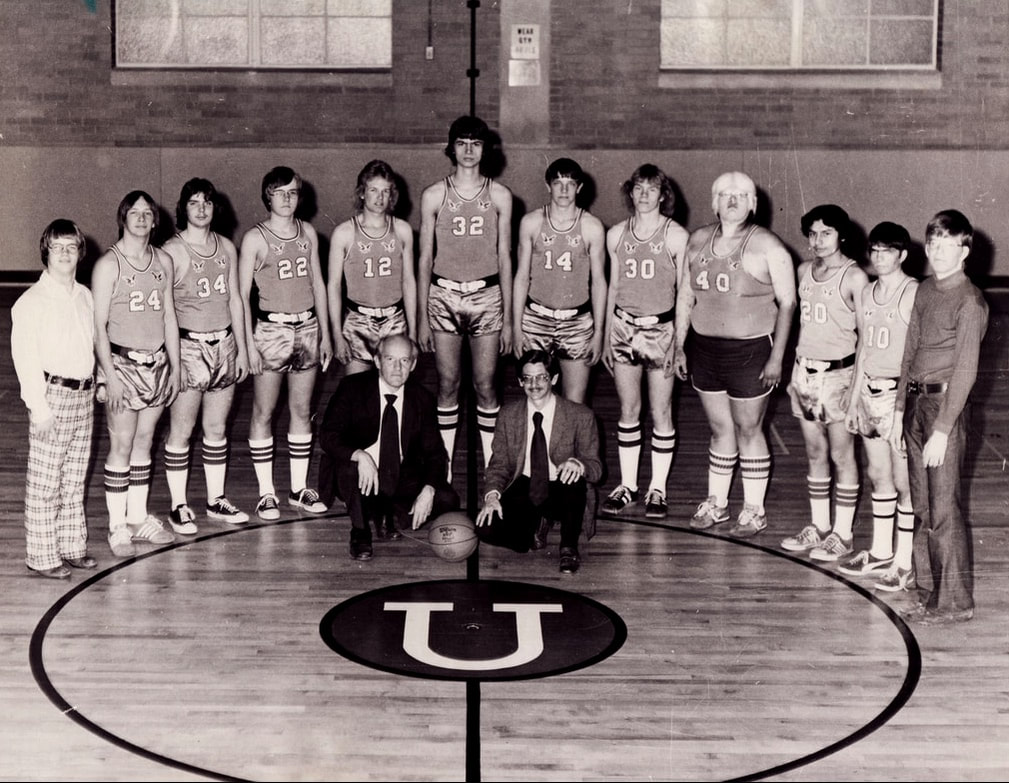
Basketball team at the Utah School for the Deaf in the 1970s

Track team at the Utah School for the Deaf in 1976. Bottom L-R: Pat Lein, Jim Jenkins. Middle L-R: Jerry R. Taylor, Eddie Olson, David Hermanson, Steven Coomb, Bruce Aldridge, Jay Barker. Back R-L: Bobby Shupla, Fred Eddgers, Eddie Foster, Bill Stricklen
The Utah School for the Deaf Competes
in the Western State Basketball Classic Tournament
During the late 1970s and early 1980s, a unique opportunity emerged for a small group of basketball players from the Utah School for the Deaf's Total Communication Department. They participated in the Western State Basketball Classic (WSBC), a pioneering basketball tournament created exclusively for Deaf athletes.
The WSBC brought together teams from several renowned schools, including the California School for the Deaf-Riverside, California School for the Deaf-Fremont, Oregon School for the Deaf, Washington School for the Deaf, Arizona School for the Deaf and the Blind, and the Phoenix Day School for the Deaf. Other schools, such as the Idaho School for the Deaf and the Blind, Marlton School, the Colorado School for the Deaf and the Blind, and the New Mexico School for the Deaf, also participated in previous years. Each school took turns hosting the tournament, making the WSBC a significant event in the history of Deaf athletics.
The tournament was much more than a basketball competition. It provided students from the Utah School for the Deaf with opportunities to socialize and build friendships with peers from other state schools for the deaf before, during, and after games. In addition to competitions among the eight boys' teams, eight girls' teams, and cheerleading squads, the WSBC hosted a variety of social activities for student participants.
The annual event also brought together superintendents and athletic directors from participating schools, strengthening professional relationships and fostering collaboration among Deaf education programs. Fans from the Deaf community traveled to support their teams, creating a warm atmosphere of camaraderie and school spirit. Each year, Deaf students eagerly anticipated competing against their peers while communicating freely in American Sign Language, their natural language.
The Impact of Mainstreaming on Athletic
Programs at the Utah School for the Deaf
During the 1980s, enrollment at the Utah School for the Deaf declined as increasing numbers of students were mainstreamed into public schools. Following Jerry Taylor's retirement as athletic director in 1987, Mike Hillstrom assumed responsibility for the athletic program and gradually reduced offerings until only basketball and volleyball remained.
During the 1986-1987 school year, the athletic program fielded only a junior varsity basketball team. Tintic High School served as the varsity team, and USD competed against several small schools throughout Utah, including Tintic High School, Rowland Hall High School, Dugway High School, and Rich County High School. Despite competing against some of the state's smallest schools, USD struggled on the court and lost all ten games.
The following year, during the 1987-1988 season, declining enrollment and ongoing challenges led to USD's removal from the Utah High School Athletic Association. The team subsequently joined the Christian Athletic Association (CAA), which hosted games on the Utah Schools for the Deaf and the Blind campus in Ogden. The CAA also sponsored a volleyball league in which USD participated. According to Mike Hillstrom, the athletic programs ultimately closed because student participation continued to decline (Mike Hillstrom, e-mail message to Jodi Christel Becker, May 30, 2014).

Mike Hillstrom
The closure of the athletic program in 1989 had a devastating impact on the Utah Deaf community. Since the 1960s, mainstreaming had increasingly integrated Deaf students into public schools throughout Utah. The implementation of the dual-track program and the growing emphasis on mainstream education contributed to the eventual closure of the Ogden residential campus in the early 1990s.
In 1993, the Utah School for the Deaf and the Utah School for the Blind merged and relocated to a new campus at 742 Harrison Boulevard in Ogden, Utah (Leers, November 1, 1988, p. B1; Deseret News, November 4, 1988; Bannister, UAD Bulletin, February 1989). Unfortunately, the school's athletic trophies disappeared during the move, and their whereabouts remain unknown (Jerry Taylor, personal communication, February 2012).
Despite these losses, the Utah Deaf community, particularly former mainstreamed students, demonstrated remarkable perseverance. Following the closure of the school's athletic programs, many Deaf athletes continued participating in organized sports through community-based organizations. Deaf Utahns remained active in organizations such as the Utah Athletic Club of the Deaf and the Golden Spike Athletic Club of the Deaf.
Members of the Utah Deaf community also competed at regional and national levels through organizations such as the Far West Athletic Association of the Deaf, the Northwest Athletic Association of the Deaf, the American Athletic Association of the Deaf, and the USA Deaf Sports Federation. Their dedication helped preserve Utah's rich Deaf athletic tradition even after the closure of the Utah School for the Deaf's athletic program.
Did You Know?
In approximately 1895, the Utah School for the Deaf established a physical education program in Salt Lake City, Utah. After relocating to Ogden in 1896, the school constructed a gymnasium and hired a physical education instructor, demonstrating the school's early commitment to student health, recreation, and athletics (Roberts, 1994).
The Rebirth of Athletic Programs
at the Utah School for the Deaf
Shortly after the Jean Massieu School of the Deaf (JMS) merged with the Utah School for the Deaf (USD) in 2005, Julio Diaz, Jr., a sports enthusiast, 1983 graduate of the Florida School for the Deaf, husband of JMS co-founder Minnie Mae Wilding-Diaz, and father of three Deaf children, advocated for the reinstatement of athletic programs. His request received the support of Linda Rutledge, superintendent of the Utah Schools for the Deaf and the Blind.
In 2006, Julio Diaz's efforts paid off when the Utah High School Activities Association (UHSAA) Board of Trustees approved a new rule that revived activities and athletics for Deaf and blind students, regardless of where they attended school. This decision marked a significant milestone for students receiving services through the Utah Schools for the Deaf and the Blind (USDB). Under the new rule, USDB teams could include eligible students from any high school, provided that the Board designated them as students receiving USDB services.
In 2006, Julio Diaz's efforts paid off when the Utah High School Activities Association (UHSAA) Board of Trustees approved a new rule that revived activities and athletics for Deaf and blind students, regardless of where they attended school. This decision marked a significant milestone for students receiving services through the Utah Schools for the Deaf and the Blind (USDB). Under the new rule, USDB teams could include eligible students from any high school, provided that the Board designated them as students receiving USDB services.

Julio Diaz, Jr. Source: Facebook
Rebuilding athletic programs from the ground up proved challenging and required considerable time and effort. According to Mike Hillstrom, a long-time teacher at the Utah School for the Deaf and activities director, the school once supported relatively large athletic teams when approximately 200 students lived on the residential campus. However, as mainstreaming increased during the late 1980s, more students attended public schools while receiving support services from USD teachers. As enrollment on the residential campus declined, participation in extracurricular activities and athletics also decreased, contributing to the eventual disappearance of many programs (Donaldson, Deseret News, March 6, 2007).
Julio remained optimistic that athletic opportunities for Deaf students could be restored despite the challenges created by mainstreaming. However, during the 2008-2009 school year, USDB faced a budget reduction of $2.25 million under the administration of Interim Superintendent Timothy W. Smith. At the time, the athletic programs were threatened with elimination. Members of the Utah Deaf community strongly advocated for preserving the programs, emphasizing their importance to Deaf students. Ultimately, Superintendent Smith agreed to reinstate athletics, and Deaf volunteers stepped forward to assist with volleyball, basketball, and track and field programs.
Julio remained optimistic that athletic opportunities for Deaf students could be restored despite the challenges created by mainstreaming. However, during the 2008-2009 school year, USDB faced a budget reduction of $2.25 million under the administration of Interim Superintendent Timothy W. Smith. At the time, the athletic programs were threatened with elimination. Members of the Utah Deaf community strongly advocated for preserving the programs, emphasizing their importance to Deaf students. Ultimately, Superintendent Smith agreed to reinstate athletics, and Deaf volunteers stepped forward to assist with volleyball, basketball, and track and field programs.

Timothy W. Smith. Photo courtesy of the Blinder Book of the 2009 Utah School for the Deaf Reunion
After two years of planning, the Utah School for the Deaf's boys' and girls' basketball teams finally competed in a national tournament in Oregon in 2008. According to Jen Byrnes, a graduate of the Idaho School for the Deaf and head coach of the girls' basketball team, the tournament provided a transformative experience for the athletes.
"The girls were in a national environment. Many of them had never witnessed conversations among members of the Deaf community before. 'Hey, they're teens just like us. They're talking about boys and school.'"
The experience helped students realize they were part of a much larger Deaf community and gave them opportunities to build new friendships and develop a stronger Deaf identity.
Craig Radford, head coach of the boys' basketball team, observed:
"Some students have identity issues. Being part of a larger community helps them build more confidence as Deaf individuals."
Both coaches agreed that participation in the tournament improved the athletes' skills and provided tremendous support from the Deaf community. The tournament helped students develop pride, confidence, and a stronger connection to Deaf culture while reintroducing athletics to a new generation of Utah School for the Deaf students (Sights & Sounds, May 2008).

Craig Radford. Source: Facebook
The Utah Deaf community had finally realized a long-held dream. Despite budget challenges and limited enrollment, students from the Utah School for the Deaf and the Jean Massieu School of the Deaf once again had opportunities to participate in organized sports. With the support of dedicated coaches and community volunteers, increasing numbers of mainstreamed students could practice and compete at the Robert G. Sanderson Community Center of the Deaf and Hard of Hearing. Fortunately, the community center's gymnasium provided a gathering place where Deaf students could come together, develop their athletic skills, and strengthen their connections with one another.
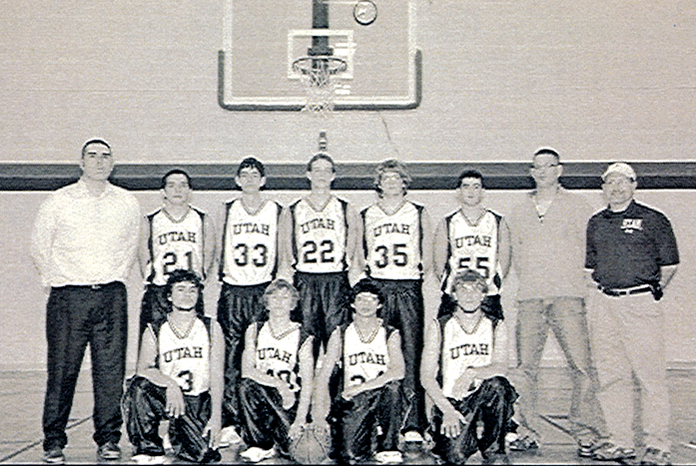
Basketball team at the Utah School for the Deaf in 2008-2009 with Craig Radford, Head Coach (far left) and two Assistant Coaches, Brain Thornberry and Keith Mischo (far right)
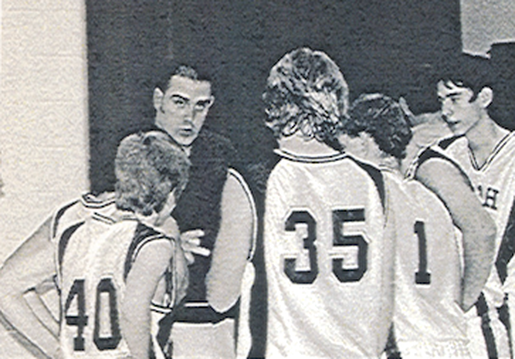
Craig Radford, the Head Coach speaking with his Utah School for the Deaf team in 2008-2009
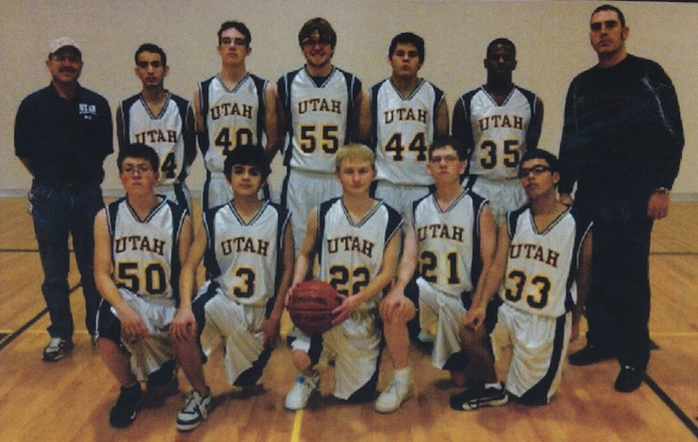
Basketball team at the Utah School for the Deaf in 2009 with Craig Radford as head coach and Keith Mischo as an assistant coach, 2009-2010
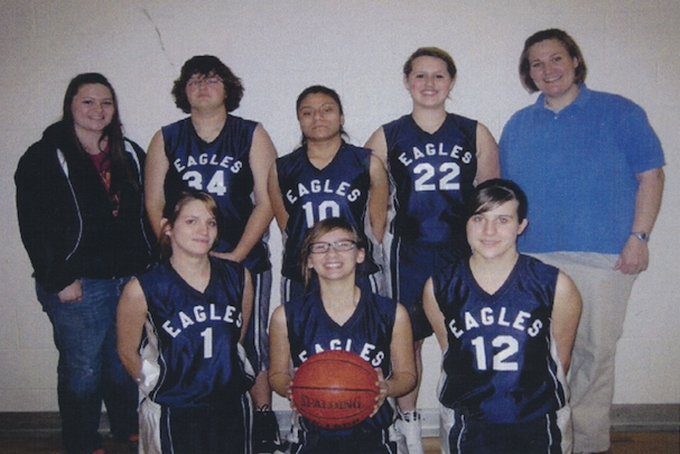
Basketball team at the Utah School for the Deaf with Jen Byrnes as the Head Coach in 2009-2010
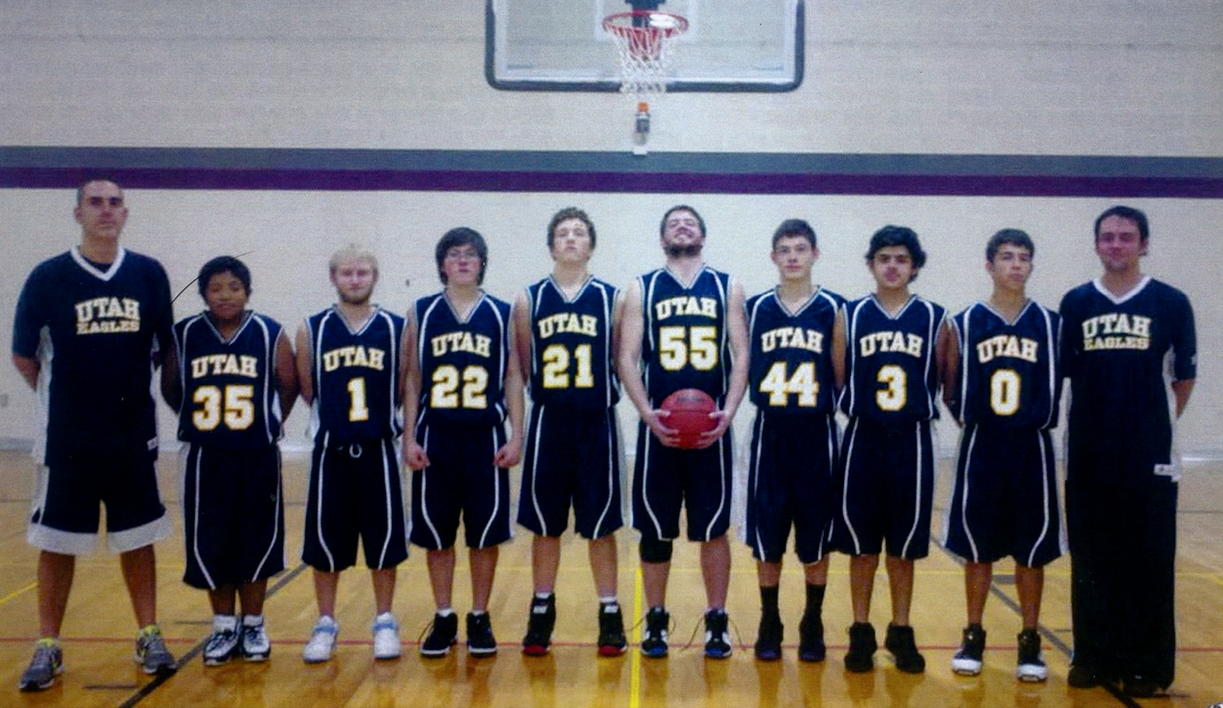
Basketball team at the Utah School for the Deaf with Craig Radford as head coach and Matt Cesar as an assistant coach in 2011-2012
Did You Know?
Sports have always played a significant role in the Deaf community. Deaf children attending state schools for the deaf across the United States, including the Utah School for the Deaf, enjoyed participating in athletics with their peers. Many older Utah School for the Deaf graduates who had competed in sports on the Ogden residential campus hoped that mainstreamed Deaf students would have similar opportunities.
When plans were developed for the Utah Community Center for the Deaf, later renamed the Robert G. Sanderson Community Center of the Deaf and Hard of Hearing, members of the Utah Deaf community proposed including a gymnasium in the facility. The committee assigned Norman Williams, a 1962 graduate of the Utah School for the Deaf, to identify the ideal gym design for the center.
Williams visited several gyms throughout the region but remained dissatisfied with their layouts. Later, while visiting the Idaho School for the Deaf, he saw a new full-size basketball court with bleachers and was impressed by its design and size. He recommended a similar facility for the community center, which ultimately led to the construction of a gymnasium featuring a full basketball court and movable bleachers (Kenneth L. Kinner, personal communication, 2008; Norman Williams, personal communication, May 8, 2012).

Norman Williams. Source: Utah Athletic Club of the Deaf: 50th Anniversary Celebration 1947–1997 Program Book
The Utah School for the Deaf Returns to the
Western States Basketball Classic
Since the late 1970s and early 1980s, the Western States Basketball Classic (WSBC) has brought together teams from eight state schools for the deaf. The tournament holds special significance within the Deaf community because it provides Deaf students with opportunities to compete in sports, socialize, and establish lifelong friendships. After many years of absence due to insufficient enrollment to field a team, the Utah School for the Deaf returned to the tournament in 2007 and has since competed in several WSBC events.
Maintaining a place in the tournament is challenging because only eight schools receive invitations each year. When one school withdraws, another school is invited to participate. The teams representing the Utah School for the Deaf, including students from the Jean Massieu School of the Deaf, practiced and competed at the Robert G. Sanderson Community Center of the Deaf and Hard of Hearing. In 2009, the Utah School for the Deaf received another invitation to participate in the WSBC, providing students with valuable opportunities to compete against their peers from other state schools for the deaf while strengthening their connections to the broader Deaf community. In the March 2009 issue of the UAD Bulletin, Mike Hillstrom reported that twenty-five students attended the WSBC and described the experience as worthwhile and life-changing (Hillstrom, UAD Bulletin, March 2009).
During the Great Recession of 2008-2012, the Utah Schools for the Deaf and the Blind (USDB) faced significant financial challenges. According to Julio Diaz, Dr. Jennifer Howell, then Associate Superintendent of the Utah School for the Deaf, informed Jill Radford, principal of the Jean Massieu School of the Deaf and a graduate of the Idaho School for the Deaf, that the Utah School for the Deaf would have to withdraw from the 2011 WSBC tournament due to budget constraints. Rather than allowing the tournament opportunity to disappear, Jill volunteered to help preserve the program despite already serving as the only full-time administrator responsible for ninety-seven students from preschool through high school.
Jill believed that the WSBC provided Deaf students with valuable opportunities to compete, socialize, and establish lifelong friendships. She observed that the event benefited not only students but also school administrators and superintendents who attended. The tournament allowed students from smaller communities to interact with Deaf peers from across the western United States and broaden their understanding of the Deaf world beyond their local experiences (Julio Diaz, Jr., e-mail message to Jodi Christel Becker, October 2010).

Jill Radford
Despite ongoing financial challenges, Julio Diaz noted that Jill Radford and event chairpersons Brian Thornsberry, USD Athletic Director and a 1991 graduate of the Idaho School for the Deaf, and Craig Radford, a longtime volunteer basketball coach, successfully organized and hosted the 35th Annual Western States Basketball Classic in Utah. Their careful planning and dedication ensured the event's success. According to Julio, everything "worked absolutely perfectly" (Julio Diaz, Jr., e-mail message to Jodi Christel Becker, October 2010).

Brian Thornsberry
Julio Diaz strongly believed that students at the Utah School for the Deaf should have the same opportunities as students attending public high schools to participate in Utah High School Activities Association (UHSAA) athletics. He recognized that maintaining UHSAA membership was essential to sustaining athletic opportunities and preserving the school's ability to compete in tournaments such as the WSBC. Julio cautioned Dr. Jennifer Howell that withdrawing from the UHSAA would make reentry difficult and would significantly complicate future athletic scheduling. Even if funding were later restored, the lengthy and selective UHSAA application process could limit participation opportunities for Deaf student-athletes (Julio Diaz, Jr., e-mail message to Jodi Christel Becker, October 2010).
After considerable discussion and advocacy, Dr. Howell agreed to continue supporting athletic programs. However, in 2009, Steven W. Noyce became superintendent of the Utah Schools for the Deaf and the Blind. Noyce had previously participated in Dr. Grant B. Bitter's oral education program, which emphasized mainstreaming Deaf and hard-of-hearing students into public education. Noyce believed that Deaf and hard-of-hearing students should participate primarily in public-school athletic programs. As a result, some members of the Utah Deaf community believed that athletic opportunities at the Utah School for the Deaf remained vulnerable during this period. Nevertheless, community members continued advocating for the preservation of Deaf athletics and successfully maintained the programs.
After considerable discussion and advocacy, Dr. Howell agreed to continue supporting athletic programs. However, in 2009, Steven W. Noyce became superintendent of the Utah Schools for the Deaf and the Blind. Noyce had previously participated in Dr. Grant B. Bitter's oral education program, which emphasized mainstreaming Deaf and hard-of-hearing students into public education. Noyce believed that Deaf and hard-of-hearing students should participate primarily in public-school athletic programs. As a result, some members of the Utah Deaf community believed that athletic opportunities at the Utah School for the Deaf remained vulnerable during this period. Nevertheless, community members continued advocating for the preservation of Deaf athletics and successfully maintained the programs.

Steven W. Noyce. Source: Twitter
In 2015, the Utah School for the Deaf hosted the Western States Basketball and Cheerleading Classics from January 28 through January 31 at the Robert G. Sanderson Community Center of the Deaf and Hard of Hearing and Taylorsville High School. Months of planning resulted in a highly successful event. Under the leadership of Deaf coach Wade Hester, the Utah School for the Deaf boys' basketball team captured the WSBC championship. In the final game, USD defeated the Phoenix Day School for the Deaf by a score of 59-40 (Tanner, UAD Bulletin, February 2015; Montalette, UAD Bulletin, February 2015).
Craig Radford, then Director of Business Development at ZVRS, traveled from Florida to Utah to support the team. Having coached many of the players for nearly a decade, he knew them well and served as a mentor, teacher, and friend. Watching the team win the championship was undoubtedly a rewarding moment for both the players and the coaches who had helped rebuild the program.
Craig Radford, then Director of Business Development at ZVRS, traveled from Florida to Utah to support the team. Having coached many of the players for nearly a decade, he knew them well and served as a mentor, teacher, and friend. Watching the team win the championship was undoubtedly a rewarding moment for both the players and the coaches who had helped rebuild the program.
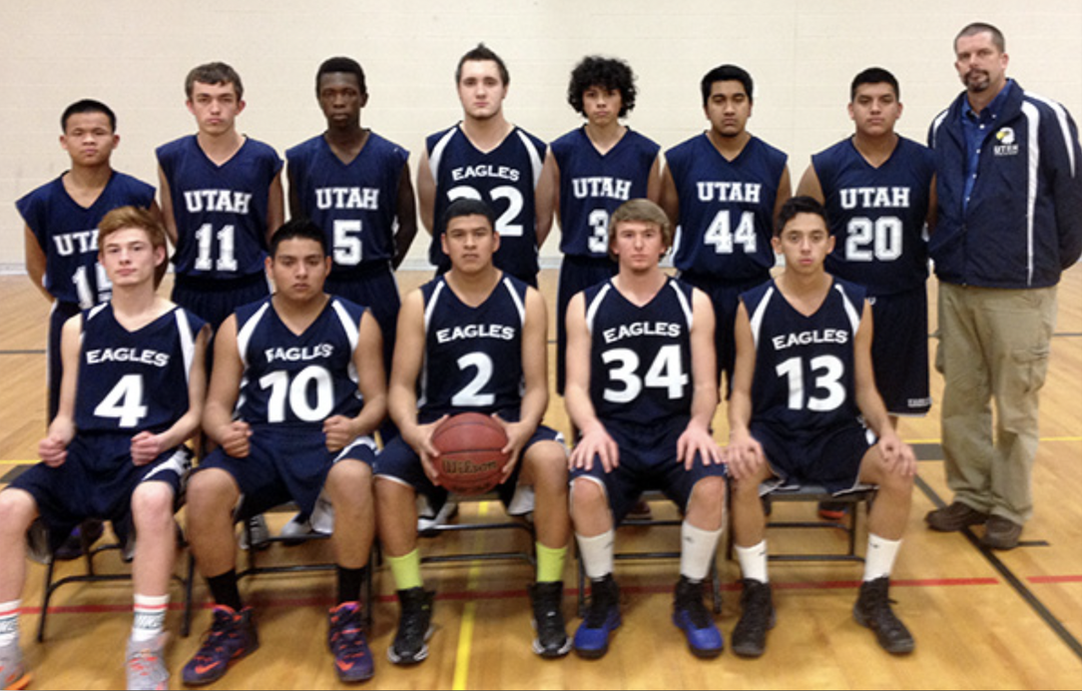
Basketball team at the Utah School for the Deaf. The athletic director and coach, Wade Hester (far right), is pictured with his boys' team. Source: UAD Bulletin, February 2015
Following Steven W. Noyce's tenure, Joel Coleman, a former member of the Utah State Board of Education, became superintendent of the Utah Schools for the Deaf and the Blind. He appointed Michelle Tanner as Associate Superintendent to oversee both academic and extracurricular programs. Their leadership contributed to the continued growth and stability of athletic opportunities for Deaf students throughout Utah.
Since 2006, the Utah School for the Deaf has maintained athletic programs that participate in UHSAA-sponsored activities in the 1A classification as well as the annual Western States Basketball and Cheerleading Classic. The program serves students from Utah's three Deaf schools: the Jean Massieu School of the Deaf in Salt Lake City, the Kenneth C. Burdett School of the Deaf in Ogden, and the Elizabeth DeLong School of the Deaf in Springville. This statewide structure allows students to compete both within Utah and against Deaf students from other states.
These athletic programs remain an important part of the Deaf educational experience. Participation in Deaf sports allows students to compete against their peers from state schools for the deaf across the western United States while building confidence, strengthening leadership skills, and fostering a sense of identity and belonging within the Deaf community.

Michelle Tanner, USD Assoc. Supt; Joel Coleman, USDB Superintendent; Carolyn Lasater, USB Assoc. Supt. Source: Twitter
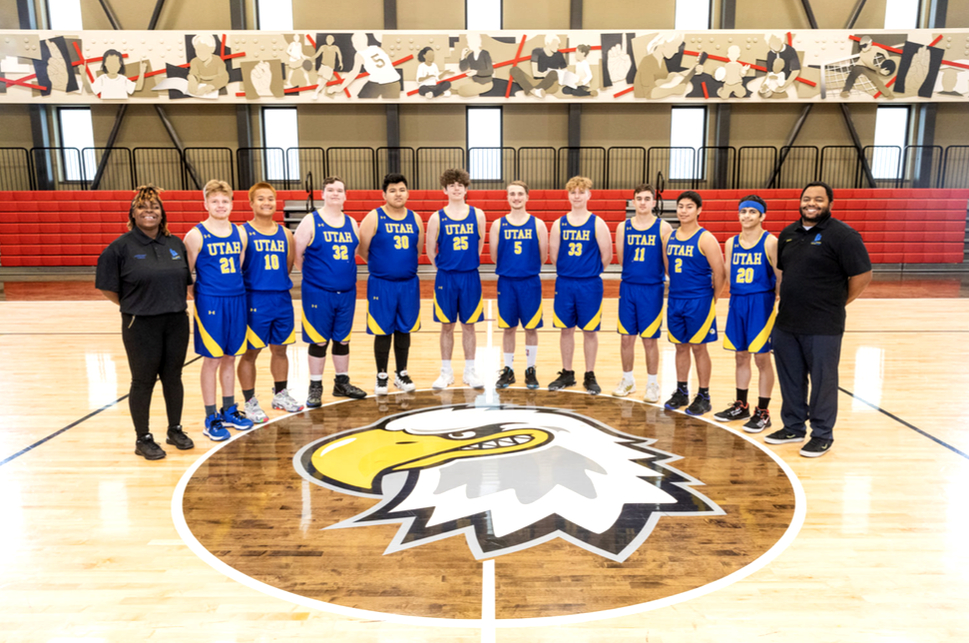
Basketball Team at the Utah School for the Deaf in 2021-22. Source: USDB website
Volleyball team at the Utah School for the Deaf volleyball team in 2021-22. Ben Lee (far right) is the head coach. Source: USDB website
Conclusion
The success of the athletic programs at the Utah School for the Deaf is largely the result of the dedication and perseverance of volunteers, coaches, parents, administrators, and community leaders such as Julio Diaz, Jill Radford, Craig Radford, Brian Thornsberry, and many others. Their collective efforts made it possible to rebuild opportunities that many feared had been lost forever.
Although athletics are not part of the formal academic curriculum, they provide students with opportunities that are every bit as valuable as classroom learning. Participation in sports teaches discipline, teamwork, leadership, responsibility, perseverance, and good sportsmanship. Just as important, athletics help students build friendships, strengthen their self-confidence, and develop a sense of belonging within the Deaf community.
Because of the commitment of dedicated volunteers, coaches, school leaders, and community members, athletic programs at the Utah School for the Deaf continue to thrive today, ensuring that future generations of Deaf students can enjoy the same opportunities, experiences, and lifelong memories that Deaf athletes have cherished for well over a century.
The Legacy of the
Utah Athletic Club of the Deaf
Author's Note
Deaf athletes from Utah, representing the Salt Lake Silent Club, participated in the earliest competitions of the Far West Athletic Association of the Deaf (FAAD). Their involvement ultimately led to the establishment of the Utah Athletic Club of the Deaf (UACD)in 1947.
A key figure in preserving the club's history was John F. "Jack" White, a devoted sports enthusiast whose dedication inspired him to collect and preserve much of the historical material featured in the Utah Athletic Club of the Deaf: 50th Anniversary Celebration, 1947-1997 program book.
Special thanks to Gary L. Leavitt for writing The Silent Sportsmanship: John "Jack" F. White, an unpublished paper prepared for a history course at the University of Utah in 2005. His work has been an invaluable resource in documenting the history of Deaf sports in Utah.
Jack White's commitment to Deaf athletics in Utah deserves special recognition. Through his efforts to collect photographs, newspaper clippings, records, and personal accounts, he preserved an important chapter of Utah Deaf history for future generations.
With permission from both authors, portions of their work have been incorporated into this biography with minor revisions.
Thank you, Jack White, for preserving this important history.
Jodi Christel Becker
The Salt Lake Silent Club is Formed
John F. "Jack" White, a 1932 graduate of the Utah School for the Deaf, played a pivotal role in the development of Deaf athletics in Utah. He founded the Salt Lake Silent Club and sponsored a basketball team that competed against teams from Fort Douglas, a military training installation near the University of Utah, as well as teams from the Salt Lake City Fire Department, Salt Lake City Police Department, and the Utah School for the Deaf.
In 1945, Deaf athletes from Utah received an opportunity to participate in regional and out-of-state competitions with other Deaf athletes. The Far West Athletic Association of the Deaf (FAAD), founded by Art Kruger, a well-known graduate of Gallaudet College, brought together Deaf athletic clubs from Washington, Oregon, California, Arizona, Idaho, Utah, and other western states. In March 1946, Kruger contacted Jack White and asked whether the Salt Lake Silent Club would participate in the FAAD basketball tournament in Los Angeles, California. He promised the team $350 if they agreed to compete against other Deaf athletic clubs. Recognizing the opportunity, Jack organized a meeting of basketball players from both Salt Lake City and Ogden.
In 1945, Deaf athletes from Utah received an opportunity to participate in regional and out-of-state competitions with other Deaf athletes. The Far West Athletic Association of the Deaf (FAAD), founded by Art Kruger, a well-known graduate of Gallaudet College, brought together Deaf athletic clubs from Washington, Oregon, California, Arizona, Idaho, Utah, and other western states. In March 1946, Kruger contacted Jack White and asked whether the Salt Lake Silent Club would participate in the FAAD basketball tournament in Los Angeles, California. He promised the team $350 if they agreed to compete against other Deaf athletic clubs. Recognizing the opportunity, Jack organized a meeting of basketball players from both Salt Lake City and Ogden.

John F. "Jack" White. Photo courtesy of the Kenneth C. Burdett Bulletin Board
The Establishment of the
Utah Athletic Club of the Deaf
At the meeting, Jack White explained Art Kruger's proposal and emphasized the importance of forming a new organization that could establish a lasting relationship with the FAAD. He initially suggested the name "Salt Lake Athletic Club for the Deaf," but players from Ogden felt that the name did not adequately represent them. After considerable discussion, the group agreed on the name Utah Athletic Club of the Deaf (UACD).
George L. Laramie was elected president and coach. Jack White became vice president and assistant coach, while Larry Anderson was appointed secretary-treasurer.
George L. Laramie was elected president and coach. Jack White became vice president and assistant coach, while Larry Anderson was appointed secretary-treasurer.

George L. Laramie. Source: The UAD Bulletin, Spring 1969
With the Los Angeles tournament approaching, the newly formed club needed a place to practice. Jack approached his hearing acquaintance, John M. Knight, Salt Lake City's Police Commissioner, and requested permission to use the police department's gymnasium at State Street and First South. After obtaining approval, the UACD team practiced there and competed against teams from the Salt Lake City Police Department, Salt Lake City Fire Department, and Fort Douglas.
As tournament time drew near, several players withdrew, leaving only six team members. Undeterred, Jack recruited additional players, including Edwin Ross Thurston, Alton Fisher of Hooper, Utah, and Jack Downey of Boise, Idaho.
When coach George Laramie became unable to travel to Los Angeles, Jack assumed coaching duties in his place. Financial challenges quickly emerged. The team lacked sufficient funds for transportation and lodging, but Jack believed strongly that the players deserved the opportunity to compete. He contributed $200 from his personal savings to cover expenses, including the $22 round-trip Greyhound bus fare and hotel accommodations. Larry Anderson drove three players in his automobile, while Ross Thurston served as the team's delegate at the tournament.
During their journey to Los Angeles, the team stopped in Las Vegas, then a small town consisting primarily of a motel and general store. From there, they continued their trip eager to compete against Deaf athletic clubs from across the West.
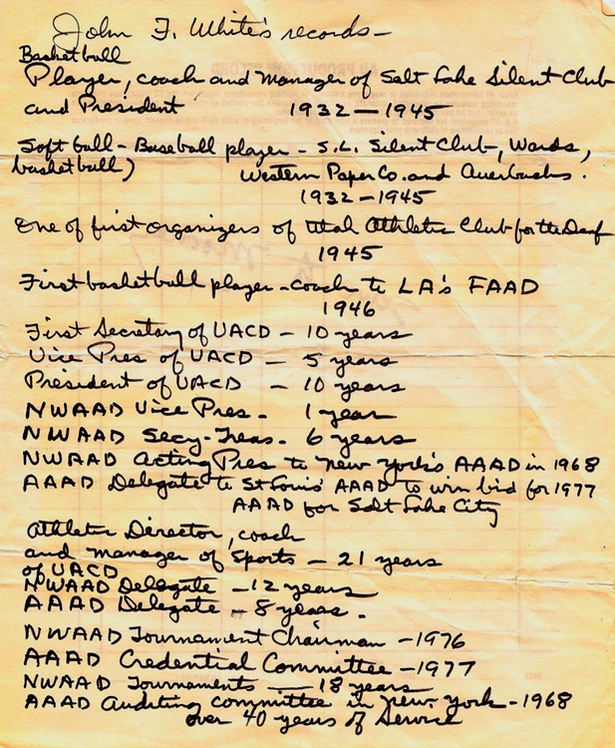
Source: John F. White’s Utah Deaf Sports Records. Courtesy of John F. "Jack" White
Despite losing four of its strongest players to the powerful Los Angeles Club for the Deaf, the UACD team demonstrated remarkable determination. After winning its first game, the team captured two additional victories and earned the tournament's consolation championship. Art Kruger honored his commitment by awarding the team $350. Of that amount, Jack White was reimbursed $200 for his personal contribution, while the remaining $150 was deposited into the UACD treasury.
In 1947, Oakland, California, hosted the FAAD basketball tournament. Under Jack White's leadership, UACD won the consolation bracket, defeating Hollywood 46-44 and San Francisco 32-15. Although the club did not win the overall championship, its strong performance earned UACD the privilege of hosting the 1948 FAAD tournament in Salt Lake City on February 27 and 28.
Ross Thurston was appointed chairman of the 1948 tournament and assembled a committee that included Larry Anderson (secretary and program), Jack White (entertainment), Rodney Walker (treasurer), Eugene Plumby (trophies), George L. Laramie (reservations), Earl P. Smith (concessions), Joseph Burnett (Ogden entertainment), and Earl Rogerson (Ogden entertainment). UACD trustees included Verl W. Thorup, Catherine J. Morgan, and Gladys Hind.

Edwin Ross Thurston
The tournament was held at Deseret Gymnasium, located at 37 College Place in Salt Lake City. To finance the event, the committee paid $200 to rent the gymnasium and organized fundraisers that included raffle ticket sales, parties, and dinners. Many of these activities took place in downtown Salt Lake City near the area where the Church Office Building now stands (White, 1997; Gary L. Leavitt, 1995; Walker, 2006).
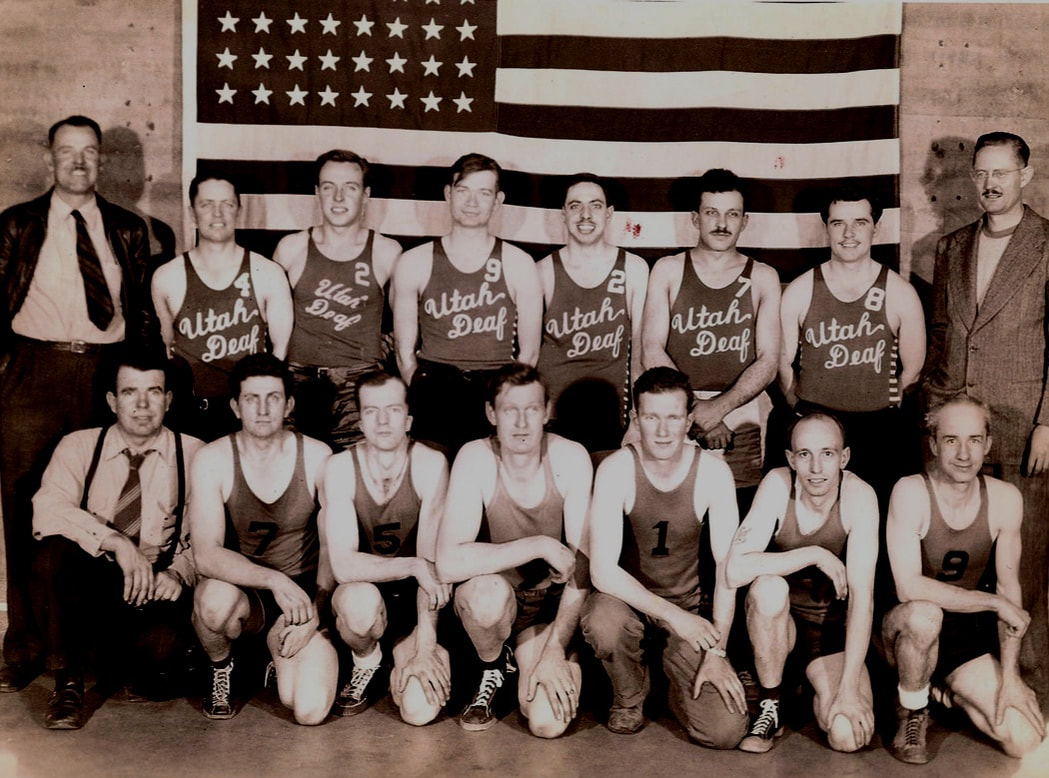
The Utah Athletic Club of the Deaf team in Oakland, California in 1947. Photo courtesy of John F. "Jack" White
In 1957, UACD left the FAAD region and joined the newly formed Northwest Athletic Association of the Deaf (NWAAD). Team members were responsible for paying for their own transportation, lodging, and meals as they traveled throughout California, Idaho, Oregon, Washington, and Canada to compete.
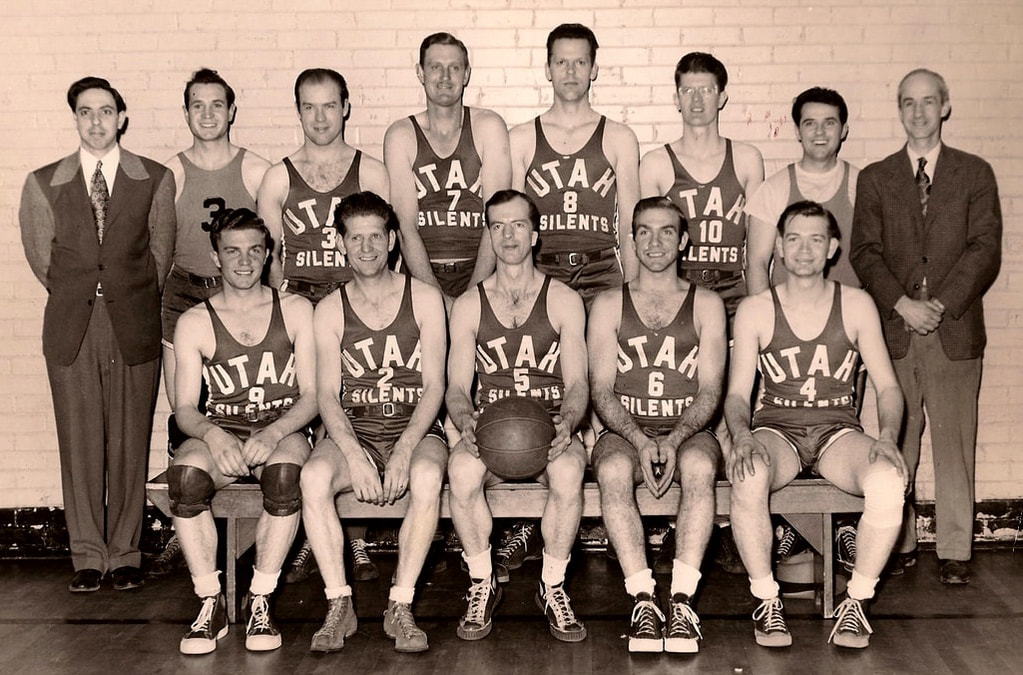
The Utah Athletics Club of the Deaf Team at the Far West Athletic Association of the Deaf Tournament in Salt Lake City, Utah, in 1948. Standing L-R: Eugene Phumby (Coach), Lloyd Perkins, Larry Anderson, Clem Sefvy, Phil Thornton, Don Jacobs, Shirley Barney, Jack White (manager). Seated L-R: Ronald Bess, Paul Gines, Paul Wood, Kird Allred, Bruce Eyre. Photo courtesy of John F. "Jack" White
A simple invitation to attend a UACD meeting led Rodney W. Walker to become involved with the organization. In 1958, he was elected president and remained in that position for ten years. One of his most significant accomplishments was proposing the creation of a UACD newsletter. His wife, Georgia Hendricks Walker, served as editor and publisher. Annual membership dues were only one dollar, and the club welcomed anyone interested in participating in activities such as basketball, bowling, and softball. The newsletter significantly increased awareness of the organization and helped membership grow from approximately 175 members to three or four times that number (Walker, 2006).
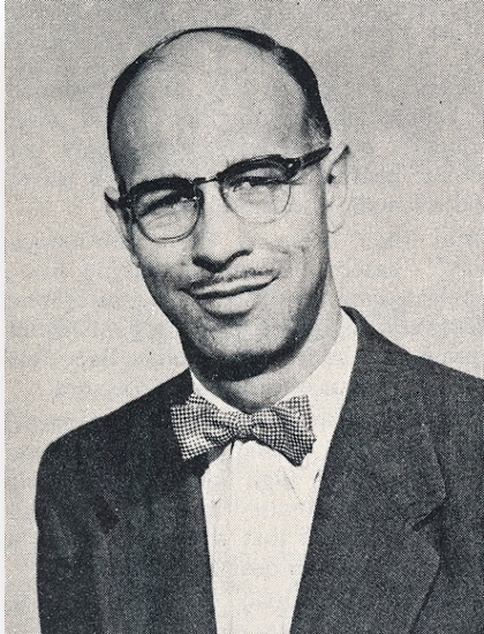
Rodney W. Walker. Source: The Utah Eagle, April 1955
|

Gerogia Henricks Walker
|
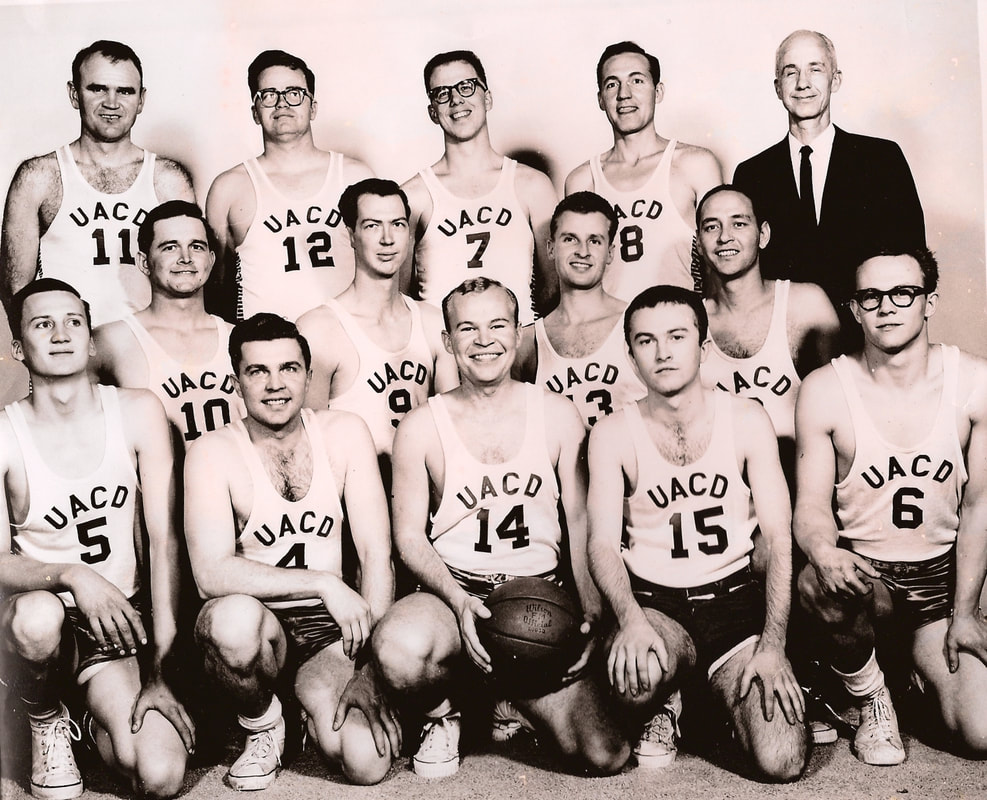
The Utah Athletics Club of the Deaf team at the Northwest Athletic Association of the Deaf Tournament in Salt Lake City, Utah, in 1962. Front row L-R: R: .J. Christensen, R. Bess, R. Potter, K. Stewart, R. Kerr; 2nd Row L-R: R. Johnston, R. Bonnell, V. Jones, A. Valdez; 3rd row, L-R: R. Loveland, K. Nelson, L. Curtis, B. Harvey, John F. White (manager/coach). Photo courtesy of John F. "Jack" White

With minutes to go and Seattle coasting along with a comfortable lead, Utah's basketball team takes time out. Coach John "Jack" White offers Jerry Schwab, left, solace in the orange segment; Arthur Valdez strikes a pensive pose; Paul Loveland sinks in despondency; Leon Curtis wants the crying towel; and Jay Christensen holds his head, trying to forget the whole thing. Cheer up, boys, it's Seattle in '63, and revenge can be sweet! Photo by Keith Nelson. Source: The UAD Bulletin, Spring 1962
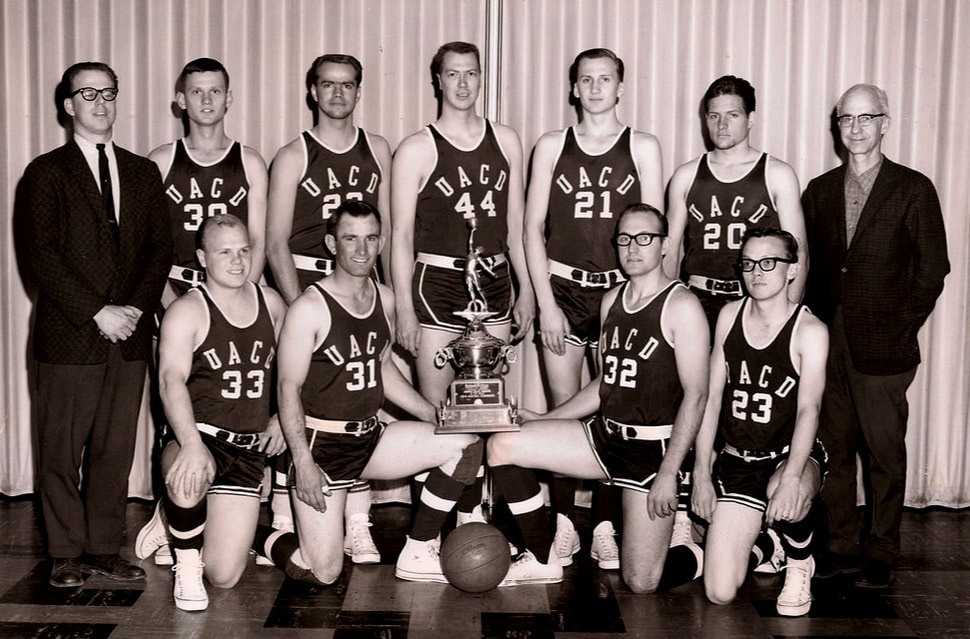
The Utah Athletics Club of the Deaf basketball team at the Northwest Athletic Association of the Deaf Tournament, pose with trophies in Philadelphia, Penn, in 1964. Kneeling L-R: R. Per·kins, E. Bell, B. Harvey, R. Cochran, Standing, L-R:
L. Curtis, E. Pzybyla, N. Williams, R. Bonnell, J. Christensen, J. Murray, John F. White (asst. coach/manager). Photo courtesy of John F. "Jack" White

The Utah Athletics Club of the Deaf basketball team at the Northwest Athletic Association of the Deaf Tournament in Philadelphia, Penn, in 1964. Jay Christensen (standing) and Robert Bonnell (sitting). Photo courtesy of John F. "Jack" White

The The Utah Athletics Club of the Deaf basketball team in 1964. District champs of Northern Athletic Association, pose with trophies: front from left, Roy Cochran, Roy Milborn, Carl Obson, middle: Bruce Harvey, Ronald Perkins, Leon Curtis, coach: Ed Bell, John White, manager: back, Norman Williams, Robert Bonnell, Jay Christensen, Eric Przybyla, and John Murray. Source: The UAD Bulletin, February 1964. Photo courtesy of John F. "Jack" White

'Utah Team Nabs Casaba Title In Coast Meet.' Source: The Salt Lake Tribune, February 25, 1964
The Incorporation of the Utah Athletic Club
of the Deaf Under Utah State Laws
In 1970, the Utah Athletic Club of the Deaf became officially incorporated under Utah law. Since that time, the organization has maintained affiliations with numerous regional and national Deaf athletic organizations while continuing to promote Deaf sports throughout Utah.
Over the years, the club's programs expanded beyond basketball to include softball, volleyball, flag football, golf, skiing, and snowboarding. Through these activities, the UACD has provided generations of Deaf athletes with opportunities for competition, leadership, friendship, and community involvement, while preserving Utah's rich tradition of Deaf athletics.
Over the years, the club's programs expanded beyond basketball to include softball, volleyball, flag football, golf, skiing, and snowboarding. Through these activities, the UACD has provided generations of Deaf athletes with opportunities for competition, leadership, friendship, and community involvement, while preserving Utah's rich tradition of Deaf athletics.
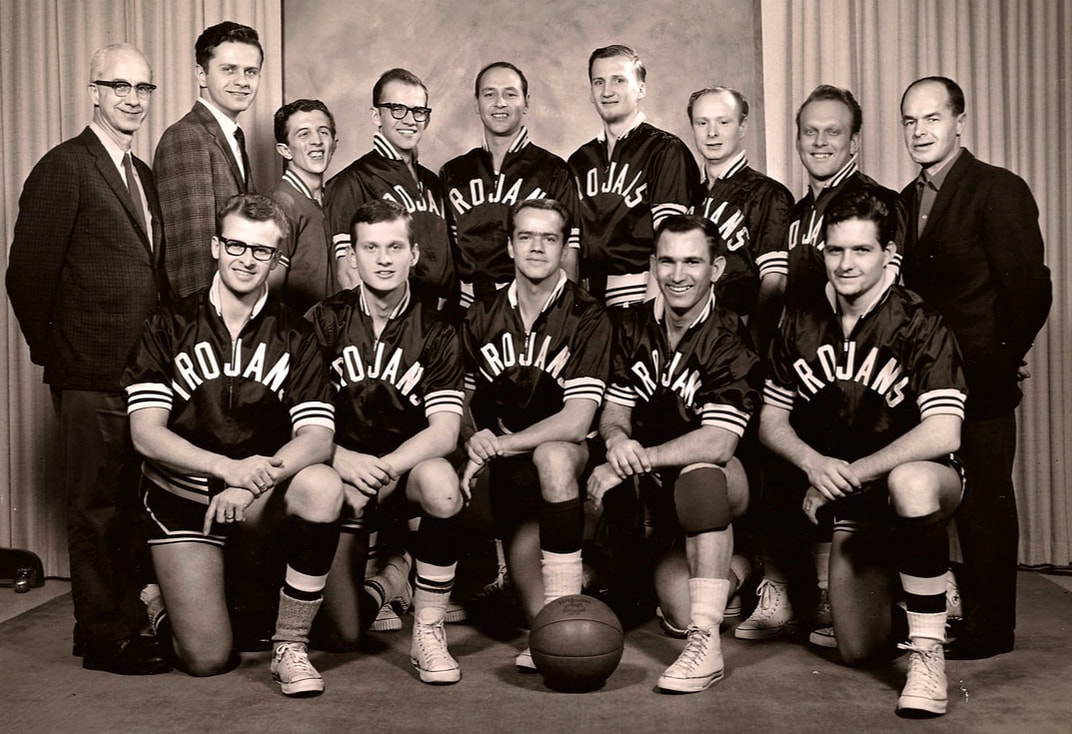
The Utah Athletics Club of the Deaf basketball team at the Northwest Athletic Association of the Deaf Tournament, pose with trophies in Philadelphia, Penn in 1964. Kneeling, L-R: R. Perkins, E. Bell, B. Harvey, R. Cochran, Standing, L-R: Leon Curtis, E. Przybyla, N. Williams, R. Bonnell, J. Christensen, J. Murray, John F. White (asst. coach/manager). Photo courtesy of John F. "Jack" White

The Utah Athletics Club of the Deaf basketball team in the 1960s. Photo courtesy of John F. "Jack" White

In the 1960s, the Utah Athletics Club of the Deaf had a basketball team. Front Row L-R: Jay Christensen, Randy Sobieski, Norman Williams. Middle Row L-R: Robert Kerr, John O'Neal, John Murray, Eric Przybyla, Robert Cillespie, Steve Marlock, Paul Loveland. Back row L-R: Thomas Adams, Jack Imhoff, Jerry Roach, John "Jack" White, Leo Duran, and Lynn Losee. Source: UAD Bulletin, Winter 1970
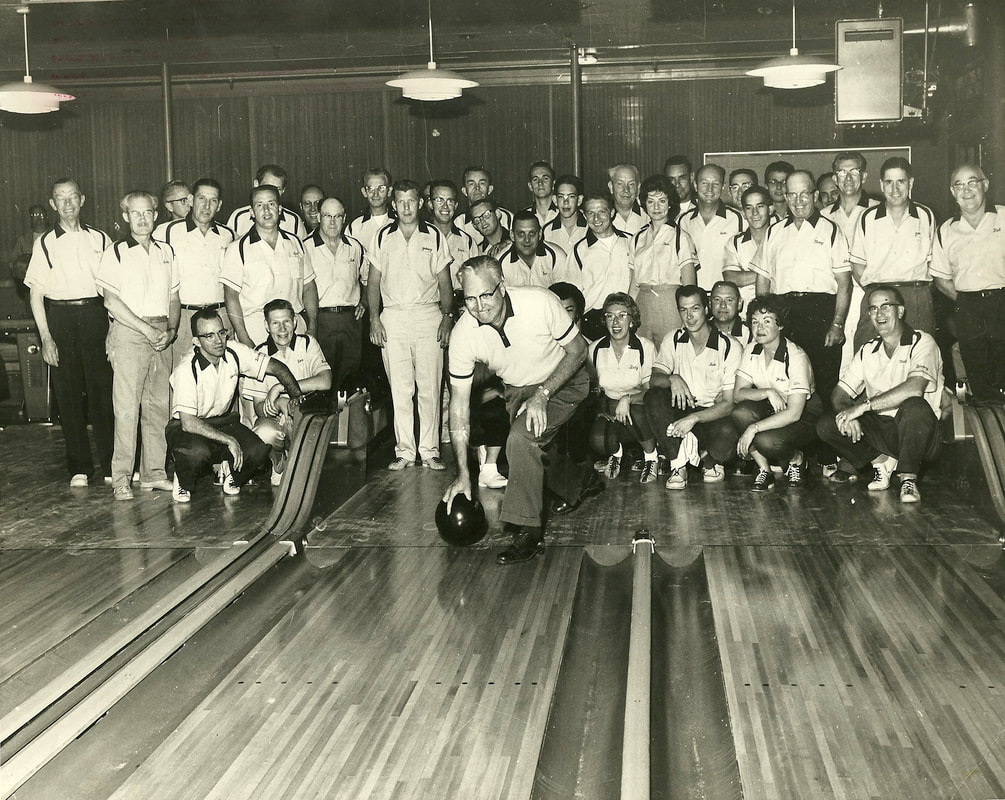
The Utah Athletic Club of the Deaf's bowling team. The members of the UACD gathered to watch him bowl. Photo courtesy of John F. "Jack" White

The Utah Athletic Club of the Deaf's basketball Team in the 1970s. Photo courtesy of John F. "Jack" White

The Utah Athletic Club of the Deaf Team's basketball team in the 1970s. Photo courtesy of John F. "Jack" White
Presidential Awards Given
to Utah Athletic Club of the Deaf
On September 27, 1997, Nancy O'Brien chaired a special celebration at the Ramada Inn in downtown Salt Lake City, Utah, commemorating the 50th anniversary of the Utah Athletic Club of the Deaf (UACD). The event honored the club's rich history and recognized five outstanding athletes with awards celebrating their achievements. In recognition of the UACD's fifty years of service to Deaf athletics, the Utah Association of the Deaf presented the organization with a Presidential Award, which UACD Secretary Nancy O'Brien accepted on behalf of the club.

Nancy O'Brien. Source: Utah Athletic Club of the Deaf: 50th Anniversary Celebration 1947–1997 Program Book
In 2002, the Utah Association of the Deaf presented its President's Award to the UACD women's basketball team for its outstanding performance at the USA Deaf Basketball National Tournament in Indianapolis, Indiana. This accomplishment was particularly significant because it marked the first time a Utah women's basketball team had competed in the national tournament, demonstrating the athletes' dedication, perseverance, and skill (UAD Bulletin, May 2002).
Andrea Garff Anderson, a 1995 graduate of the Idaho School for the Deaf and a member of the UACD women's basketball team, proudly accepted the award on behalf of her teammates (UAD Bulletin, September 2002).
Andrea Garff Anderson, a 1995 graduate of the Idaho School for the Deaf and a member of the UACD women's basketball team, proudly accepted the award on behalf of her teammates (UAD Bulletin, September 2002).

Justin and Andrea Garff Anderson. Photo provided by Andrea Garff Anderson
UCAD President Justin Anderson Shares His Vision
"My vision is to preserve the strong and rich legacy of Utah Athletic and to pass its traditions and successes on to future leaders and athletes.
We want to maintain the distinction of being the oldest active Deaf athletic club in the United States.
We want to continue building a strong amateur sports organization for Deaf people, especially Deaf youth."
— Justin Anderson, President, Utah Athletic Club of the Deaf
We want to maintain the distinction of being the oldest active Deaf athletic club in the United States.
We want to continue building a strong amateur sports organization for Deaf people, especially Deaf youth."
— Justin Anderson, President, Utah Athletic Club of the Deaf
Conclusion
John "Jack" F. White was a pivotal leader in the history of the Utah Athletic Club of the Deaf whose contributions extended far beyond athletics. Through his leadership, dedication, and vision, the UACD flourished and established a lasting foundation for Deaf sports in Utah.
For generations, the Utah Athletic Club of the Deaf has united athletes, promoted healthy lifestyles, and created opportunities for Deaf individuals to compete, socialize, and build lifelong friendships. The organization has also fostered leadership, community involvement, and a strong sense of Deaf identity.
The legacy established by Jack White and carried forward by subsequent generations of volunteers, athletes, and leaders continues today. Deaf sports have played a vital role in strengthening Utah's Deaf community, and through the ongoing work of the UACD, that proud tradition remains alive for future generations.
The Legacy of the Golden
Spike Athletic Club of the Deaf
Discussions about forming the Golden Spike Athletic Club of the Deaf (GSACD) began in the locker room of the Utah School for the Deaf in Ogden, Utah, during the fall of 1971. After spending several years competing with the Utah Athletic Club of the Deaf in Salt Lake City, a group of athletes from the Ogden area explored the possibility of establishing their own athletic club. Creating a club closer to home would save Ogden athletes both time and travel expenses.
The vision and dedication of G. Leon Curtis and Dennis R. Platt ultimately led to the club's formation. Dennis proposed the name Golden Spike Athletic Club of the Deaf (GSACD) in recognition of the Golden Spike region, where Ogden served as a major hub within the historical Golden Spike Empire (Tenth Anniversary Celebration Program Book; Golden Spike Athletic Club of the Deaf: 25th Anniversary Celebration Program Book).
The vision and dedication of G. Leon Curtis and Dennis R. Platt ultimately led to the club's formation. Dennis proposed the name Golden Spike Athletic Club of the Deaf (GSACD) in recognition of the Golden Spike region, where Ogden served as a major hub within the historical Golden Spike Empire (Tenth Anniversary Celebration Program Book; Golden Spike Athletic Club of the Deaf: 25th Anniversary Celebration Program Book).

G. Leon Curtis. Source: The UAD Bulletin, Winter 1964
On January 20, 1972, GSACD held its first organizational meeting at the Weber County Library, marking a significant milestone in the club's history. During the meeting, C. Roy Cochran was elected president, Ronald Johnston vice president, Dennis R. Platt secretary, and Tom Starkey treasurer. According to the Tenth Anniversary Celebration Program Book, the group raised $25.00 on its first night.
Much like the Utah Athletic Club of the Deaf, GSACD soon became one of the most respected organizations in the Northwest Athletic Association of the Deaf (NWAAD) region. The NWAAD encompassed Montana, Idaho, Oregon, Washington, Northern California, and portions of western Canada, including Vancouver, British Columbia, and Edmonton, Alberta. GSACD's long-standing membership in both the NWAAD and the American Athletic Association of the Deaf demonstrated its importance within the broader Deaf sports community (Tenth Anniversary Celebration Program Book).
GSACD organized a variety of athletic activities for its members, including horseshoes, volleyball, softball, and golf. For many years, both men and women from the club competed in the Ogden City softball league. Participation in the league helped prepare athletes for the annual NWAAD softball tournament, where GSACD members consistently demonstrated their athletic ability and sportsmanship (Golden Spike Athletic Club of the Deaf: 25th Anniversary Celebration Program Book).

Dennis R. Platt, UAD President. Source: UAD Bulletin, Winter 1970
The 1974 NWAAD Softball Tournament, hosted by the Utah Athletic Club of the Deaf, marked an important milestone because it introduced softball as a new NWAAD sport. GSACD advanced to the championship game against the defending Seattle team. Although GSACD finished in second place, its successful tournament run showcased the club's growing competitiveness and dedication to Deaf athletics (Tenth Anniversary Celebration Program Book).
GSACD also made a lasting contribution to Deaf sports by hosting five Northwest Athletic Association of the Deaf tournaments. According to the Golden Spike Athletic Club of the Deaf: 25th Anniversary Celebration Program Book, the club hosted softball tournaments in 1978, 1986, 1992, and 1996, as well as the basketball tournament in 1980. These events reflected the club's commitment to serving both Deaf athletes and the wider Deaf community.
The 1980 NWAAD Basketball Tournament demonstrated GSACD's resilience and determination. After narrowly losing its opening game to Sacramento by a score of 57-54, the team rebounded strongly. Nathaniel Cannon scored an impressive 40 points in the opening game and accumulated 92 points throughout the tournament. His outstanding performance earned him a place on the First Team NWAAD All-Star Team, and he missed being named Most Valuable Player by only one vote. Although GSACD finished in fifth place, the team captured the consolation trophy and earned the respect of competitors throughout the tournament (Tenth Anniversary Celebration Program Book).

Source: Tenth Anniversary Celebration: Golden Spike Athletic Club of the Deaf: 1972-1982
Over time, GSACD evolved beyond athletics and became an important social center for Deaf individuals and families throughout Northern Utah. The club pursued two primary goals: promoting physical fitness and encouraging participation in sports and recreational activities for individuals of all ages.
Monthly activities included attending ice hockey games, tubing, roller skating, bowling, volleyball, basketball, softball, swimming, and camping. Members also enjoyed picnics, holiday celebrations, and movie nights. Through these activities, GSACD fostered friendships, strengthened community connections, and created opportunities for Deaf individuals and families to socialize in an inclusive and welcoming environment.
Monthly activities included attending ice hockey games, tubing, roller skating, bowling, volleyball, basketball, softball, swimming, and camping. Members also enjoyed picnics, holiday celebrations, and movie nights. Through these activities, GSACD fostered friendships, strengthened community connections, and created opportunities for Deaf individuals and families to socialize in an inclusive and welcoming environment.

Source: Golden Spike Athletic Club of the Deaf: 25th Anniversary Celebration: January 20, 1972-January 18, 1997
The Formation of the Wasatch Golf Association of the Deaf
The Wasatch Golf Association of the Deaf (WGAD) was established on September 13, 1980, at Schneiter's Riverside Golf Course in Ogden, Utah. The idea originated when George Wilding posed a simple question to his friends Robert DeSpain, Dennis Platt, and Fred Bass:
"Why don't we establish a Deaf golf club?"
The group immediately embraced the idea, and the Wasatch Golf Association of the Deaf was born.
The organization's primary goal was to promote golf within Utah's Deaf community and encourage Deaf individuals to participate in the sport. To achieve this goal, WGAD organized monthly golf outings at courses throughout northern Utah, the Salt Lake Valley, and Eagle Mountain, providing members with opportunities to develop their skills and enjoy friendly competition.
One of the organization's most significant events is the Robert G. DeSpain Memorial Tournament, named in honor of Robert G. DeSpain, one of WGAD's co-founders. While anyone may join WGAD and participate in its activities, players must complete five rounds of golf with a WGAD member before becoming eligible to compete in the Robert G. DeSpain Memorial Tournament.
In addition to organizing local tournaments, WGAD members have competed in the DeafNation Golf Classic, giving participants the opportunity to test their skills against Deaf golfers from across the nation while competing for awards and recognition.
Through its tournaments, monthly outings, and dedication to promoting the sport, the Wasatch Golf Association of the Deaf has provided Deaf golfers in Utah with opportunities for recreation, competition, friendship, and community involvement for more than four decades.
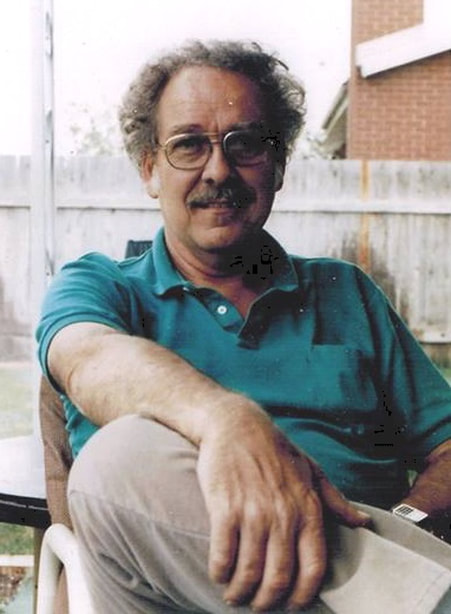
George Wilding
Dennis R. Platt as an Olympic Torchbearer
In 1996, a panel of community leaders from Ogden and Weber County selected Dennis R. Platt to carry the Olympic Flame. Dennis was a respected leader in the Utah Deaf community and had devoted many years of service to the American Athletic Association of the Deaf (AAAD). He was chosen from among 5,500 individuals considered for the honor because he exemplified the qualities identified by the Ogden selection committee.
The committee's criteria included:
The committee's criteria included:
- Outstanding volunteer service;
- Leadership as a community leader, role model, or mentor; and
- Demonstrated generosity, kindness, and extraordinary achievements at the local or national level (UAD Bulletin, February 1996; Shirley Hortie Platt, e-mail message to Jodi Christel Becker, January 6, 2015).

Source: 1996 Olympic Torch Relay: Dennis R. Platt of Ogden, Utah
On May 10, 1996, Dennis carried the Olympic torch along Washington Boulevard from 34th Street to 37th Street in Ogden, Utah. His participation brought the excitement and spirit of the Olympic Games to the local Deaf community. During the ceremony, his granddaughter, Marissa Tarbet, proudly carried the Olympic flag in front of the American Athletic Association of the Deaf offices on 36th Street (UAD Bulletin, July 1996, p. 11).
Dennis's selection as a torchbearer reflected decades of dedicated service to Deaf athletics. In 1999, he was inducted into the American Athletic Association of the Deaf Hall of Fame as a leader in recognition of his many contributions. Over a twenty-five-year period, he served the organization in numerous capacities and played an important role in helping AAAD grow into a strong national organization that benefited Deaf athletes across the United States (UAD Bulletin, December 1999, p. 5).
Among his many contributions to AAAD were:
- AAAD Vice President of NSOs (1991-1994)
- AAAD Vice President for Financial Affairs (1994 – 1997)
- AAAD Ad Hoc Committee to establish women’s softball
- AAAD Restructuring Committee
- AAAD Law Committee member (eight years)
- AAAD Board of Director member (1980 – 1997
- AAAD Basketball/Softball Commissioner
- AAAD Regional President’s Round Table (three years)
- AAAD Grants and Planning Committee member
- AAAD Audit Committee member
- AAAD Games Preparation Committee member

Dennis R. Platt. Photo courtesy of Shirley Hortie Platt
During a particularly difficult period of organizational restructuring, many National Sports Organizations faced possible suspension, and AAAD's financial stability was uncertain. While others focused on political disagreements, Dennis quietly carried out the essential administrative responsibilities that kept the organization functioning. His steady leadership helped AAAD navigate a challenging period and continue serving Deaf athletes nationwide (UAD Bulletin, December 1999, p. 5).
Dennis also served as a leader within the Northwest Athletic Association of the Deaf (NWAAD). Between 1978 and 1997, he held various positions, including recording secretary and president, and chaired two regional basketball tournaments and one regional softball tournament. He was also the first person in any NWAAD region to utilize computers for recording tournament results. In recognition of his contributions, he was inducted into the NWAAD Hall of Fame in 1990 (UAD Bulletin, December 1999, p. 5).
After 28 years of dedicated service to Deaf sports, Dennis retired in 2002 (Shirley Hortie Platt, e-mail message to Jodi Christel Becker, January 6, 2015). His leadership, vision, and commitment left a lasting impact on Deaf athletics in Utah and throughout the nation.

Dennis R. Platt carries the Olympic torch. Photo courtesy of Shirley Hortie Platt
Conclusion
Dennis R. Platt deserves recognition for his extraordinary record of volunteer service and leadership. In addition to his work with the American Athletic Association of the Deaf, the Northwest Athletic Association of the Deaf, and the Golden Spike Athletic Club of the Deaf, he also served on numerous committees and held leadership positions within the National Fraternal Society of the Deaf's Ogden Division No. 127, the Utah Association of the Deaf, and the USDB Institutional Council.
Known for his humility and quiet dedication, Dennis consistently worked behind the scenes to strengthen organizations that benefited Deaf individuals and athletes. His contributions helped expand athletic opportunities, foster leadership, and strengthen the Utah Deaf community. The community owes a tremendous debt of gratitude to Dennis Platt for his decades of selfless service and his enduring legacy in Deaf sports.
Known for his humility and quiet dedication, Dennis consistently worked behind the scenes to strengthen organizations that benefited Deaf individuals and athletes. His contributions helped expand athletic opportunities, foster leadership, and strengthen the Utah Deaf community. The community owes a tremendous debt of gratitude to Dennis Platt for his decades of selfless service and his enduring legacy in Deaf sports.
Deaflympics
The 2005 Deaflympics
in Melbourne, Australia
In 2005, four Deaf athletes from Utah represented the United States at the Deaflympics in Melbourne, Australia: Andrea Garff Anderson (basketball), Shari Anne Ena (basketball), Sarah Parker Ruzicka (volleyball), and Nicole Banks (soccer). Their participation was a source of pride for Utah's Deaf community. Through their athletic achievements, they not only represented their state and country with distinction but also inspired future generations of Deaf athletes to pursue their dreams. Their success highlighted the importance of inclusion, representation, and excellence in international competition.

The 2005 Summer Deaflympics
in Melbourne, Australia. Top L-R Andrea Garff Anderson and Shari Anne Ena. Bottom L-R: Sarah Parker Ruzicka and Nicole Banks
The 2007 Winter Deaflympics in Utah
The 16th Winter Deaflympics was held in Utah from February 1 to February 10, 2007. The United States Deaf Sports Federation (USADSF) selected Utah as the host site for three primary reasons: the availability of world-class winter sports venues, Utah's reputation for having the "Greatest Snow on Earth," and strong support from both the Deaf and hearing communities (Ingham, 2007).

Source: 16th Winter Deaflympics: Salt Lake 2007: February 1-10, 2007
The Winter Deaflympics, which began in 1924, is the world's second-oldest international multi-sport event, following only the Olympic Games. During a press conference at Governor Jon Huntsman Jr.'s Mansion in 2005, Dr. I. King Jordan, president of Gallaudet University and honorary co-chairperson of the 16th Winter Deaflympics, emphasized the unique status of Deaf athletes. He noted that Deaf athletes are not eligible to compete in the Paralympics because they are classified as able-bodied under International Olympic Committee rules (Jarvik, Deseret News, February 17, 2005).
Dr. Jordan further explained that communication barriers can create significant challenges for Deaf athletes in traditional sporting competitions. Deaf athletes often rely on visual signals rather than whistles, starting guns, or verbal commands, making athletic competition fundamentally different from that experienced by hearing athletes.
Dr. Jordan further explained that communication barriers can create significant challenges for Deaf athletes in traditional sporting competitions. Deaf athletes often rely on visual signals rather than whistles, starting guns, or verbal commands, making athletic competition fundamentally different from that experienced by hearing athletes.

Dr. I. King Jordan. Source: Wikipedia
Snowboarder Jeff W. Pollock, who participated in several Deaflympic events, described some of these challenges. In sports such as ski racing and ice hockey, Deaf athletes depend on flashing lights, hand signals, and flags to replace auditory cues. Pollock described competing alongside hearing athletes as a sometimes "lonely" experience because communication barriers often limited interaction and equal participation (Jarvik, Deseret News, February 17, 2005).

Jeff Pollock relaxes at Brighton Ski Resort. Photo by Keith Johnson for Deseret Morning News
The Deaf community regards the Deaflympics as one of its most important international gatherings. Edward Ingham, Secretary-General of the Organizing Committee and a Utah resident, observed that the Deaflympics and the World Federation of the Deaf Congress are the two largest international events in the Deaf world. These gatherings foster global connections through shared experiences, cultural exchange, and friendship (Ingham, 2007).
Unlike many international events where participants rely heavily on interpreters, Deaflympics participants often communicate directly through sign languages. These interactions help create lasting friendships and foster a strong sense of belonging within the international Deaf community.
The Board of Directors for the 16th Winter Deaflympics included two prominent Utah Deaf leaders, Dr. Robert G. Sanderson and Ronald C. Burdett. The organizing committee also benefited from the dedicated service of numerous Utah Deaf volunteers, including Dennis and Shirley Hortie Platt, Valerie G. Kinney, Eleanor "Eli" McCowan, Wendy Osterling, Justin Anderson, Jonathon Hodson, Scott and Adele Sigoda, Keith Mischo, Susan Stokes, and Barbara Schell Bass.

Edward Ingham. Source: 16th Winter Deaflympics Program Book, 2007
During the 2007 Winter Deaflympics, approximately 400 athletes from 25 countries competed in Utah. According to Jeff Pollock, many participants communicated using International Sign, a visual communication system that draws from multiple sign languages and helps reduce communication barriers among Deaf people from different nations (Jarvik, Deseret News, January 31, 2007).
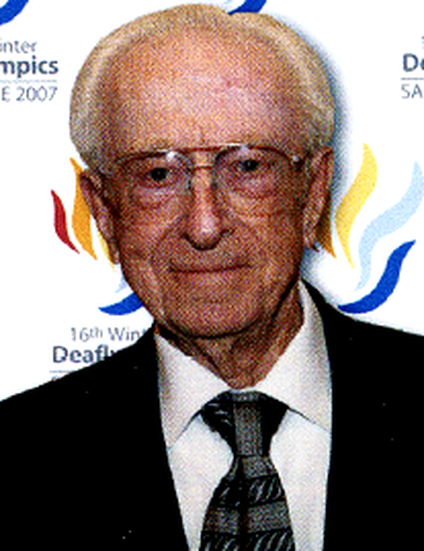
Dr. Robert G. Sanderson. Source: 16th Winter Deaflympics Program Book, 2007
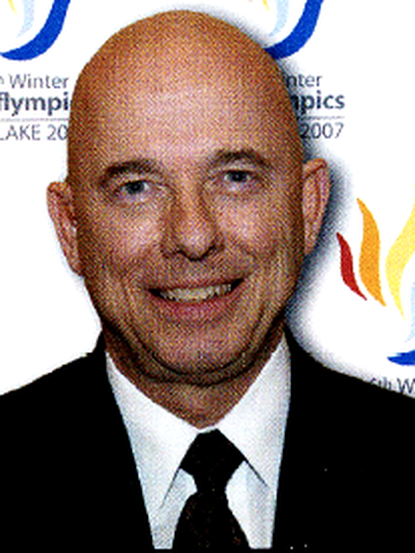
Ronald C. Burdett. Source: 16th Winter Deaflympics Program Book, 2007
Dennis Platt. Source: 16th Winter Deaflympics Program Book, 2007

Shirley Hortie Platt. Source: 16th Winter Deaflympics Program Book, 2007
Valerie G. Kinney. Source: 16th Winter Deaflympics Program Book, 2007
Jon Hudson. Source: 16th Winter Deaflympics Program Book, 2007
Wendy Osterling. Source: 16th Winter Deaflympics Program Book, 2007
Athletes competed for gold, silver, and bronze medals in five sports: alpine skiing, snowboarding, cross-country skiing, ice hockey, and curling. Ben Soukup, chairman of the 16th Winter Deaflympics Board of Directors, described the event as a once-in-a-lifetime opportunity for the world's best Deaf athletes to demonstrate their talents on an international stage (Soukup, 2007).

Ben Soukup. Source: 16th Winter Deaflympics Program Book, 2007
Utah proudly hosted this historic event, showcasing its world-renowned winter sports facilities and hospitality. Salt Lake City became the first city in the world to host all three International Olympic Committee-recognized international competitions: the Olympic Games, the Paralympic Games, and the Deaflympics. This achievement remains a significant milestone in Utah's sporting history and left a lasting positive impression on visitors from around the world.

Jeff Pollock rides his slalom snowboard at Brighton. He won medals in 1999 and 2003 Deaflympics. Photo by Keith Johnson for Deseret Morning News
The 2025 Fall Deaflympics in Tokyo, Japan
Utah's Deaf community proudly celebrated the accomplishments of three athletes who competed with the U.S. Women's Deaf National Soccer Team at the 2025 Deaflympics in Tokyo, Japan: Sophie Post, Taegan Frandsen Ferrin, and Payton DeGraw.
The team captured the gold medal by defeating Japan 4-0 in the championship match. Their victory brought pride not only to Utah but also to the broader Deaf community throughout the United States.
The U.S. Women's Deaf National Soccer Team has established an extraordinary record of success, winning Deaflympic gold medals in 2005, 2009, 2013, 2022, and 2025. Among those championship teams was Nicole Banks, a Deaf athlete from Utah who helped secure the gold medal in 2005.
With its victory on November 25, 2025, the team earned its fifth Deaflympic gold medal and eighth overall world championship in a twenty-year span, continuing a remarkable tradition of excellence. The achievements of Sophie Post, Taegan Frandsen Ferrin, and Payton DeGraw further strengthened Utah's connection to this proud athletic legacy (Becker, UAD Bulletin, January 2026).

The 2025 Fall Deaflympics in Tokyo, Japan. L-R: Taegan Frandsen, Payton DeGraw, and Sophie Post. Photo by
Joy Marshall
Utah Deaf Athletes
Marvin J. Marhall, Deaf Boxer
Marvin J. Marshall began his boxing career in 1930. Despite the challenges associated with hearing loss, he developed a passion for the sport and competed at county fairs, festivals, boys' clubs, and athletic exhibitions throughout the United States. In 1936, he won the Utah Golden Gloves 112-pound championship.
After graduating from the Utah School for the Deaf in 1942, Marvin continued boxing while attending Gallaudet College. He also coached a group of Gallaudet boxers. After graduating from Gallaudet, he retired from competitive boxing. Marvin believed that Deaf boxers must always be thoroughly prepared before entering the ring because a single punch could potentially result in a serious injury, including the loss of an eye (Strassler, Recreation & Sports).
After graduating from the Utah School for the Deaf in 1942, Marvin continued boxing while attending Gallaudet College. He also coached a group of Gallaudet boxers. After graduating from Gallaudet, he retired from competitive boxing. Marvin believed that Deaf boxers must always be thoroughly prepared before entering the ring because a single punch could potentially result in a serious injury, including the loss of an eye (Strassler, Recreation & Sports).

Marvin J. Marshall. Source: Utah Eagle, 1942
During the 1940s, Marvin won a local Golden Gloves championship and competed in the National Golden Gloves Tournament in Washington, D.C. Over the course of his career, he participated in approximately 500 amateur boxing matches. In recognition of his accomplishments, Marvin was inducted into the Gallaudet Athletic Hall of Fame in 1995 and the USA Deaf Sports Federation Hall of Fame in 2001 (USDeafSports.org).

The boxers under charge of Marvin Marshall who entered the Golden Golves are, from left to right: Edward bowman, Paul Kulas, Marvin Marshall, Bruce Eyre, Tony Jelaco, Donnie Warnick, Jerry Ryan and Lee Shepherd, 1938
Paul Franklin Baldridge, Gallaudet's Athlete
Paul Franklin Baldridge, a 1938 graduate of the Utah School for the Deaf, was one of Gallaudet College's outstanding athletes during the 1940s. He was a member of the legendary "Five Iron Men" basketball team in 1943 and served as team captain from 1942 to 1944. Throughout his collegiate career, he earned letters in multiple sports and established himself as one of Gallaudet's most respected athletes (GallaudetAthletics.com).

Paul Baldridge. Source: GallaudetAthletics.com
Paul earned his Bachelor of Arts degree from Gallaudet College in 1944 and actively participated in numerous academic and social organizations. In 1953, he received a Master of Education degree from the University of Arizona.
His distinguished 46-year career as a teacher and coach included service at Gallaudet College, the Arizona School for the Deaf and Blind, the Missouri School for the Deaf, and the Indiana School for the Deaf. Throughout his career, he influenced and inspired countless Deaf students and athletes (Obituary: Paul Baldridge). In recognition of his coaching accomplishments, the American Athletic Association of the Deaf inducted him into its Hall of Fame in 1998 (GallaudetAthletics.com).
His distinguished 46-year career as a teacher and coach included service at Gallaudet College, the Arizona School for the Deaf and Blind, the Missouri School for the Deaf, and the Indiana School for the Deaf. Throughout his career, he influenced and inspired countless Deaf students and athletes (Obituary: Paul Baldridge). In recognition of his coaching accomplishments, the American Athletic Association of the Deaf inducted him into its Hall of Fame in 1998 (GallaudetAthletics.com).

The Five Iron Men—Don Padden, Earl Roberts, Paul Baldridge, Roy Holcomb, and Hal Weingold—played for the 1943 Gallaudet team, which finished last in the Mason Dixon Conference. Amazingly, they seized victory in the conference tournament with only these five players, hence their nickname. Source: Instagram: gallaudetu
Connie Johnston, Deaf Trackster
Connie Johnston of Ogden, Utah, was one of the nation's most accomplished Deaf track and field athletes. At the 1985 World Games for the Deaf in Los Angeles, California, she captured gold medals in the heptathlon, high jump, and 4x400-meter relay.
Her outstanding performance earned her three gold medals and four world records for Deaf athletes. Connie later surpassed several of her own records in 1988 (UAD Bulletin, November 1988).
In recognition of her extraordinary athletic achievements, the USA Deaf Sports Federation inducted Connie into its Hall of Fame in 2005 as a track and field athlete (USDeafSports.org).

Connie Johnston

Deaf people participated in a broad range of sports and recreational activities. The cover features Connie Johnston at its center. Julius Donovant, a graphic artist, designed the cover. Source: Gallaudet Today, Winter 1992-93
Jeff W. Pollock, Deaflympics Snowboarder
Jeff W. Pollock is a Deaflympic snowboarder whose passion for outdoor sports brought him from Michigan to Utah in 1994. In addition to snowboarding, he enjoys skiing, skateboarding, wakeboarding, waterskiing, and motorcycling.
Since the formation of the U.S. Deaf Snowboard Team in 1998, Jeff has been one of its members. He won four medals in three Winter Deaflympics and earned additional medals in local and national United States of America Snowboard and Freeski Association (USASA) competitions.
Since the formation of the U.S. Deaf Snowboard Team in 1998, Jeff has been one of its members. He won four medals in three Winter Deaflympics and earned additional medals in local and national United States of America Snowboard and Freeski Association (USASA) competitions.

Jeff W. Pollock. Source: Sorensen VRS
Jeff competed in the Winter Deaflympics in Davos, Switzerland (1999); Sundsvall, Sweden (2003); and Salt Lake City, Utah (2007). He also planned to compete in the 2011 Winter Deaflympics in Vysoké Tatry, Slovakia, before that event was canceled.
Reflecting on his experiences as a Deaf athlete, Jeff stated:
"To be a Deaf snowboarder in a race with hearing racers is, in a single word, lonely."
He explained that Deaf athletes face unique challenges because they cannot hear starting guns, whistles, or other auditory signals. Instead, they rely on flashing lights, flags, and hand signals to compete (Jarvik, Deseret News, January 31, 2007; Jarvik, Deseret News, February 17, 2005).

Jeff W. Pollock, former U.S. Snowboarding Olympian. Source: Instagram: usdeafskiandsnowboard
Jacob Buzianis, Deaf Kiteboarder
Jacob Buzianis discovered kiteboarding during his first lesson on a beach in Maui and quickly developed a passion for the sport. After returning to Utah, he sought out opportunities for both kiteboarding and snowkiting throughout the year.
Rather than spending time waiting in lift lines at ski resorts, Jacob embraced Utah's vast open landscapes and endless opportunities for adventure. His favorite locations include Strawberry Reservoir, Powder Mountain, the Uinta Mountains, the Wasatch Range, Park City, Alaska, and Wyoming.
Jacob continues to seek new kiteboarding and snowkiting opportunities across the United States. He encourages others to embrace the sport, stating:
"There is nothing better than feeling the wind behind you and sharing epic sessions with friends."
His Utah Snowkite website features numerous photographs and videos showcasing his adventures.

Jacob Buzianis. Source: utahsnowkite.com

Jacob Buzianis. Source: utahsnowkite.com
Aimee Walker Pond Jepson, Deaf Gymnast
Aimee Walker Pond Jepson is a former U.S. gymnast who began training at the age of seven. As a Deaf athlete with partial blindness, she is among the few athletes with disabilities to compete at both national and international levels.
Aimee graduated from Brigham Young University and later owned Champions Sports Center, a recreational and athletic facility in Saratoga Springs, Utah. In 2015, she published No Pond's Excuses: The Story of Elite Gymnast Aimee Walker-Pond through Impact Publishing.
Throughout her life and athletic career, Aimee has emphasized the importance of maintaining a positive attitude. As she often says:
"Attitude is everything."
Her perseverance and accomplishments continue to inspire athletes both within and beyond the Deaf community (Taylor, Deseret News, January 26, 2016).

Aimee Walker-Pond. Source: The Daily Universe
Conclusion
The history of Deaf sports in Utah is filled with remarkable athletes, dedicated leaders, and inspiring achievements. From boxing champions and collegiate athletes to Deaflympians, snowboarders, kiteboarders, gymnasts, and community sports leaders, Utah's Deaf athletes have demonstrated perseverance, determination, and excellence across generations.
It has been a privilege to document and preserve this history. In addition to researching these athletes, I have digitized and uploaded historical materials related to the Utah Athletic Club of the Deaf and the Golden Spike Athletic Club of the Deaf. My hope is that these resources will help make Utah's rich Deaf sports history accessible to current and future generations.
I invite you to explore these materials and discover the remarkable stories, accomplishments, and traditions that continue to shape Deaf athletics in Utah.
ARCHIVES
The following historical materials from the Utah Athletic Club of the Deaf and the Golden Spike Athletic Club of the Deaf have been digitized and uploaded to this webpage for preservation and public access.
Enjoy exploring the rich history of Deaf athletics in Utah!
Enjoy exploring the rich history of Deaf athletics in Utah!
Personal Communication
Dale R. Cook, Paul Arthur, and Linda (Snodgrass) James, e-mail message to Jodi Christel Becker, May 29, 2011.
Jerry Taylor, e-mail message to Jodi Christel Becker, February 2012.
Julio Diaz, Jr., e-mail message to Jodi Christel Becker, October 2010.
Kenneth L. Kinner, personal communication with the author, 2008.
Kenneth L. Kinner, personal communication with the author, 2010.
Kenneth L. Kinner, personal communication with the author, May 14, 2011.
Mike Hillstrom, e-mail message to Jodi Christel Becker, May 30, 2014.
Norman Williams, personal communication, May 8, 2012.
Ruth Taylor, e-mail message to Jodi Christel Becker, February 11, 2015.
Shirley Hortie Platt, e-mail message to Jodi Christel Becker, January 6, 2015.
Sources
"A Chance to Compete." Sights & Sounds (May 2008): 12.
"Awards/Honors." UAD Bulletin, vol. 23, no. 7 (December 1999): 5.
Bannister, Thomas. "USDB Update." UAD Bulletin, vol. 12, no. 10 (February 1989): 2.
Becker, Jodi Christel. "The U.S. Women's Deaf National Soccer Team Wins a Gold Medal." UAD Bulletin (January 2026): 2.
"Combined Ogden Campus for Deaf, Blind Is Sensible." Deseret News, November 4, 1988, A10.
"Connie Johnston: Athlete Inductee." USA Deaf Sports Federation. Available at: https://usdeafsports.org/about/hall-of-fame/athletes/
"Dennis Platt as Torchbearer." UAD Bulletin, vol. 20, no. 2 (July 1996): 11.
"Dennis Platt Named One of Community Hero Torchbearers for 1996 Olympic Torch Relay." UAD Bulletin, vol. 19, no. 9 (February 1996): 1.
Donaldson, Amy. "USDB Reviving Athletics." Deseret News, March 6, 2007, D02.
Gallaudet University. Wikipedia. Available at: https://en.wikipedia.org/wiki/Gallaudet_University
Golden Spike Athletic Club of the Deaf: 25th Anniversary Celebration. January 20, 1972-January 18, 1997.
Hillstrom, Mike. "Western States Basketball Classic." UAD Bulletin, vol. 32, no. 10 (March 2009): 1.
Jarvik, Elaine. "Utah to Host Deaflympics." Deseret News, February 17, 2005.
Jarvik, Elaine. "Deaf World Games in Utah." Deseret News, January 31, 2007.
Leers, Twila V. "Consolidation of Schools for the Deaf, Blind OK'd." Deseret News, November 4, 1988, B1.
Leavitt, Gary L. “The Silent Sportsmanship: John ‘Jack’ F. White.” Unpublished paper prepared for a history course at the University of Utah, 2005.
"Martha Hughes Cannon." Wikipedia, January 22, 2019. Available at: https://en.wikipedia.org/wiki/Martha_Hughes_Cannon
"Marvin Marshall: Athlete Inductee." USA Deaf Sports Federation. Available at: https://usdeafsports.org/about/hall-of-fame/athletes/
Montalette, Philippe. "President's Corner." UAD Bulletin, vol. 38, no. 9 (February 2015): 2.
"New Developments in Utah's Educational Programs for the Deaf." The Utah Eagle, vol. 79, no. 5 (February 1968): 13-15.
"Paul Baldridge." Gallaudet Athletics Hall of Fame. Available at: https://www.gallaudetathletics.com/hof/bios/baldridge_paul?view=bio
Paul Baldridge: Obituary.
Roberts, Elaine M. The Early History of the Utah School for the Deaf and Its Influence in the Development of a Cohesive Deaf Society in Utah, Circa 1884-1905. Thesis presented to the Department of History, Brigham Young University, August 1994.
Sanderson, Robert G. "Sports Notes." UAD Bulletin (April 1959): 2.
Strassler, Barry. "Gallaudet Had a Boxing Golden Gloves Champion." Recreation & Sports.
Tanner, Michelle. "Utah School for the Deaf Makes History." UAD Bulletin, vol. 38, no. 9 (February 2015): 1, 3.
Taylor, Madison Swensen. "'No Excuses' Tells Gymnast Aimee Walker-Pond's Story of Faith, Success Despite Trials." Deseret News, January 26, 2016.
Tegeder, Robert W. "Presenting New Faculty Members." The Utah Eagle, vol. 70, no. 8 (October 1958): 2.
Tenth Anniversary Celebration: 1972-1982. Golden Spike Athletic Club of the Deaf, Ogden, Utah, January 23, 1982.
"UAD Honors Night." UAD Bulletin, vol. 26, no. 4 (September 2002): 1.
"Utah Women Excel at USADB." UAD Bulletin, vol. 25, no. 12 (May 2002): 1.
Walker, Rodney W. My Life Story. 2006.
Wenger, Arthur. "Distinctive Features of Schools for the Deaf; No. 11: The Inspirational Side of the Utah School." The Silent Worker, vol. 33, no. 4 (January 1921): 111-113.
Wight, Ray. "Deaf Teaching Methods Debated." Ogden Standard-Examiner, October 19, 1970.
White, Jack F. Utah Athletic Club of the Deaf: 50th Anniversary Celebration, 1947-1997 Program Book.
"Who's for the Deaf?" The UAD Bulletin, vol. 2, no. 8 (Fall-Winter 1962): 2-3.
