Beth Ann Stewart Campbell: The First Nationally Certified RID Interpreter in Utah and the United States
Author’s Note
I would like to recognize Beth Ann Stewart Campbell and her remarkable contributions to the field of interpreting. I am also pleased to acknowledge my colleague, Julie Hesterman Smith, whose connection to Beth Ann through a family friend reflects the lasting relationships that help preserve our community's history.
Beth Ann achieved a groundbreaking milestone in 1965 when she became the first nationally certified interpreter through the Registry of Interpreters for the Deaf (RID) in both Utah and the United States. This historic accomplishment marked a significant turning point in the profession and stands as a lasting tribute to her pioneering spirit, leadership, and dedication to accessibility.
On August 8, 2014, UTRID honored Beth Ann with the Kim Maibaum Lifetime Achievement Award in recognition of her extraordinary service and lasting impact. As a proud Utah native and a Child of Deaf Adults (CODA), she also served as the former director of the Utah Community Center for the Deaf. Her contributions have earned the respect and admiration of both the Utah Deaf community and the interpreting profession.
Through her vision, dedication, and leadership, Beth Ann opened doors for future generations of interpreters and helped shape the development of Utah's interpreting community. Her influence continues to be felt today, and her accomplishments serve as an inspiration to us all.
It has truly been a privilege to meet and know Beth Ann. Thank you for everything you have done for our community, Beth Ann. Your legacy will continue to inspire generations to come.
Jodi Christel Becker

Beth Ann Stewart Campbell, the nation's first interpreter, receives the Kim Maibaum Lifetime Achievement Award during the UTRID banquet on August 8, 2014. She is standing next to Courtney LaDue, President of UTRID. Photo from the private collection of Jodi Christel Becker
Beth Ann Stewart Campbell's Journey to Becoming
the First Nationally Certified RID Interpreter
in Utah and the United States
the First Nationally Certified RID Interpreter
in Utah and the United States
Beth Ann Moon Stewart Campbell is recognized as the first nationally certified interpreter by the Registry of Interpreters for the Deaf (RID) in both Utah and the United States. Born in 1937 in Utah to Deaf parents, Arnold Henry Moon and Zelma Leona Lundquist, Beth Ann grew up interpreting for her family but had never interpreted for anyone outside that context.
Beth Ann's journey as an interpreter began unexpectedly when her first husband, Wayne Stewart, a police officer, asked her to interpret for a Deaf man from Colorado who had been mistreated by the Salt Lake City Police Department. The man had been handcuffed and left alone in a cell, making effective communication challenging. He was frightened and confused.
Despite her own fears and inability to find another interpreter to assist her, Beth Ann entered the police station and discovered the Deaf man sitting alone, handcuffed and frightened. Once they were able to communicate, she learned that he needed to pay a fee to secure his release (Campbell, UAD Bulletin, April 1992; Beth Ann Stewart Campbell Interview, YouTube, October 15, 2010). This experience showcased Beth Ann's courage and highlighted the challenges interpreters often face when responding to difficult situations under pressure.
In the spring of 1964, Dr. Robert "Bob" G. Sanderson, a respected leader in Utah's Deaf community, attended a workshop in Indiana titled Interpreting for the Deaf as a consultant. The workshop brought together Deaf professionals, Children of Deaf Adults (CODAs), and interpreters. Around the same time, Bob sent a letter to Deaf parents encouraging them to inform their hearing children about an upcoming interpreting workshop in Utah. Beth Ann's mother showed her Bob's flyer, which aimed to recruit and train interpreters in Utah (UAD Bulletin, Spring 1964).
At the encouragement of her mother, Beth Ann attended the workshop despite being the mother of six young children. There, she witnessed professional interpreting for the first time, an experience that had a profound impact on her. Prior to attending the workshop, she had never considered herself an interpreter (Beth Ann Stewart Campbell Interview, YouTube, October 15, 2010; Beth Ann Stewart Campbell, personal communication, September 18, 2012).
Beth Ann's life changed forever when Bob, who had her name on the workshop participant list, contacted her to interpret for him in court. She agreed and attended the hearing. This experience sparked her passion for interpreting and led her to dedicate her life to serving and advocating for Utah's Deaf community (Beth Ann Stewart Campbell Interview, YouTube, October 15, 2010).

Beth Ann Stewart Campbell. Source: UAD Bulletin, 1973
As president of the National Association of the Deaf, Bob played a crucial role in encouraging Beth Ann to pursue interpreter certification. In 1965, he urged her to take the national certification examination administered by the National Registry of Interpreters for the Deaf in Illinois, where she was the only participant from Utah.
The examination format required candidates to draw numbers from a bowl to determine their testing order. The woman seated next to Beth Ann drew number one, while Beth Ann received the highest number. The woman expressed her reluctance to go first, while Beth Ann admitted she did not want to be last. The two agreed to exchange numbers. Filled with determination, Beth Ann took the examination first and successfully passed.
Beth Ann achieved a remarkable distinction by becoming the first person to take and pass the examination, earning recognition as the first nationally certified interpreter in both Utah and the United States (Campbell, UAD Bulletin, April 1992; Beth Ann Stewart Campbell Interview, YouTube, October 15, 2010; Beth Ann Campbell, personal communication, September 18, 2012). This achievement reflected her courage, determination, and commitment to the profession.
Bob's mentorship greatly influenced Beth Ann's success. He recognized her as a tenacious advocate for Deaf individuals who was always willing to help (Sanderson, 2004). Beth Ann described Bob as her mentor and teacher, noting that he was patient, kind, and an exceptional supervisor (Campbell, UAD Bulletin, April 1992).
Bob also understood the important role interpreters play in helping Deaf individuals navigate daily life. To address the growing need for qualified interpreters, he continued organizing interpreter workshops throughout Utah. He found that, like Beth Ann, hearing children of Deaf parents often became highly effective interpreters (Trotter, Ogden Standard-Examiner, January 2, 2011).

Robert G. Sanderson. Source: UAD Bulletin, Winter 1965
Beth Ann earned her certification in 1965, just one year after the National Registry of Interpreters for the Deaf was established and several years before the organization was incorporated in 1972. Her achievement opened doors for future interpreters, advanced professional standards, and helped raise awareness of the importance of interpreting within Utah's Deaf community. Her success also reflected the lasting influence of Bob Sanderson's efforts to recruit, train, and support interpreters throughout Utah.
Throughout her career, Beth Ann worked closely with Deaf individuals, providing interpreting services in a wide variety of settings, including the legislature, courts, mental health facilities, medical facilities, and institutions of higher education. She became the first interpreter at the University of Utah and later worked full-time for the Utah Division of Rehabilitation. From 1971 to 1980, she also volunteered as an interpreter for televised evening news broadcasts.
Beth Ann's commitment to Utah's Deaf community extended far beyond interpreting. She consistently advocated for equal access, effective communication, and improved opportunities for Deaf individuals throughout the state.
Beth Ann's contributions have left an enduring mark on both the Utah Deaf community and the interpreting profession. Through her advocacy, leadership, and dedication to service, she helped expand access, improve communication, and elevate professional standards for interpreters. Her work greatly enhanced the recognition and understanding of interpreting while strengthening opportunities for Deaf individuals throughout Utah.
As a passionate advocate for the Utah Deaf community, Beth Ann earned immense respect and admiration for her accomplishments. As the first nationally certified interpreter in the United States, she opened doors for future generations of interpreters and helped ensure that the voices of Deaf individuals would be heard, understood, and valued. Her legacy continues to inspire interpreters, educators, advocates, and members of the Deaf community today.

Marjorie, Arnold, Zelma and Beth Ann Moon. Source: The Salt Lake Valley Ward for the Deaf Directory, 1972
Beth Ann Stewart Campbell's Advocacy
in the Utah Deaf Community
in the Utah Deaf Community
With Beth Ann serving as an interpreter, two prominent Deaf leaders, Dr. Robert G. Sanderson and W. David Mortensen, launched a legislative campaign to improve education and rehabilitation services for Utah's Deaf community. Their efforts ultimately led to the establishment of the Utah Community Center for the Deaf, a vital resource that has provided essential services, advocacy, and support for Deaf individuals for decades. The center was later renamed the Robert G. Sanderson Community Center of the Deaf and Hard of Hearing. The success of this effort reflected the dedication of many individuals, including Beth Ann, whose work helped strengthen and expand services for Utah's Deaf community.
Beth Ann was not only a pioneer in the interpreting profession but also a dedicated advocate for Deaf individuals throughout Utah. She served as director of the Utah Community Center for the Deaf from 1985 to 1989, where she worked to improve access to services and promote the needs of the community. She was also one of the first two hearing members elected to the board of directors of the Utah Association for the Deaf, serving from 1971 to 1981 and again from 1987 to 1990. In addition, she served as the first secretary of the Utah Registry of Interpreters for the Deaf after its establishment in 1968.
Beth Ann's leadership extended far beyond her professional responsibilities. As both an interpreter and administrator, she worked tirelessly to advocate for greater accessibility, equal opportunities, and improved services for Deaf individuals throughout Utah. Her efforts helped strengthen communication access and increase public awareness of the needs and contributions of the Deaf community.
Much of Beth Ann's advocacy took place before the passage of the Americans with Disabilities Act (ADA) in 1990, during a time when accommodations for Deaf individuals were far less common. She consistently championed the provision of qualified interpreters in educational, medical, legal, governmental, and community settings. Her dedication helped lay the foundation for many of the accessibility services that Deaf individuals benefit from today.
Beth Ann's contributions left a lasting mark on both the Utah Deaf community and the interpreting profession. Through her leadership, service, and advocacy, she helped improve access to essential services while advancing recognition of the interpreting profession. Her work continues to inspire interpreters, advocates, educators, and community leaders throughout Utah and beyond.
Beth Ann passed away on January 28, 2026, at the age of 88. We are grateful for her invaluable contributions and honor the enduring legacy she leaves behind. Her life's work improved the lives of countless Deaf individuals and strengthened the Utah Deaf community for future generations. Thank you, Beth Ann, for your dedication, leadership, and service.

Beth Ann Stewart Campbell. Photo courtesy of Sanderson Community Center

Beth Ann Stewart Campbell and Courtney LaDue, President of UTRID, presents her with an award. Photo from the private collection of Jodi Christel Becker
Additional Information
About Beth Ann Stewart Campbell
About Beth Ann Stewart Campbell
Biographies of Prominent Utah Interpreters: http://www.utahdeafhistory.com/biographies-of-prominent-utah-interpreters.html
The History of Interpreting Services in Utah: https://www.utahdeafhistory.com/the-history-of-interpreting-services-in-utah.html
Beth Ann Stewart Campbell Interview: https://www.youtube.com/watch?v=5HHj_8Uoe74
Beth Ann Stewart Campbell Interview: https://www.youtube.com/watch?v=gihyBpv-at0
The History of Interpreting Services in Utah: https://www.utahdeafhistory.com/the-history-of-interpreting-services-in-utah.html
Beth Ann Stewart Campbell Interview: https://www.youtube.com/watch?v=5HHj_8Uoe74
Beth Ann Stewart Campbell Interview: https://www.youtube.com/watch?v=gihyBpv-at0
Dr. Jay J. Campbell, a Crucial Ally
of the Utah Deaf community
of the Utah Deaf community
Throughout the history of Deaf education in Utah, a significant debate emerged between the Utah Association for the Deaf, led by Dr. Robert G. Sanderson, a prominent advocate for sign language and state schools for the deaf, and Dr. Grant B. Bitter, who championed oral and mainstream education. During this period, Dr. Jay J. Campbell, husband of interpreter Beth Ann Stewart Campbell and Deputy Superintendent of the Utah State Office of Education, played an important role in the discussion. His support of initiatives that benefited Utah's Deaf community made him a valuable ally during a pivotal chapter in the history of Deaf education.
Dr. Campbell's contributions helped shape conversations about Deaf education and services in Utah. His willingness to listen, collaborate, and support efforts that addressed the needs of Deaf individuals earned him the respect and appreciation of many within the community.
We extend our sincere gratitude to Dr. Campbell for his support of the Utah Deaf community. His dedication and contributions left a lasting impact and continue to be remembered with appreciation.
Jodi Christel Becker

Beth Ann Stewart Campbell and Jay J. Campbell. Photo by Robert L. Bonnell
"Beth Ann Campbell, my long suffering
and patient interpreter and colleague,
a tenacious advocate for the deaf,
who was always ready."
~Dr. Robert G. Sanderson~
and patient interpreter and colleague,
a tenacious advocate for the deaf,
who was always ready."
~Dr. Robert G. Sanderson~
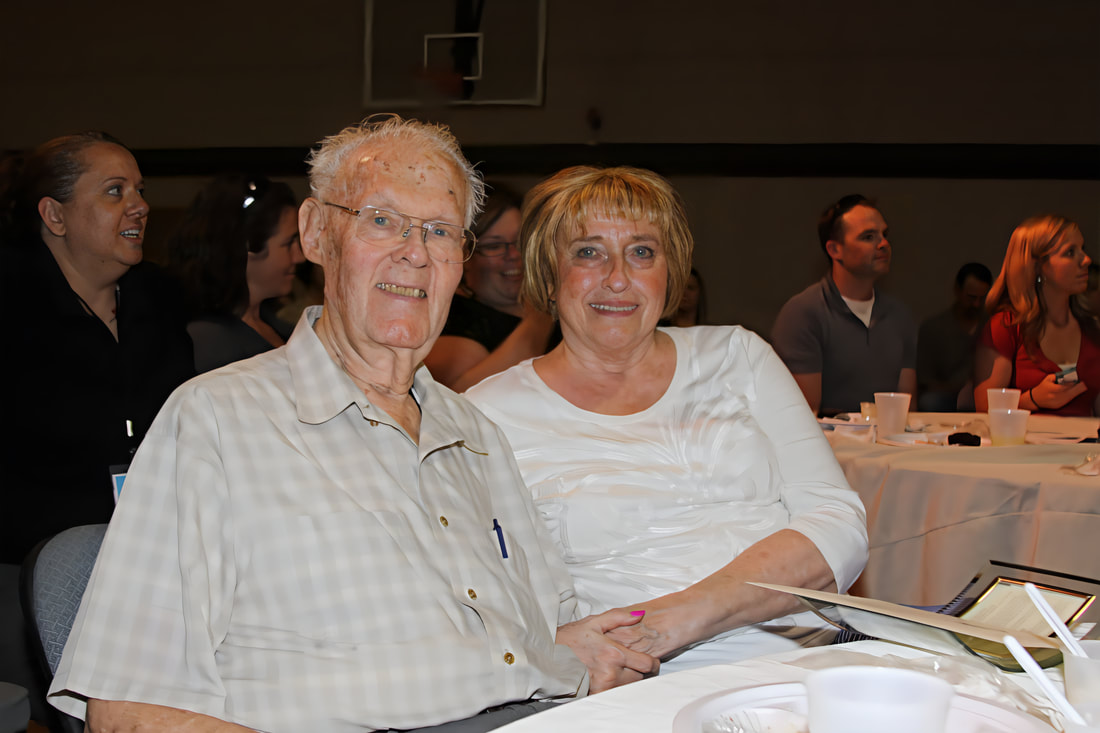
Dr. Jay J. Campbell & Beth Ann Stewart Campbell
