The History and Growth of
Interpreting Services in Utah
Compiled & Written by Jodi Christel Becker
Edited by Valerie G. Kinney
Published in 2013
Updated in 2026
Edited by Valerie G. Kinney
Published in 2013
Updated in 2026
Author's Note
As a Deaf individual, I am pleased to share the history of interpreting services in Utah. Researching this topic has provided valuable insight into the individuals and organizations that worked to expand interpreting services, improve communication access, and advocate for legislation benefiting the Deaf community.
The development of interpreting services in Utah reflects decades of dedication by Deaf leaders, interpreters, educators, and advocates. Their efforts helped expand communication access, support Deaf and hard-of-hearing individuals and families, and contribute to laws and policies that strengthened accessibility throughout the state.
While organizing my home office, I rediscovered a paper written by Dr. Robert G. Sanderson, a respected leader in the Utah Deaf community. Dr. Sanderson had shared the paper with Jean Greenwood Thomas, a former ASL interpreter and educator, who later provided me with a copy. The paper contains Dr. Sanderson's keynote remarks delivered at the Utah Registry of Interpreters for the Deaf Conference on May 12, 2005. Because of its historical value, I have included it on this webpage as an important resource documenting the early development of interpreting services in Utah.
Since its founding in 1968, the Utah Registry of Interpreters for the Deaf (URID) has played a significant role in the growth of Utah's interpreting community. The organization has supported professional development, promoted high standards of practice, and contributed to important initiatives, including the recognition of American Sign Language and efforts that led to interpreter certification requirements in Utah.
Utah has also benefited from strong interpreter education and training programs. Institutions such as the Robert G. Sanderson Community Center of the Deaf and Hard of Hearing, Salt Lake Community College, Utah Valley University, and Utah State University have contributed to the preparation of interpreters who serve Deaf and hard-of-hearing individuals throughout the state.
We also recognize the important contributions of the interpreter training programs formerly offered by Davis Applied Technology College and the VRS Interpreting Institute (VRSII) at Sorenson Communications. Although these programs have closed, their legacy continues through the many interpreters they helped prepare for service in Utah and beyond.
The history of interpreting services in Utah reflects the ongoing efforts of individuals and organizations committed to communication access, professional excellence, and service to the Deaf community. As interpreting needs continue to evolve, this history provides valuable context for understanding the development of interpreting services and the people whose dedication helped shape the profession.
In my historical work, I use first names for everyone, including men, women, and LGBTQ+ individuals, to recognize their contributions and challenge the patriarchal tradition of identifying women primarily through their spouses' surnames. This approach acknowledges individual achievements while respecting personal identity. Using first names helps make each person feel valued and recognized while highlighting the important roles women and other underrepresented individuals have played in our community's history.
Furthermore, our organization was previously known as the Utah Association for the Deaf before changing its name to the Utah Association of the Deaf in 2012. Historically, the organization was known as the Utah Association of the Deaf from 1909 to 1962. In 1963, the name changed to the Utah Association for the Deaf, and in 2012 it returned to its original name. To accurately reflect each historical period, I use both "of" and "for" throughout this website when referring to the organization.
I would also like to express my sincere appreciation to the many interpreters, Deaf leaders, educators, and advocates who have contributed to the Utah Deaf community through their professionalism, dedication, and service. Their collaborative efforts have expanded communication access, strengthened opportunities for Deaf and hard-of-hearing individuals, and helped shape the development of interpreting services throughout Utah. We gratefully acknowledge their lasting contributions to Utah Deaf history.
The history of interpreting services in Utah is ultimately a story of collaboration, advocacy, and commitment to accessibility. The efforts of Deaf leaders and interpreters have left a lasting impact on communication services, education, employment opportunities, and community life across the state. Their legacy continues to influence the interpreting profession and the lives of Deaf and hard-of-hearing Utahns today.
Thank you for taking an interest in this important aspect of Utah Deaf history.
Enjoy!
Jodi Christel Becker
Background History
of Interpreting
The Utah Deaf community, particularly Children of Deaf Adults (CODAs), has historically played a crucial role in bridging communication between Deaf and hearing individuals, often serving as interpreters in important situations. This practice remained commonplace until the establishment of the National Registry of Interpreters for the Deaf (RID) in 1964, which marked a pivotal moment in the professionalization of interpreting services. Unfortunately, many of these early interpreters received little recognition, as newspapers and historical records often referred to them simply as "interpreters." As the profession evolved, it became increasingly important to acknowledge and value interpreters, who play an essential role in enabling people from different cultures and language communities to communicate and understand one another.
Beth Ann Stewart Campbell, a Child of Deaf Adults (CODA) and sign language interpreter, noted that before the late 1950s and early 1960s, there were no formal training programs for sign language interpreters. Despite these limitations, many CODAs volunteered their interpreting services and made significant contributions to the Utah Deaf community (Stewart, UAD Bulletin, June 1973). Their efforts laid the foundation for future advancements in sign language education and interpreter training, empowering Deaf individuals to advocate for greater access and equal opportunities.
During the 1960s and 1970s, the Deaf community advocated for its rights as part of broader social justice movements. This activism contributed to the recognition of interpreters as professionals, the creation of the RID, and the development of ethical guidelines and training programs that continue to shape the profession today (Humphrey & Alcorn, 2001). This important shift recognized interpreters as essential professionals rather than simply helpers, fostering greater respect for the field and encouraging the development of standards that continue to guide interpreters today (Stewart, UAD Bulletin, June 1973).

Beth Ann Stewart Campbell. Photograph by Robert L. Bonnell
The Two Pioneering Interpreters of Utah:
Eula Rayland Pusey and Pauline
Veronica Mark Humphries
Prior to the growth of professional interpreting during the 1960s and 1970s, Eula Rayland Pusey and Pauline Veronica Mark Humphries were among Utah's earliest and most influential interpreters. As CODAs, both women grew up immersed in Deaf culture and communication, enabling them to serve as vital links between Deaf and hearing communities for decades.
Eula Rayland Pusey
Born in 1896 to Deaf parents, Fred William Ragland and Cora Jane Webb, Eula Rayland Pusey was a Child of Deaf Adults (CODA) and the eldest child in her family. At home, she communicated exclusively in sign language with her parents, an experience that gave her a deep understanding of Deaf culture and communication (The Salt Lake Tribune, April 25, 1963). Her work left a lasting impact on Utah's Deaf community and helped pave the way for future interpreters.
In 1936, Eula joined George L. Laramie, Fern Player, E. Ross Thurston, and Mrs. Joseph Taylor in helping organize the Utah Association of the Deaf Convention (Telegram, August 22, 1936). Her participation reflected the strong spirit of cooperation and leadership that characterized the Utah Deaf community during that era.
Her lifelong dedication to Deaf individuals continued through her extensive church service. In 1954, she served as an interpreter for the Salt Lake Valley Branch for the Deaf of The Church of Jesus Christ of Latter-day Saints (Deseret News, April 4, 1954). As an active church member and Relief Society secretary, she also participated in numerous church and community activities (Deseret News, November 16, 1957).

'Leaders of the ‘Eloquent Hands’ Convention. They supervise at the 1936 UAD Convention...seated Fern Player, Eula Rayland Pusey, and E. Ross Thurston. George L. Laramie, the recently elected president, and Mrs.Joseph Taylor stand together.' Source: Telegram, August 22, 1936
In 1936, Eula joined George L. Laramie, Fern Player, E. Ross Thurston, and Mrs. Joseph Taylor in helping organize the Utah Association of the Deaf Convention (Telegram, August 22, 1936). Her participation reflected the strong spirit of cooperation and leadership that characterized the Utah Deaf community during that era.
Her lifelong dedication to Deaf individuals continued through her extensive church service. In 1954, she served as an interpreter for the Salt Lake Valley Branch for the Deaf of The Church of Jesus Christ of Latter-day Saints (Deseret News, April 4, 1954). As an active church member and Relief Society secretary, she also participated in numerous church and community activities (Deseret News, November 16, 1957).
For 28 years, from 1935 to 1963, Eula interpreted temple marriage ceremonies for Deaf couples, including Kenneth K. Kinner and Ilene Coles. In addition to interpreting temple ceremonies, she provided interpreting services for Sunday School classes, guest speakers, and members of the Salt Lake Valley Branch for the Deaf. She also interpreted from a corner balcony of the Salt Lake Tabernacle during the Church's semiannual conferences (The Salt Lake Tribune, April 25, 1963).

Sign language: Eula Rayland Pusey, center secretary of the Salt Lake Valley Branch for the Deaf Relief Society of Park Stake, uses sign language while speaking of the beautiful creations displayed at the Relief Society Bazaars. On the right is Catherine J. Morgan, president, and on the left is Elsie M. Christiansen, literary teacher. Source: Deseret News, November 16, 1957
Eula also served as interpreter for Deaf leaders participating in the Study Committee in 1963 (UAD Bulletin, Fall 1963). Her contributions supported efforts led by Dr. Robert G. Sanderson to establish statewide services for Deaf individuals. Those efforts ultimately contributed to the creation of the Robert G. Sanderson Community Center of the Deaf and Hard of Hearing, which continues to serve Utah's Deaf community today.
During the 1965 session of the Utah State Legislature, Eula joined G. Leon Curtis, Eugene W. Petersen, Joseph B. Burnett, Ned C. Wheeler, and other Deaf leaders in advocating for services and funding for Utah's Deaf community. The group took unpaid leave from work and met with Governor Calvin L. Rampton to promote legislation benefiting Deaf Utahns (Curtis, UAD Bulletin, Spring 1965; Sanderson, 2004). Eula's willingness to make personal sacrifices for the benefit of the Deaf community demonstrated her unwavering dedication to public service and advocacy.
Through decades of volunteer service, interpreting, and community involvement, Eula Rayland Pusey became one of Utah's most influential early interpreters. Her legacy continues to inspire both Deaf leaders and interpreters today.

Utah Interpreters: Eva Alice McMills Prudence Fowler and Eula Rayland Pusey at The Church of Jesus Christ of Latter-day Saints Conference in the 1940s. Source: www.interpreterhistory.com/?p=992
Pauline Veronica Mark Humphries
Another pioneering Utah interpreter was Pauline Veronica Mark Humphries, who was born in 1902 to Deaf parents, Paul Mark and Theresa Maria Rasche. As the eldest child in her family and a CODA, Pauline grew up navigating both Deaf and hearing worlds. Her unique experiences provided the foundation for a lifetime of service to the Utah Deaf community.
Pauline began interpreting at an early age. At just 13 years old, she interpreted at the 1915 Utah Association of the Deaf Convention during her father's campaign for president of the organization (UAD Bulletin, Summer 1963). This experience marked the beginning of her long involvement with the Deaf community.
By 1938, Pauline had established herself as a respected interpreter throughout Utah's Deaf community (The Salt Lake Tribune, September 3, 1938). Her younger brother, Nicholas Paul Mark, later recalled that she regularly interpreted for Deaf individuals and was known throughout the community for her skill, reliability, and dedication.
Pauline spent most of her life in and around Ogden, Utah. Her father, Paul Mark, served as the second president of the Utah Association of the Deaf and operated a shoe repair business in the area. Because the Utah School for the Deaf was nearby, Pauline frequently interacted with Deaf students, alumni, and community members. These experiences strengthened her connection to the Deaf community and expanded her opportunities to serve as an interpreter.

Pauline Veronica Mark Humphries. Source: FamilySearch.org
Over the years, Pauline became a trusted and respected figure among Deaf Utahns. Through her interpreting services, she helped Deaf individuals gain access to information, communicate effectively with hearing people, and participate more fully in community life. Her contributions strengthened the connection between Utah's Deaf and hearing communities and helped establish a tradition of interpreting service that would continue for future generations (Nicholas Paul Mark, Autobiography, FamilySearch.org).
Together, Eula Rayland Pusey and Pauline Veronica Mark Humphries represent two of Utah's earliest interpreting pioneers. Long before interpreting became a recognized profession, their dedication, skill, and service helped ensure that Deaf individuals had access to communication, information, and community participation. Their contributions remain an important part of Utah Deaf history.
Together, Eula Rayland Pusey and Pauline Veronica Mark Humphries represent two of Utah's earliest interpreting pioneers. Long before interpreting became a recognized profession, their dedication, skill, and service helped ensure that Deaf individuals had access to communication, information, and community participation. Their contributions remain an important part of Utah Deaf history.

'Nimble Fingers Tell Meaning.' Pauline Mark Humphries serves as an interpreter throughout the 1938 Utah Association of the Deaf Convention. Source: Salt Lake Tribune, September 3, 1938
Gladys Burnham Wenger, Who is
Hard of Hearing, Serves as an Interpreter for
the Deaf Community in Utah
For many years, Utah's Deaf community relied on individuals who were hard of hearing and had learned sign language before using hearing aids, as well as those who had lost their hearing but developed strong oral communication skills. These individuals often served as interpreters and communication facilitators between Deaf and hearing people.
By 1961, however, the demographics of Utah's Deaf community had begun to change. The number of individuals who were born Deaf increased, while the number of those who became deaf later in life declined. During this same period, the number of Deaf individuals with multiple disabilities also increased (UAD Bulletin, Spring 1961).
As communication needs grew, Deaf leaders recognized the increasing importance of qualified interpreters. These changing circumstances contributed to the growing movement that ultimately led to the establishment of the Registry of Interpreters for the Deaf (RID) in 1964. The development of professional interpreting services helped create greater communication access and strengthened advocacy efforts within the Deaf community.

D. Hart Wenger and Gladys Burnham Wenger. Source: UAD Bulletin
The Spring 1961 issue of the UAD Bulletin emphasized the importance of involving hard-of-hearing individuals in interpreting roles. One notable example was Gladys Burnham Wenger, who was hard of hearing and served as an interpreter for both the Salt Lake Branch for the Deaf and the Utah Association of the Deaf. Despite her own hearing challenges, she was deeply committed to bridging communication gaps and supporting Deaf individuals throughout Utah.
The 1962 Student Protest at the Utah School for the Deaf further demonstrated the need for effective communication and advocacy. The protest arose in response to the dual-track policy that separated students into oral and sign-language departments at the Ogden residential campus and limited interaction between them. Following this historic event, Gladys played an important role by interpreting for Deaf officers of the Utah Association of the Deaf during meetings with Dr. Wilburn N. Ball, Utah's State Superintendent of Public Instruction. Deaf leaders valued her assistance as they advocated for educational opportunities and language access for Deaf students.
Through her service and dedication, Gladys Burnham Wenger helped strengthen communication between Deaf community leaders and government officials during an important period in Utah Deaf history.

President George Albert Smith of The Church of Jesus Christ of Latter-day Saints, dedicating Salt Lake Valley Branch for the Deaf. Gladys Burnham Wenger is interpreting his speech.
Frank W. Metcalf, Superintendent of the
Utah School for the Deaf, Serves as an
Interpreter for Deaf Students
On January 10, 1892, The Church of Jesus Christ of Latter-day Saints established a Sunday School for Deaf students attending the Utah School for the Deaf in Salt Lake City, Utah. Frank W. Metcalf, the non-Latter-day Saint superintendent of the school, volunteered to serve as an interpreter for the students.
Among those attending was Laron Pratt, who later became a prominent Deaf leader within the Deaf Latter-day Saint community. He worked alongside Charles H. Barrett, the first superintendent of the Deaf Sunday School program. Through Frank's interpreting services, Deaf students were able to participate more fully in religious instruction and community activities (The Daily Enquirer, February 11, 1892).
At a time when formal interpreting services were virtually nonexistent, Frank's willingness to volunteer his skills demonstrated an early commitment to accessibility and inclusion for Deaf students in Utah.

Frank W. Mecalf. Photo courtesy of the Kenneth C. Burdett Bulletin Board
Frank M. Driggs, the Superintendent of the
Utah School for the Deaf Serves as the
Interpreter for the Deaf Community in Utah
Frank M. Driggs served as superintendent of the Utah School for the Deaf from 1901 to 1941 and was one of the most influential hearing allies in Utah Deaf history. In addition to his administrative responsibilities, he frequently volunteered as an interpreter and advocate for the Deaf community.
Frank provided interpreting services at many important community events. In 1909, he assisted during the founding of the Utah Association of the Deaf, helping facilitate communication between Deaf leaders and hearing individuals. His support contributed to the successful establishment of what would become Utah's oldest and most influential Deaf organization.
In 1912, Frank served as interpreter during activities sponsored by the Utah Commercial Club of the Deaf. He interpreted speeches given by visiting dignitaries and hearing guests, helping Deaf attendees fully participate in the banquet and community discussions (Ogden Examiner-Standard, October 3, 1912; Salt Lake Herald Republican, October 6, 1912; UAD Bulletin, Summer 1963).
Throughout his 40 years as superintendent, Frank worked closely with Deaf students, alums, and community leaders. His ability to communicate effectively in sign language and his willingness to interpret at important events earned him the respect of Utah's Deaf community. His contributions helped strengthen relationships between Deaf and hearing communities and improved access to education, public events, and civic participation.
Long before professional interpreter training programs existed, individuals such as Gladys Burnham Wenger, Frank W. Metcalf, and Frank M. Driggs provided essential communication access for Deaf Utahns. Their dedication helped pave the way for the development of professional interpreting services and demonstrated the importance of accessible communication in all aspects of community life.

Frank M. Driggs. Source: The UAD Bulletin, Summer 1963
The National Registry of
Interpreters for the Deaf Is Born
On May 12, 2005, Dr. Robert G. Sanderson, affectionately known as "Bob," delivered a keynote address at the Utah Registry of Interpreters for the Deaf Conference. During his presentation, he shared the history of interpreting in Utah and reflected on the early days when a small group of remarkable Children of Deaf Adults (CODAs) volunteered their time and skills to support Deaf individuals long before professional interpreting became established. Their dedication and selfless service underscored the vital role community members played in providing communication access.
Bob graduated from the Utah School for the Deaf in 1936 after losing his hearing at the age of 11 due to spinal meningitis. At that time, the concept of a professional interpreter was unfamiliar to him. Most of his teachers were trained in oral education, and only a few Deaf teachers used sign language. He recalled hearing about Lucy McMills Greenwood, who interpreted for hearing individuals attending the Ogden Branch of The Church of Jesus Christ of Latter-day Saints, making her one of the few interpreters he knew of during his youth.
As a member of Gallaudet College's Class of 1941, Bob remembered that sign language was the primary mode of communication on campus. Because nearly everyone signed, interpreters were generally unnecessary. New students either adapted by learning sign language quickly or struggled to participate fully in campus life.
Bob's first personal experience using an interpreter occurred at his wedding in 1946. The interpreter was a CODA. Reflecting humorously on the experience, Bob remarked that if the officiant had been forced to write down every word instead, the ceremony might have taken so long that his Deaf bride, Mary Antonietti, could have gotten cold feet and run away (Robert G. Sanderson, May 12, 2005).

Robert G. Sanderson. Photo courtesy of Barry Sanderson
In 1964, Bob became president of the National Association of the Deaf (NAD) and began participating in workshops focused on addressing the growing need for interpreter training and professional standards.
During these workshops, he met many interpreters, most of whom were CODAs with a sincere desire to serve the Deaf community. However, he observed that there was little consistency in interpreting practices. No formal training programs or established curricula existed, and American Sign Language had not yet achieved widespread linguistic recognition. Interpreters often relied on whatever signing methods they believed Deaf people could understand, leading to ongoing discussions among Deaf adults regarding the nature and structure of sign language (Robert G. Sanderson, May 12, 2005).
At that time, Gallaudet College promoted various forms of Signed English, and many residential schools for the deaf adopted similar systems because educators believed they were more effective for teaching English. Nevertheless, Deaf people continued using the language now known as American Sign Language, even though it had not yet received formal recognition by linguists (Robert G. Sanderson, May 12, 2005).
Bob credited his close friend, Dr. Boyce R. Williams, with playing a critical role in transforming the interpreting profession. Like Bob, Boyce became deaf after contracting spinal meningitis, losing his hearing at age seventeen. After attending the Wisconsin School for the Deaf, Gallaudet College, and Columbia University, he became director of the Office of Deafness and Communication Disorders in Washington, D.C.
Boyce strongly advocated for the professionalization of interpreting. He emphasized the importance of interpreters being able to communicate fluently in both American Sign Language and English. He frequently reminded colleagues that effective interpretation required more than simply knowing signs; it required the ability to accurately convey meaning in both directions. This concept, often called reverse interpreting, helped establish expectations for interpreter competency and professionalism. His leadership played an important role in shaping modern interpreting standards (Boyce Williams, Visionary Leader, Gallaudet University, November 2014; Robert G. Sanderson, May 12, 2005).

Robert G. Sanderson, after whom the Deaf Center was named, served as the president of the National Association of the Deaf from 1964 to 1968. The September 1966 issue of the Deaf American magazine features a photo of him shaking hands with Dr. Boyce R. Williams, a Deaf and Hard of Hearing Consultant at the Vocational Rehabilitation Administration in Washington, D.C. At the convention banquet in San Francisco, California, Robert G. Sanderson announced the award and presented the first National Association of the Deaf Distinguished Service Award to Dr. Boyce R. Williams. Source: The Deaf American, September 1966. The photo was taken by Floyd Barlow.
Boyce successfully obtained funding for several workshops and research projects devoted to interpreting. A challenge soon emerged regarding how to organize and coordinate the growing body of information and training efforts. Frederick C. Schreiber, executive director of the National Association of the Deaf, suggested that those involved in interpreting establish a formal professional organization. His recommendation encouraged collaboration among Deaf leaders, interpreters, and educators, ultimately leading to the creation of an interpreter registry (Robert G. Sanderson, May 12, 2005).

Frederick C. Schreiber. Source: A Rose for Tomorrow: Biography of Frederic C. Schreibe
According to Bob, Boyce's efforts were instrumental in securing support for the groundbreaking Interpreting for the Deaf workshop, held June 14-17, 1964, at Ball State Teachers College in Muncie, Indiana. The workshop became a historic milestone in the development of professional interpreting and led directly to the establishment of the National Registry of Professional Interpreters and Translators for the Deaf (Robert G. Sanderson, May 12, 2005).
Funded through Vocational Rehabilitation and sponsored by Ball State Teachers College, the workshop brought together Deaf leaders, CODAs, interpreters, educators, and rehabilitation professionals from across the nation (UAD Bulletin, Summer 1964; Boyce Williams, Visionary Leader, Gallaudet University, November 2014; Robert G. Sanderson, May 12, 2005).
The workshop addressed communication barriers experienced by Deaf individuals and focused on improving interpreting services nationwide. Participants discussed recruitment and training of interpreters, professional responsibilities, ethical standards, and methods for improving communication access. The gathering provided a unique opportunity for stakeholders to exchange ideas, identify solutions, and establish a foundation for the future of the profession.

Boyce R. Williams and Robert G. Sanderson at the 1964 National Association of the Deaf Conference. Photo courtesy of Barry Sanderson
Among the workshop's principal objectives were recruiting and training additional interpreters, developing a code of ethics, improving communication access, and expanding services available to Deaf individuals. The workshop's success led to the formal establishment of a nonprofit interpreting organization on June 16, 1964 (The Silent Worker, July-August 1964). Over time, the organization expanded its mission and became known simply as the Registry of Interpreters for the Deaf (RID).
Approximately 90 people attended the historic workshop, including about thirty Deaf participants. Their active involvement demonstrated the Deaf community's commitment to improving communication access and professional standards. Many attendees were recognized experts in Deaf education, sign language, rehabilitation, and oral communication (UAD Bulletin, Summer 1964). Their collective efforts laid the foundation for the interpreting profession as it exists today and helped ensure greater accessibility, equality, and communication opportunities for Deaf individuals throughout the United States.
Approximately 90 people attended the historic workshop, including about thirty Deaf participants. Their active involvement demonstrated the Deaf community's commitment to improving communication access and professional standards. Many attendees were recognized experts in Deaf education, sign language, rehabilitation, and oral communication (UAD Bulletin, Summer 1964). Their collective efforts laid the foundation for the interpreting profession as it exists today and helped ensure greater accessibility, equality, and communication opportunities for Deaf individuals throughout the United States.

'National Registry of Professional Interpreters and Translators for the Deaf Established.' Source: The Silent Worker, July-August 1964
Dr. Robert G. Sanderson:
A Key Figure in the Establishment of the
Registry of Interpreters for the Deaf
In 1964, Dr. Robert G. Sanderson, known affectionately as "Bob," was invited to participate in the groundbreaking Interpreting for the Deafworkshop held at Ball State Teachers College in Muncie, Indiana. At the time, Bob was already an active member of the National Association of the Deaf (NAD) Board of Directors and a respected leader within the Deaf community. The workshop brought together approximately 90 participants, including Deaf leaders, educators, interpreters, and Children of Deaf Adults (CODAs), to address the growing need for trained interpreters and professional standards (The Silent Worker, July-August 1964; UAD Bulletin, Spring 1964; UAD Bulletin, Summer 1964; Storrer, UAD Bulletin, May 2008).
Shortly after the workshop, Bob's leadership responsibilities expanded significantly. In 1965, he became the Deaf Services Coordinator for the Utah Division of Rehabilitation and was elected president of the National Association of the Deaf. His participation in the workshop and subsequent leadership roles strengthened his influence both in Utah and nationally, particularly in the development of interpreting services (Robert G. Sanderson, May 12, 2005; Storrer, UAD Bulletin, May 2008).
Shortly after the workshop, Bob's leadership responsibilities expanded significantly. In 1965, he became the Deaf Services Coordinator for the Utah Division of Rehabilitation and was elected president of the National Association of the Deaf. His participation in the workshop and subsequent leadership roles strengthened his influence both in Utah and nationally, particularly in the development of interpreting services (Robert G. Sanderson, May 12, 2005; Storrer, UAD Bulletin, May 2008).

Dr. Robert G. Sanderson. Photo courtesy of Barry Sanderson
As president of the NAD, Bob observed growing awareness within the Deaf community regarding communication access. Workshops, conferences, seminars, government initiatives, and university research projects were increasingly focused on the communication needs of Deaf individuals. During these discussions, Deaf leaders frequently identified several important concerns regarding interpreting:
Bob noted that interpreting involved both art and science. Evaluating an interpreter's skill level was often difficult, and significant challenges confronted the profession. At the time, no standardized curriculum existed, no formal Code of Ethics had been universally adopted, and reliable testing and certification procedures had yet to be developed (Robert G. Sanderson, May 12, 2005).
Despite these challenges, Bob remained deeply supportive of interpreters and recognized the importance of their work. He emphasized the need for better training, improved professional standards, and greater support for individuals entering the field. His efforts to expand interpreting services in Utah and his participation in the establishment of the Registry of Interpreters for the Deaf reflected his lifelong commitment to improving communication access for Deaf individuals. His leadership continues to inspire both Deaf advocates and interpreting professionals today.
- Reverse interpreting skills
- Flexibility in interpreting between American Sign Language and English
- The establishment of a strict Code of Ethics
Bob noted that interpreting involved both art and science. Evaluating an interpreter's skill level was often difficult, and significant challenges confronted the profession. At the time, no standardized curriculum existed, no formal Code of Ethics had been universally adopted, and reliable testing and certification procedures had yet to be developed (Robert G. Sanderson, May 12, 2005).
Despite these challenges, Bob remained deeply supportive of interpreters and recognized the importance of their work. He emphasized the need for better training, improved professional standards, and greater support for individuals entering the field. His efforts to expand interpreting services in Utah and his participation in the establishment of the Registry of Interpreters for the Deaf reflected his lifelong commitment to improving communication access for Deaf individuals. His leadership continues to inspire both Deaf advocates and interpreting professionals today.

Madelaine Burton Perkins relays information for Robert G. Sanderson during proceeding in Judge Gordon Hall's courtroom. Source: UAD Bulletin, February 1972
A Sign Language Interpreter
is Provided in the Courtroom
By the mid-1960s, Deaf leaders across the United States increasingly recognized the need for laws guaranteeing communication access in legal settings. Deaf individuals often faced significant barriers when participating in court proceedings because qualified interpreters were not always available.
In 1965, several states, including Utah, had begun allowing interpreters to assist Deaf individuals in court. This development represented a significant step toward equal access to justice. The availability of interpreters enabled Deaf individuals to understand legal proceedings, communicate effectively with attorneys and judges, and participate more fully in matters affecting their rights and responsibilities (UAD Bulletin, Spring 1965).
The introduction of courtroom interpreting also marked a broader shift in public recognition of communication accessibility. As legal systems increasingly acknowledged the need for qualified interpreters, new policies and procedures were implemented to ensure Deaf individuals received equal treatment under the law. These developments significantly improved access to justice and helped protect the civil rights of Deaf citizens (UAD Bulletin, Spring 1965).
The growing availability of courtroom interpreters further demonstrated the importance of professional interpreting services and reinforced the need for training, certification, and ethical standards. These advancements helped pave the way for the continued expansion of communication access throughout education, government, healthcare, employment, and public life.

Dr. Robert G. Sanderson's letter argues for the need for more interpreters
Beth Ann Stewart Campbell's Journey to Becoming
the First Nationally Certified RID Interpreter
in Utah and the United States
Beth Ann Moon Stewart Campbell is recognized as the first nationally certified interpreter by the Registry of Interpreters for the Deaf (RID) in both Utah and the United States. Born in 1937 in Utah to Deaf parents, Arnold Henry Moon and Zelma Leona Lundquist, Beth Ann grew up interpreting for her family but had never interpreted for anyone outside that context.
Beth Ann's journey as an interpreter began unexpectedly when her first husband, Wayne Stewart, a police officer, asked her to interpret for a Deaf man from Colorado who had been mistreated by the Salt Lake City Police Department. The man had been handcuffed and left alone in a cell, making effective communication challenging. He was frightened and confused.
Despite her own fears and inability to find another interpreter to assist her, Beth Ann entered the police station and discovered the Deaf man sitting alone, handcuffed and frightened. Once they were able to communicate, she learned that he needed to pay a fee to secure his release (Campbell, UAD Bulletin, April 1992; Beth Ann Stewart Campbell Interview, YouTube, October 15, 2010). This experience showcased Beth Ann's courage and highlighted the challenges interpreters often face when responding to difficult situations under pressure.
In the spring of 1964, Bob Sanderson, a respected leader in Utah's Deaf community, attended a workshop in Indiana titled Interpreting for the Deaf as a consultant. The workshop brought together Deaf professionals, Children of Deaf Adults (CODAs), and interpreters. Around the same time, Bob sent a letter to Deaf parents encouraging them to inform their hearing children about an upcoming interpreting workshop in Utah. Beth Ann's mother showed her Bob's flyer, which aimed to recruit and train interpreters in Utah (UAD Bulletin, Spring 1964; Beth Ann Stewart Campbell, personal communication, September 18, 2012).
At the encouragement of her mother, Beth Ann attended the workshop despite being the mother of six young children. There, she witnessed professional interpreting for the first time, an experience that had a profound impact on her. Prior to attending the workshop, she had never considered herself an interpreter (Beth Ann Stewart Campbell Interview, YouTube, October 15, 2010; Beth Ann Stewart Campbell, e-mail message to Jodi Christel Becker, September 18, 2012).
Beth Ann's life changed forever when Bob, who had her name on the workshop participant list, contacted her to interpret for him in court. She agreed and attended the hearing. This experience sparked her passion for interpreting and led her to dedicate her life to serving and advocating for Utah's Deaf community (Beth Ann Stewart Campbell Interview, YouTube, October 15, 2010).

Beth Ann Stewart Campbell. Photograph by Robert L. Bonnell
As president of the National Association of the Deaf, Bob played a crucial role in encouraging Beth Ann to pursue interpreter certification. In 1965, he urged her to take the national certification examination administered by the National Registry of Interpreters for the Deaf in Illinois, where she was the only participant from Utah.
The examination format required candidates to draw numbers from a bowl to determine their testing order. The woman seated next to Beth Ann drew number one, while Beth Ann received the highest number. The woman expressed her reluctance to go first, while Beth Ann admitted she did not want to be last. The two agreed to exchange numbers. Filled with determination, Beth Ann took the examination first and successfully passed.
Beth Ann achieved a remarkable distinction by becoming the first person to take and pass the examination, earning recognition as the first nationally certified interpreter in both Utah and the United States (Campbell, UAD Bulletin, April 1992; Beth Ann Stewart Campbell Interview, YouTube, October 15, 2010; Beth Ann Campbell, e-mail message to Jodi Christel Becker, September 18, 2012). This achievement reflected her courage, determination, and commitment to the profession.
Bob's mentorship greatly influenced Beth Ann's success. He recognized her as a tenacious advocate for Deaf individuals who was always willing to help (Sanderson, 2004). Beth Ann described Bob as her mentor and teacher, noting that he was patient, kind, and an exceptional supervisor (Campbell, UAD Bulletin, April 1992).
Bob also understood the important role interpreters play in helping Deaf individuals navigate daily life. To address the growing need for qualified interpreters, he continued organizing interpreter workshops throughout Utah. He found that, like Beth Ann, hearing children of Deaf parents often became highly effective interpreters (Trotter, Ogden Standard-Examiner, January 2, 2011).

Beth Ann Stewart Campbell, 1980s. Photograph by Robert L. Bonnell
Beth Ann earned her certification in 1965, just one year after the National Registry of Interpreters for the Deaf was established and several years before the organization was incorporated in 1972. Her achievement opened doors for future interpreters, advanced professional standards, and helped raise awareness of the importance of interpreting within Utah's Deaf community. Her success also reflected the lasting influence of Bob Sanderson's efforts to recruit, train, and support interpreters throughout Utah.
Throughout her career, Beth Ann worked closely with Deaf individuals, providing interpreting services in a wide variety of settings, including the legislature, courts, mental health facilities, medical facilities, and institutions of higher education. She became the first interpreter at the University of Utah and later worked full-time for the Utah Division of Rehabilitation. From 1971 to 1980, she also volunteered as an interpreter for televised evening news broadcasts.
Beth Ann's commitment to Utah's Deaf community extended far beyond interpreting. She consistently advocated for equal access, effective communication, and improved opportunities for Deaf individuals throughout the state.
Beth Ann's contributions have left an enduring mark on both the Utah Deaf community and the interpreting profession. Through her advocacy, leadership, and dedication to service, she helped expand access, improve communication, and elevate professional standards for interpreters. Her work greatly enhanced the recognition and understanding of interpreting while strengthening opportunities for Deaf individuals throughout Utah.
As a passionate advocate for the Utah Deaf community, Beth Ann earned immense respect and admiration for her accomplishments. As the first nationally certified interpreter in the United States, she opened doors for future generations of interpreters and helped ensure that the voices of Deaf individuals would be heard, understood, and valued. Her legacy continues to inspire interpreters, educators, advocates, and members of the Deaf community today.

Larry W. Blake, left, accepts the first UAD Award from President G. Leon Curtis at the 21st Biennial Convention of the Utah Association for the Deaf. Dixie Lee Nasfell is an interpreter for the ceremony. Blake receives the award, a beautifully engraved silver tray, in recognition of his efforts on behalf of the Deaf people in Utah. Source: The UAD Bulletin, Fall 1965

Robert K. Ward of the Community Services Council discusses the problem of poverty at the 21st Biennial Convention for the Utah Association of the Deaf. Dixie Lee Nasfell is the interpreter. Source: The UAD Bulletin, Fall 1965
A Workshop on Interpreting is Held
in Salt Lake City, Utah
On June 3, 1967, Dr. Robert G. Sanderson conducted a one-day training program on interpreting issues at the Ramada Inn in Salt Lake City, Utah. The workshop was held during the formative years of the Registry of Interpreters for the Deaf and was funded by the Utah Division of Rehabilitation as part of its ongoing efforts to improve services for Deaf individuals in Utah.
Approximately 45 people attended the program, including Deaf individuals, parents, teachers, interpreters, and other community members. During the morning session, participants heard presentations from several prominent professionals and community leaders. Speakers included Dr. Vaughn L. Hall, administrator of the Division of Rehabilitation; Maurice Warshaw, chairman of the Utah Governor's Committee on Employment of the Handicapped; Dr. Max Cutler, a clinical psychologist; Judge Aldon J. Anderson; Robert K. Ward, statewide planning director of the Division of Rehabilitation; and Lloyd H. Perkins, president of the Salt Lake Valley Branch for the Deaf of The Church of Jesus Christ of Latter-day Saints.
Following lunch, Bob organized participants into three discussion groups, each assigned to identify problems and develop recommendations relating to interpreting services. The workshop proved highly successful, generating thoughtful discussion and practical recommendations. Among the ideas that emerged were plans to establish a Utah chapter of the Registry of Interpreters for the Deaf and to develop interpreter-training opportunities within the state. These recommendations would have a lasting impact on the Deaf community and help shape the future of interpreting in Utah (UAD Bulletin, Spring-Summer 1967).

Dr. Robert G. Sanderson. Photo courtesy of Gallaudet University Archives
The Establishment of the Utah Registry
of Interpreters for the Deaf
The Utah Association for the Deaf played a vital role in sponsoring and supporting the establishment of the Utah Registry of Interpreters for the Deaf (URID). Through its leadership and advocacy, Utah became one of the earliest states to organize a local chapter of the Registry of Interpreters for the Deaf, just four years after the national organization was founded in 1964.
On October 5, 1968, the inaugural meeting of the Utah Registry of Interpreters for the Deaf was held at the Ramada Inn in Salt Lake City. Under the leadership of Bob Sanderson, coordinator of the Unit of Services for the Deaf within the Office of Rehabilitation Services, attendees drafted a constitution, adopted organizational procedures, and elected officers to guide the newly formed organization.
The meeting was jointly sponsored by the Utah Association for the Deaf and the Unit of Services for the Deaf. It attracted hearing individuals who were already providing interpreting services as well as others interested in supporting the Deaf community. A major emphasis of the meeting was professional development, including interpreter training and certification.
Forty-one Deaf and hearing individuals attended the organizational meeting. Among them was Albert Pimentel, executive director of the National Registry of Interpreters for the Deaf, who traveled from Washington, D.C., to represent the national organization. He shared information about RID programs and developments occurring throughout the United States (Davis County Clipper, September 27, 1968; Tooele Transcript, September 27, 1968; UAD Bulletin, Fall 1968).
Following the establishment of URID, Bob recalled one of Utah's earliest interpreter testing and certification workshops. Only five or six candidates participated in the initial assessments, which evaluated their ability to interpret between Deaf and hearing individuals in realistic communication settings. Some participants found the experience intimidating because they encountered situations for which they felt unprepared. Nevertheless, those early evaluations provided important lessons and helped shape future interpreter certification efforts (Robert G. Sanderson, May 12, 2005).
Bob and his colleagues initially used live Deaf individuals rather than recorded materials during certification testing. Participants with a wide variety of signing styles presented identical stories to the candidates. Some used highly visual American Sign Language, while others incorporated Signing Exact English and other communication methods. These differences highlighted the challenges interpreters faced when working with Deaf individuals whose signing styles varied significantly.
The experience demonstrated the importance of standardized testing materials. Bob and his colleagues eventually concluded that recorded presentations would provide greater consistency and fairness during evaluations. Through trial, experience, and continuous improvement, URID steadily refined its testing procedures and matured into a respected professional organization (Robert G. Sanderson, May 12, 2005).
The following officers were elected to lead the Utah Registry of Interpreters for the Deaf:
These officers brought a combination of Deaf and hearing perspectives to the organization and helped establish URID as a collaborative partnership between the interpreting profession and the Deaf community.
During an interpreting workshop held at Salt Lake Community College on October 15, 2010, Beth Ann Stewart Campbell reflected on the organization's early years. She explained that Utah's interpreting community worked diligently to establish one of the nation's earliest interpreter certification programs. Through their shared vision, volunteer efforts, and collaboration with the Utah Association for the Deaf, they laid the foundation for the professional interpreting standards that continue to benefit Utah's Deaf community today.
On October 5, 1968, the inaugural meeting of the Utah Registry of Interpreters for the Deaf was held at the Ramada Inn in Salt Lake City. Under the leadership of Bob Sanderson, coordinator of the Unit of Services for the Deaf within the Office of Rehabilitation Services, attendees drafted a constitution, adopted organizational procedures, and elected officers to guide the newly formed organization.
The meeting was jointly sponsored by the Utah Association for the Deaf and the Unit of Services for the Deaf. It attracted hearing individuals who were already providing interpreting services as well as others interested in supporting the Deaf community. A major emphasis of the meeting was professional development, including interpreter training and certification.
Forty-one Deaf and hearing individuals attended the organizational meeting. Among them was Albert Pimentel, executive director of the National Registry of Interpreters for the Deaf, who traveled from Washington, D.C., to represent the national organization. He shared information about RID programs and developments occurring throughout the United States (Davis County Clipper, September 27, 1968; Tooele Transcript, September 27, 1968; UAD Bulletin, Fall 1968).
Following the establishment of URID, Bob recalled one of Utah's earliest interpreter testing and certification workshops. Only five or six candidates participated in the initial assessments, which evaluated their ability to interpret between Deaf and hearing individuals in realistic communication settings. Some participants found the experience intimidating because they encountered situations for which they felt unprepared. Nevertheless, those early evaluations provided important lessons and helped shape future interpreter certification efforts (Robert G. Sanderson, May 12, 2005).
Bob and his colleagues initially used live Deaf individuals rather than recorded materials during certification testing. Participants with a wide variety of signing styles presented identical stories to the candidates. Some used highly visual American Sign Language, while others incorporated Signing Exact English and other communication methods. These differences highlighted the challenges interpreters faced when working with Deaf individuals whose signing styles varied significantly.
The experience demonstrated the importance of standardized testing materials. Bob and his colleagues eventually concluded that recorded presentations would provide greater consistency and fairness during evaluations. Through trial, experience, and continuous improvement, URID steadily refined its testing procedures and matured into a respected professional organization (Robert G. Sanderson, May 12, 2005).
The following officers were elected to lead the Utah Registry of Interpreters for the Deaf:
- Gene D. Stewart, President
- Madelaine Burton Perkins, First Vice President
- Edith Deininger Wheeler (Deaf), Second Vice President
- Beth Ann Stewart Campbell, Secretary
- Dennis R. Platt (Deaf), Treasurer
- Jonathan Freston, Board Member
- Ned C. Wheeler (Deaf), Six-Year Trustee
- Lloyd H. Perkins (Deaf), Two-Year Trustee (UAD Bulletin, Fall 1968)
These officers brought a combination of Deaf and hearing perspectives to the organization and helped establish URID as a collaborative partnership between the interpreting profession and the Deaf community.
During an interpreting workshop held at Salt Lake Community College on October 15, 2010, Beth Ann Stewart Campbell reflected on the organization's early years. She explained that Utah's interpreting community worked diligently to establish one of the nation's earliest interpreter certification programs. Through their shared vision, volunteer efforts, and collaboration with the Utah Association for the Deaf, they laid the foundation for the professional interpreting standards that continue to benefit Utah's Deaf community today.
The elected officers of the
Utah Registry of Interpreters
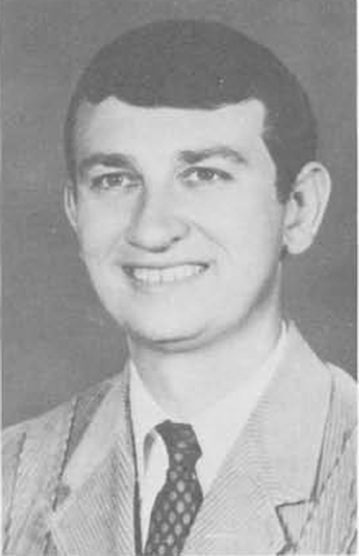
Gene D. Stewart. Source: UAD Bulletin, Winter 1970
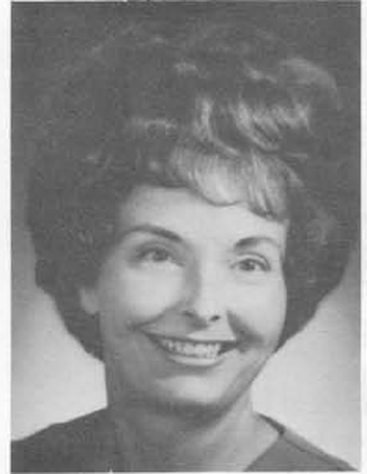
Madeleine Burton Perkins. Source: UAD Bulletin, Winter 1970
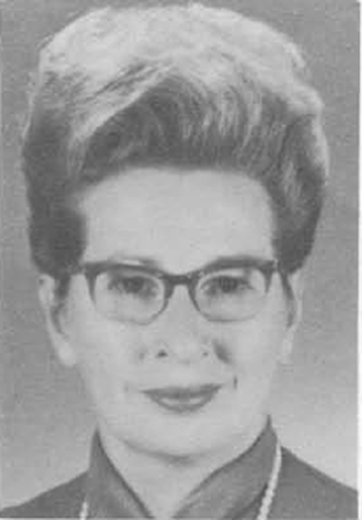
Edith Deininger Wheeler. Source: UAD Bulletin, Winter 1970
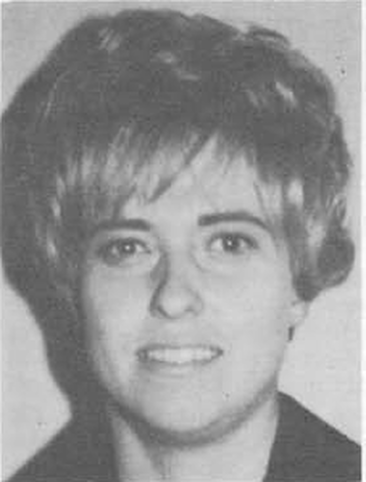
Beth Ann Stewart Campbell. Source: UAD Bulletin, Winter 1970
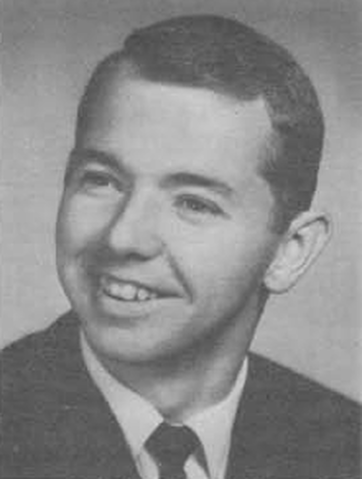
Dennis Platt. Source: UAD Bulletin, Winter 1970
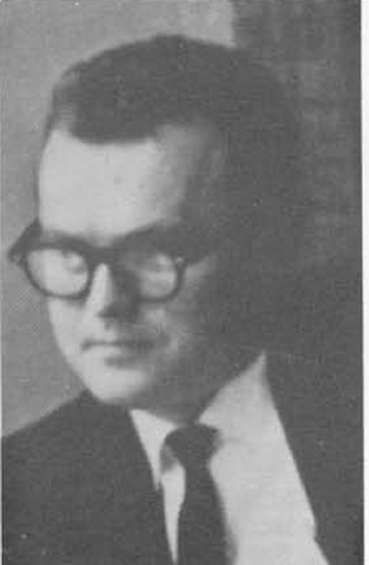
Jonathan Freston. Source: UAD Bulletin, Winter 1970

Ned C. Wheeler. Source: UAD Bulletin, Winter 1970
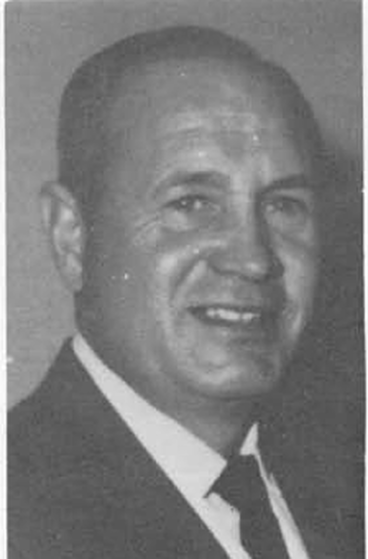
Lloyd Perkins. Source: UAD Bulletin, Winter 1970
The Purpose of Utah Registry
of Interpreters for the Deaf
The primary purpose of establishing the Utah Registry of Interpreters for the Deaf (URID) in 1968 was to create a reliable network of qualified interpreters who could provide communication access for Deaf individuals throughout Utah. The organization sought to ensure that both the Utah Deaf community and the general public could obtain interpreting services whenever needed. By promoting interpreter training, certification, and professional standards, URID helped provide greater confidence and security for Deaf individuals seeking equal access to education, employment, religion, government services, and community activities.
Since its establishment in 1968, URID has experienced significant growth and development. In its earliest years, the organization consisted of only 16 members. Most were Children of Deaf Adults (CODAs) or individuals who had grown up with Deaf parents. Several members were Deaf themselves, one member was hard of hearing, and two members were married to Deaf spouses. Among the original members, only one hearing individual learned sign language while working as a houseparent and counselor at the South Dakota School for the Deaf.
Although hearing individuals primarily served as interpreters, Deaf members often provided what is now known as Deaf interpreting or reverse interpreting. Today, these professionals are known as Certified Deaf Interpreters (CDIs). Their participation reflected the collaborative partnership between Deaf and hearing individuals that helped establish the interpreting profession in Utah.
The following individuals served as interpreters or reverse interpreters during the early years of the Utah Registry of Interpreters for the Deaf:
This early membership demonstrates the vital role played by CODAs, Deaf individuals, hard-of-hearing individuals, and Deaf family members in the development of professional interpreting in Utah. Their commitment to communication access and community service helped establish the foundation upon which the interpreting profession in Utah continues to build today.
Since its establishment in 1968, URID has experienced significant growth and development. In its earliest years, the organization consisted of only 16 members. Most were Children of Deaf Adults (CODAs) or individuals who had grown up with Deaf parents. Several members were Deaf themselves, one member was hard of hearing, and two members were married to Deaf spouses. Among the original members, only one hearing individual learned sign language while working as a houseparent and counselor at the South Dakota School for the Deaf.
Although hearing individuals primarily served as interpreters, Deaf members often provided what is now known as Deaf interpreting or reverse interpreting. Today, these professionals are known as Certified Deaf Interpreters (CDIs). Their participation reflected the collaborative partnership between Deaf and hearing individuals that helped establish the interpreting profession in Utah.
The following individuals served as interpreters or reverse interpreters during the early years of the Utah Registry of Interpreters for the Deaf:
- Lucy McMills Greenwood (CODA and Deaf spouse)
- Dennis R. Platt (Deaf)
- Betty Johnson Jones (CODA)
- Madelaine P. Burton Perkins (CODA and Deaf spouse)
- Keith W. Tolzin (former houseparent and counselor at the South Dakota School for the Deaf)
- Beth Ann Stewart Campbell (CODA)
- Nancy F. Murray (Deaf spouse)
- Ned C. Wheeler (Deaf)
- Iola Elizabeth Jensen (Deaf)
- Evern Lee Smith (CODA)
- Edith Deininger Wheeler (Hard of Hearing)
- Robert G. Sanderson (Deaf)
- Gene D. Stewart (CODA)
- Doris L. Wastlund (CODA)
- Lloyd H. Perkins (Deaf)
- Jon C. Freston (CODA) (UAD Bulletin, Winter 1970)
This early membership demonstrates the vital role played by CODAs, Deaf individuals, hard-of-hearing individuals, and Deaf family members in the development of professional interpreting in Utah. Their commitment to communication access and community service helped establish the foundation upon which the interpreting profession in Utah continues to build today.

At the 1973 Utah Association for the Deaf Convention banquet, Dr. Jay J. Campbell signs his speech on "Humanizing Education." Beth Ann Stewart Campbell interprets her rendition of "I." There Be Peace on Earth. Source: UAD Bulletin, November 1973
Controversy Surrounding Channel 4 News
This story recounts the events that inspired Dr. Robert G. Sanderson to pursue a Ph.D. It centers on a significant controversy during the late 1960s and early 1970s involving Dr. Grant B. Bitter, a professor of special education at the University of Utah. The conflict extended beyond disagreements over educational philosophy and ultimately motivated Bob to pursue a doctorate during the early 1970s.
Before earning his doctorate in 1974, Bob found himself at the center of a long-running debate over Deaf education in Utah. One of his principal opponents was Dr. Grant B. Bitter, a strong advocate of oralism and mainstream education. Grant believed that Deaf children should learn spoken language and attend their neighborhood public schools to achieve greater integration into society. His philosophy emphasized oral communication and often discouraged the use of sign language. Mainstreaming, likewise, promoted the placement of Deaf students in public schools rather than residential schools for the Deaf (Baldwin, 1990).
Grant's advocacy for oral communication and mainstream education placed him in direct opposition to the Utah Association of the Deaf (UAD), whose membership consisted largely of graduates of the Utah School for the Deaf. Among the organization's leaders was Bob Sanderson, who had become deaf at age eleven and strongly supported sign language and state schools for the Deaf (Becker, 2026).
The rivalry between these two giant figures—Grant Bitter and Bob Sanderson—stemmed from their ongoing disagreement over the use of oral and sign language approaches in Utah's Deaf education system. This conflict was not merely a matter of personal preference; it represented a fundamental disagreement over the most effective methods for educating Deaf children. Each side sought to influence policy and practice within a rapidly changing educational landscape, akin to a chess match, which added to tension. As the conflict intensified, both groups rallied supporters to advocate for their views and influence public opinion and policymakers. The outcome of this debate would shape the future of Deaf education in Utah and contribute to similar discussions nationwide (Becker, 2026).

Dr. Grant B. Bitter. Source: The Utah Eagle, October 1967
In 1971, another controversy emerged when Beth Ann Stewart Campbell volunteered to interpret the nightly Channel 4 News in sign language. Bob, who was serving as Deaf Services Coordinator, coordinated the effort to provide Deaf viewers with access to current events through sign language interpretation. However, Grant Bitter and other supporters of oral education strongly opposed the presence of an interpreter in the corner of the television screen. They urged Dr. Avard Rigby, Bob's supervisor, to prevent Beth Ann from interpreting the news (Stewart, DSDHH Newsletter, April 2012).
Bob and Beth Ann, along with Gene Stewart, a vocational rehabilitation counselor for the Deaf, were anxious when Avard invited them to a meeting with oral advocates who were complaining about the presence of an interpreter during the evening news broadcasts. Bob, Gene, and Beth Ann feared that the interpreting service might be discontinued and were on pins and needles waiting to learn how Avard would respond (Stewart, DSDHH Newsletter, April 2012).
During the meeting, Avard listened to the complaints from the oral advocates while serving as a mediator. At the time, there were only three major television news channels, and Beth Ann interpreted for only one of them. After hearing their concerns, Avard responded, “Well, if you don't like watching her, why don't you change the channel?” (Stewart, DSDHH Newsletter, April 2012).
Avard's remark only served to further infuriate the oral advocates, who then demanded that he fire Bob. They were upset by Bob's role in organizing sign language interpretation of the news. However, Avard refused, stating that Bob was one of his best employees. His decision brought relief not only to Bob, Gene, and Beth Ann but also to many members of Utah's Deaf community who relied on the service. This powerful moment demonstrated the strength of their solidarity and underscored the importance of their cause (Robert G. Sanderson, personal communication to the author, October 21, 2006; Stewart, DSDHH Newsletter, April 2012).

Beth Ann Stewart Campbell serves as an interpreter for Deaf TV viewers during newscasts. She volunteers as the interpreter in the right-hand corner of the TV screen on Channel 4 during the news broadcast. Source: UAD Bulletin, March 1992
Following the meeting, Bob confided in Gene Stewart:
"No one listens to you unless you have a Ph.D. after your name, so I'm going back to school" (Stewart, DSDHH Newsletter, April 2012, p. 3).
At the time, Bob held a master's degree but often felt that his expertise and opinions were discounted. In contrast, Grant benefited from the credibility and professional respect associated with holding a doctorate. Frustrated by these challenges and determined to strengthen his advocacy efforts, Bob enrolled at Brigham Young University (Deseret News, September 26, 2003).
The rivalry between Bob and Grant intensified discussions about Deaf education throughout Utah. While Grant continued to promote oral communication, Bob remained a steadfast advocate for sign language and expanded educational opportunities for Deaf students. Their disagreements reflected broader national tensions over educational philosophies and communication approaches for Deaf students (Becker, 2026).

State Educator First Deaf Student To Receive Doctor Degree at BYU. Source: Gains Tribune, 1974
The tension between Bob and Grant was both intense and highly visible. As Bob's designated interpreter, Beth Ann often found herself in the middle of intense debates between them over Deaf education. During an interpreting workshop at Salt Lake Community College on October 15, 2010, she recalled that whenever she entered a room to interpret for Bob, Grant openly objected to her presence. Bob's response was always straightforward:
"Well, she's staying" (Beth Ann Stewart Campbell, Utah Deaf History Channel, YouTube, October 15, 2010).
Beth Ann observed that Bob frequently challenged Grant's views, and Grant responded with equal determination. During legislative hearings, Grant deliberately spoke as rapidly as possible and used complex vocabulary, seemingly in an effort to test her interpreting skills. Despite his attempts, Beth Ann successfully kept pace with the discussions, which only appeared to frustrate him further (Beth Ann Stewart Campbell, Utah Deaf History Channel, YouTube, October 15, 2010). She remained committed to ensuring that Bob had full access to information and equal opportunities to participate in the discussions (Beth Ann Stewart Campbell, personal communication with the author, July 1, 2007).
Throughout these encounters, Bob remained composed and consistently relied on Beth Ann's interpretation. Even when Grant insisted, "You can read my lips," Bob refused to give in to the challenge (Beth Ann Stewart Campbell, Utah Deaf History Channel, YouTube, October 15, 2010). Although Bob lost his hearing at age 11 and retained both his speech and lipreading abilities, he preferred using interpreting services whenever possible to ensure full and accurate access to communication.
Reflecting on the longstanding national debate between supporters of oral education and sign language, Beth Ann later remarked that the rivalry between Bob and Grant was particularly bitter and contentious. In her view, their disagreements represented one of the most vicious examples of the broader conflict over Deaf education in the United States (Beth Ann Stewart Campbell, Utah Deaf History Channel, YouTube, October 15, 2010).

Win Ph.D. Despite Deafness. Source: The Salt Lake Tribune, March 7, 1974
During this period of educational and political conflict, Hannah P. Lewis, the parent of a grown Deaf son, publicly expressed gratitude for Bob's work. In 1977, she described him as a guiding light for Utah's Deaf community and stated:
"I cannot thank him enough for all the help he has given my son throughout his growing-up years. Thank God for a man like him" (Lewis, Deseret News, November 24, 1977, p. A4).
Bob's doctorate proved to be a valuable accomplishment. Following his election victory over an 18-year incumbent president of the National Association of the Deaf, he continued advocating for Deaf individuals nationwide. His work contributed to improvements in education, employment, accessibility, rehabilitation services, and community programs. In recognition of his lifelong contributions, Utah's Deaf community honored him in 2003 when the Deaf Center was renamed the Robert G. Sanderson Community Center of the Deaf and Hard of Hearing (Becker, 2026).
In 1974, Bob earned a doctorate in educational administration, becoming the first Deaf person at BYU and the first Deaf Utahn to receive a Ph.D. (Deseret News, September 26, 2003). His achievements demonstrated perseverance, determination, and a commitment to advancing opportunities for Deaf people.

A letter from Dr. Walter D. Talbot, State Superintendent of Public Instruction, congratulating Dr. Robert G. Sanderson on getting his doctorate, April 15, 1974. Courtesy of the Sanderson Community Center
During the dispute over the interpreted Channel 4 News broadcasts, Bob, who was not a member of The Church of Jesus Christ of Latter-day Saints, asked Lloyd H. Perkins, bishop of the Salt Lake Valley Ward for the Deaf, and Kenneth Kinner, president of the Ogden Branch for the Deaf, to encourage church members to send thank-you letters to Channel 4 News. He wanted to express appreciation for the station's willingness to provide sign language interpretation despite criticism from opponents.
From 1971 to 1980, Beth Ann Stewart Campbell volunteered as the interpreter for Channel 4 News, and many members of Utah's Deaf community fondly remember seeing her on television each evening (Campbell, UAD Bulletin, March 1992). Through her dedication and service, she helped make local news accessible to Deaf viewers and became a respected figure within the community. Her work not only improved communication access but also demonstrated the value of interpreting services, leaving a lasting legacy for future generations of Deaf Utahns.
From 1971 to 1980, Beth Ann Stewart Campbell volunteered as the interpreter for Channel 4 News, and many members of Utah's Deaf community fondly remember seeing her on television each evening (Campbell, UAD Bulletin, March 1992). Through her dedication and service, she helped make local news accessible to Deaf viewers and became a respected figure within the community. Her work not only improved communication access but also demonstrated the value of interpreting services, leaving a lasting legacy for future generations of Deaf Utahns.

Dr. Robert G. Sanderson's letter to the Deaf leaders of The Church of Jesus Christ of Latter-day Saints, March 12, 1971. Courtesy of the Sanderson Community Center
Meet Beth Ann Campbell, a Trailblazing Interpreter in the Utah Deaf Community, in the Interpreter In-Service Training at Salt Lake Community College
During our interpreting workshop at Salt Lake Community College on October 15, 2010, Beth Ann Stewart Campbell shared valuable insights into the history of interpreting and Deaf advocacy in Utah. Beth Ann is a family friend of my colleague, Julie Hesterman Smith, Interpreter Manager for Salt Lake Community College's Accessibility and Disability Services.
As a Child of Deaf Adults (CODA), Beth Ann grew up in a Deaf family and developed a deep understanding of American Sign Language and Deaf culture from an early age. Her background led her to become one of Utah's pioneering interpreters and among the first nationally certified Registry of Interpreters for the Deaf (RID) interpreters. Her experiences as director of the Utah Community Center for the Deaf, as well as her firsthand knowledge of the development of the interpreting profession, provided invaluable historical and professional perspectives.
We are deeply grateful to Beth Ann for her lifelong advocacy and service to Utah's Deaf community. Her experiences as an interpreter before the passage of the Americans with Disabilities Act (ADA), her firsthand involvement during the Deaf education conflicts of the Bitter-Sanderson era, and her continued commitment to accessibility and communication rights offered important lessons for everyone in attendance.
Unfortunately, I was unable to attend her presentation because of personal circumstances. I am especially grateful to my co-worker, Julie Hesterman Smith, for organizing the workshop and making Beth Ann's presentation available to me afterward.
Beth Ann's insights into the interpreting profession, Deaf history, and community advocacy were both enlightening and inspiring. Although I was unable to attend in person, it was an honor to later become acquainted with her and learn from her experiences. Her stories provided a unique glimpse into a pivotal period in Utah Deaf history and highlighted the important role interpreters have played in expanding communication access and civil rights for Deaf individuals.
We recommend turning on captions while viewing the video recording of Beth Ann's presentation to ensure full accessibility and understanding.
Thank you, Beth Ann, for your many years of interpreting, advocacy, leadership, and dedication to the Utah Deaf community. Your contributions have made a lasting difference and continue to inspire future generations.
Jodi Christel Becker
The National Registry of Interpreters
of the Deaf Becomes Incorporated
In 1972, the Registry of Interpreters for the Deaf (RID) was formally incorporated as a national organization dedicated to promoting professional standards, ethical conduct, certification, and continuing education for interpreters serving Deaf and hard-of-hearing individuals. The incorporation of RID represented a significant milestone in the evolution of interpreting as a recognized profession.
Over the following decades, RID continued to develop certification programs, ethical standards, and professional training opportunities designed to improve the quality and consistency of interpreting services throughout the United States.
Another major turning point occurred in 1990 with the passage of the Americans with Disabilities Act (ADA). This landmark legislation significantly expanded access to interpreting services by requiring reasonable accommodations for individuals with disabilities. As a result, sign language interpreters became increasingly available in schools, colleges, universities, hospitals, courtrooms, government agencies, businesses, and other public settings. The ADA greatly improved communication access and strengthened civil rights protections for Deaf and hard-of-hearing individuals nationwide.

Utah Governor Calvin L. Rampton speaks to the large 1975 Utah Association for the Deaf Convention banquet crowd, with Doris Wastlund interpreting his remarks. Source: UAD Bulletin, October 1975
A Workshop to Train
Interpreters for the Deaf
Despite ongoing disagreements with Dr. Grant B. Bitter regarding Deaf education, Dr. Robert G. Sanderson remained deeply committed to expanding interpreting services for Utah's Deaf community.
On May 6, 1972, the Divisions of Adult Education, Training, and Vocational Rehabilitation sponsored a workshop titled "Training Deaf Interpreters." The event brought together educators, interpreters, rehabilitation professionals, and Deaf community members to discuss the future of interpreting in Utah.
Featured speakers included:
These speakers provided valuable information regarding interpreter professionalism and the growing need for qualified interpreters throughout the nation. Topics included certification standards and procedures, interpreter evaluation methods, training experiences, fee schedules, professional conduct, and the relationships between Deaf individuals and interpreters, as well as relationships among interpreters themselves (UAD Bulletin, June 1972).
The workshop reflected the growing effort to establish interpreting as a recognized profession and to improve communication access for Deaf individuals throughout Utah. It also reinforced the importance of interpreter training and certification at a time when demand for qualified interpreters was increasing rapidly.
This growing movement toward professional interpreting may have influenced Dr. Grant B. Bitter's later efforts to establish the Utah Registry of Oral Interpreters in 1981. As a nationally recognized advocate of oral education, Grant remained committed to promoting oral interpreting and speech-based communication. His dedication to this philosophy was reflected in workshops and presentations he conducted throughout the United States, including programs at the University of Cincinnati and the University of Utah (Bitter, 1985; Bitter, 1986).
The differing approaches promoted by Robert G. Sanderson and Grant B. Bitter reflected the broader national debate concerning communication methods, educational philosophies, and accessibility services for Deaf individuals during the second half of the 20th century. While they often disagreed on educational practices, both men played influential roles in shaping services available to Deaf and hard-of-hearing individuals in Utah.
On May 6, 1972, the Divisions of Adult Education, Training, and Vocational Rehabilitation sponsored a workshop titled "Training Deaf Interpreters." The event brought together educators, interpreters, rehabilitation professionals, and Deaf community members to discuss the future of interpreting in Utah.
Featured speakers included:
- Ralph Neesam, president of the National Registry of Interpreters for the Deaf
- Dr. Ray L. Jones, director of the Leadership Training Program for the Deaf at San Fernando Valley State College in Northridge, California
- Robert E. Bevill, consumer consultant at the University of Arizona
These speakers provided valuable information regarding interpreter professionalism and the growing need for qualified interpreters throughout the nation. Topics included certification standards and procedures, interpreter evaluation methods, training experiences, fee schedules, professional conduct, and the relationships between Deaf individuals and interpreters, as well as relationships among interpreters themselves (UAD Bulletin, June 1972).
The workshop reflected the growing effort to establish interpreting as a recognized profession and to improve communication access for Deaf individuals throughout Utah. It also reinforced the importance of interpreter training and certification at a time when demand for qualified interpreters was increasing rapidly.
This growing movement toward professional interpreting may have influenced Dr. Grant B. Bitter's later efforts to establish the Utah Registry of Oral Interpreters in 1981. As a nationally recognized advocate of oral education, Grant remained committed to promoting oral interpreting and speech-based communication. His dedication to this philosophy was reflected in workshops and presentations he conducted throughout the United States, including programs at the University of Cincinnati and the University of Utah (Bitter, 1985; Bitter, 1986).
The differing approaches promoted by Robert G. Sanderson and Grant B. Bitter reflected the broader national debate concerning communication methods, educational philosophies, and accessibility services for Deaf individuals during the second half of the 20th century. While they often disagreed on educational practices, both men played influential roles in shaping services available to Deaf and hard-of-hearing individuals in Utah.

Source: Utah School for the Deaf 100th Years Anniversary Alumni Reunion, 1984. Courtesy of the Sanderson Community Center
Contributions of Betty Johnson Jones to the Interpreting Field and the Utah Deaf Community
Betty Johnson Jones, a Child of Deaf Adults (CODA), dedicated her life to interpreting and advocacy within Utah's Deaf community. She married Von Cyril Jones, a Deaf man, and became one of Utah's earliest nationally certified interpreters. In 1972, she earned national certification through the Registry of Interpreters for the Deaf (RID), joining a pioneering generation of interpreters who helped establish professional standards within the field.
Betty recalled taking the certification examination in a room equipped with a black-and-white movie screen and an aging reel-to-reel projector that shook whenever a breeze entered the room. Despite these challenges, she successfully completed the process and became one of Utah's first nationally certified interpreters (Betty Johnson Jones, e-mail message to Jodi Christel Becker, October 15, 2024).
Throughout her career, Betty remained committed to improving communication access and advancing the profession. Her advocacy, leadership, and dedication inspired future generations of interpreters and strengthened accessibility throughout Utah's Deaf community.
Alongside Beth Ann Stewart Campbell, Lucy McMills Greenwood, and other interpreters, Betty advocated for higher wages for interpreters during Robert G. Sanderson's tenure as Deaf Services Coordinator. At the time, interpreters earned only five dollars per hour regardless of their qualifications or experience. With support from the Utah Deaf community, interpreters organized protests outside Bob's office to draw attention from city and state leaders. Betty's leadership, combined with Bob's support, contributed to efforts that ultimately resulted in increased compensation for interpreters (Betty Johnson Jones, e-mail message to Jodi Christel Becker, October 16, 2024).
This achievement represented more than a pay increase. It helped raise public awareness regarding the value of interpreting services and the professional expertise required to provide effective communication access for Deaf individuals.
Betty also played an important role in mainstream education through the Utah School for the Deaf's Extension Program in the Salt Lake area. In 1979, the program responded to parental requests for educational options using Signed Exact English (SEE), a communication system that follows English word order while incorporating signs and fingerspelling.
As one of the first interpreters and aides in the program, Betty worked directly with Deaf students who were being integrated into neighborhood public schools. Her interpreting services helped students communicate more effectively and adapt to new educational settings. She viewed this work not simply as a job, but as a mission to improve the educational experiences of Deaf children (Betty Johnson Jones, e-mail message to Jodi Christel Becker, June 10, 2025).
One of Betty's most memorable experiences involved a student enrolled in an oral program who appeared disconnected from classroom activities and showed little interest in reading. Betty recalled that many reading lessons seemed to go "right over their heads." On one occasion, she asked permission to tell the story of Little Red Riding Hood in sign language. The teacher reluctantly agreed during recess.
Initially, the student refused to look at Betty and sat with long hair covering her face. As the story unfolded in sign language, however, the student slowly peeked out, then sat up, and finally moved to a desk closer to Betty so she could watch and understand the story. Betty remembered seeing the child's eyes widen with excitement, as though she were hearing the story for the first time. The experience reinforced Betty's belief that language accessibility plays a crucial role in learning and comprehension (Betty Johnson Jones, e-mail message to Jodi Christel Becker, July 4, 2025).
This experience demonstrated the transformative power of sign language and the importance of providing Deaf children with language they can fully access. For additional information regarding this issue, see "The History of Deaf Education in Utah" webpage.
Over the years, Betty volunteered and worked as a freelance interpreter in numerous settings. Her contributions included:
Betty's daughter, interpreter Kimberlee Jones Holloway, recalled that her mother was deeply involved in Utah's Deaf community while raising her family. Through her work and volunteer service, Betty developed many meaningful friendships with Deaf individuals and families.
Kimberlee also shared that Betty initially faced challenges gaining acceptance within the Deaf community after marrying a Deaf man. As a hearing person, she sometimes encountered skepticism and resistance. After nearly five years of persistence, during which she considered giving up, Von encouraged her to continue building relationships and participating in community activities. Eventually, the community fully embraced her. One indication of this acceptance came when she began receiving invitations to social gatherings where her interpreting services were not needed. She was invited simply because she was considered part of the community.
Betty later reflected that one of the most difficult aspects of working as an interpreter was the lack of benefits and long-term financial security. Although she spent 15 to 20 years working in the Utah School for the Deaf Extension Program, she received no retirement benefits, pension, or 401(k) contributions. At the time, this was a common reality for many interpreters and reflected the profession's ongoing struggle for recognition and equitable compensation.
Fortunately, her husband, Von Jones, received excellent employment benefits that helped support their family. However, following his passing and her retirement, Betty experienced firsthand the long-term financial challenges that many interpreters faced after years of service (Betty Johnson Jones, e-mail message to Jodi Christel Becker, October 16, 2024).
Despite these challenges, Betty's contributions to both the interpreting profession and Utah's Deaf community were substantial. Through her advocacy, educational work, professional leadership, and decades of service, she helped improve communication access, elevate professional standards, and strengthen relationships between Deaf and hearing communities. Her legacy continues to inspire interpreters and Deaf advocates throughout Utah today.
Betty recalled taking the certification examination in a room equipped with a black-and-white movie screen and an aging reel-to-reel projector that shook whenever a breeze entered the room. Despite these challenges, she successfully completed the process and became one of Utah's first nationally certified interpreters (Betty Johnson Jones, e-mail message to Jodi Christel Becker, October 15, 2024).
Throughout her career, Betty remained committed to improving communication access and advancing the profession. Her advocacy, leadership, and dedication inspired future generations of interpreters and strengthened accessibility throughout Utah's Deaf community.
Alongside Beth Ann Stewart Campbell, Lucy McMills Greenwood, and other interpreters, Betty advocated for higher wages for interpreters during Robert G. Sanderson's tenure as Deaf Services Coordinator. At the time, interpreters earned only five dollars per hour regardless of their qualifications or experience. With support from the Utah Deaf community, interpreters organized protests outside Bob's office to draw attention from city and state leaders. Betty's leadership, combined with Bob's support, contributed to efforts that ultimately resulted in increased compensation for interpreters (Betty Johnson Jones, e-mail message to Jodi Christel Becker, October 16, 2024).
This achievement represented more than a pay increase. It helped raise public awareness regarding the value of interpreting services and the professional expertise required to provide effective communication access for Deaf individuals.
Betty also played an important role in mainstream education through the Utah School for the Deaf's Extension Program in the Salt Lake area. In 1979, the program responded to parental requests for educational options using Signed Exact English (SEE), a communication system that follows English word order while incorporating signs and fingerspelling.
As one of the first interpreters and aides in the program, Betty worked directly with Deaf students who were being integrated into neighborhood public schools. Her interpreting services helped students communicate more effectively and adapt to new educational settings. She viewed this work not simply as a job, but as a mission to improve the educational experiences of Deaf children (Betty Johnson Jones, e-mail message to Jodi Christel Becker, June 10, 2025).
One of Betty's most memorable experiences involved a student enrolled in an oral program who appeared disconnected from classroom activities and showed little interest in reading. Betty recalled that many reading lessons seemed to go "right over their heads." On one occasion, she asked permission to tell the story of Little Red Riding Hood in sign language. The teacher reluctantly agreed during recess.
Initially, the student refused to look at Betty and sat with long hair covering her face. As the story unfolded in sign language, however, the student slowly peeked out, then sat up, and finally moved to a desk closer to Betty so she could watch and understand the story. Betty remembered seeing the child's eyes widen with excitement, as though she were hearing the story for the first time. The experience reinforced Betty's belief that language accessibility plays a crucial role in learning and comprehension (Betty Johnson Jones, e-mail message to Jodi Christel Becker, July 4, 2025).
This experience demonstrated the transformative power of sign language and the importance of providing Deaf children with language they can fully access. For additional information regarding this issue, see "The History of Deaf Education in Utah" webpage.
Over the years, Betty volunteered and worked as a freelance interpreter in numerous settings. Her contributions included:
- Working for the State of Utah for more than thirty years.
- Serving as a Video Relay Service interpreter for Sorenson Communications for approximately five and a half years.
- Pioneering interpreting services within the Utah School for the Deaf Extension Program during the early years of mainstreaming.
- Working closely with families whose preferred communication system was Signed Exact English.
- Providing interpreting services through the Utah School for the Deaf Extension Program in St. George, Utah, for more than eight years (Betty Johnson Jones, e-mail message to Jodi Christel Becker, June 10, 2025).
Betty's daughter, interpreter Kimberlee Jones Holloway, recalled that her mother was deeply involved in Utah's Deaf community while raising her family. Through her work and volunteer service, Betty developed many meaningful friendships with Deaf individuals and families.
Kimberlee also shared that Betty initially faced challenges gaining acceptance within the Deaf community after marrying a Deaf man. As a hearing person, she sometimes encountered skepticism and resistance. After nearly five years of persistence, during which she considered giving up, Von encouraged her to continue building relationships and participating in community activities. Eventually, the community fully embraced her. One indication of this acceptance came when she began receiving invitations to social gatherings where her interpreting services were not needed. She was invited simply because she was considered part of the community.
Betty later reflected that one of the most difficult aspects of working as an interpreter was the lack of benefits and long-term financial security. Although she spent 15 to 20 years working in the Utah School for the Deaf Extension Program, she received no retirement benefits, pension, or 401(k) contributions. At the time, this was a common reality for many interpreters and reflected the profession's ongoing struggle for recognition and equitable compensation.
Fortunately, her husband, Von Jones, received excellent employment benefits that helped support their family. However, following his passing and her retirement, Betty experienced firsthand the long-term financial challenges that many interpreters faced after years of service (Betty Johnson Jones, e-mail message to Jodi Christel Becker, October 16, 2024).
Despite these challenges, Betty's contributions to both the interpreting profession and Utah's Deaf community were substantial. Through her advocacy, educational work, professional leadership, and decades of service, she helped improve communication access, elevate professional standards, and strengthen relationships between Deaf and hearing communities. Her legacy continues to inspire interpreters and Deaf advocates throughout Utah today.

Betty Johnson Jones. Photograph by Robert L. Bonnell
Beth Ann Stewart Campbell's Observations on the National and State Registry of Deaf Interpreters and Its Impact on the Utah Deaf Community
In the June 1973 issue of the UAD Bulletin, Beth Ann Stewart Campbell initiated an important discussion about the role and profession of interpreters. Her article provides valuable insight into the interpreting community of the 1970s, a period when interpreters faced challenges and expectations that differed significantly from those of today. Her observations help bridge the gap between past and present, offering a better understanding of the evolution of the interpreting profession.
Beth Ann sought to foster greater appreciation and respect for the important role interpreters play within the Utah Deaf community. She emphasized the need to recognize both the responsibilities of interpreters and the courtesy and respect they deserve. Her discussion remains historically significant and continues to be relevant to interpreters, Deaf individuals, and anyone interested in Deaf culture and interpreting ethics.
At the time, certified interpreters were expected to function as professionals and to follow the Registry of Interpreters for the Deaf's Code of Ethics, later renamed the Code of Professional Conduct. Beth Ann observed that the creation of the Registry of Interpreters for the Deaf in 1964 and the Utah Registry of Interpreters for the Deaf in 1968 had changed relationships between interpreters and members of the Deaf community. As interpreting became more professionalized, some people worried that interpreters might become so focused on neutrality and professionalism that they would lose their individuality, compassion, and personal connections with Deaf people.
Beth Ann acknowledged these concerns and emphasized that interpreters should never become unthinking or unfeeling "machines." She reminded readers that interpreters were human beings with thoughts, emotions, and relationships. Outside of interpreting assignments, many interpreters remained friends, family members, and active participants in the Deaf community. According to Beth Ann, warmth, compassion, and understanding were essential qualities that should not be lost in the pursuit of professionalism.
She also emphasized the importance of mutual respect between interpreters and Deaf individuals. Interpreters should accept Deaf people as they are, understand their needs, and remain sensitive to the challenges they face. Beth Ann noted that prior to the establishment of the Utah Registry of Interpreters for the Deaf, many interpreters volunteered their services to support the Deaf community.

Beth Ann Stewart Campbell. Photo courtesy of the Sanderson Community Center
One issue she discussed was compensation. Conversations about payment could sometimes be difficult because many Deaf individuals had limited financial resources. Beth Ann advised interpreters to discuss fees openly and respectfully before providing services. She also encouraged interpreters to consider whether charging a fee might create a hardship for the Deaf individual requesting assistance.
According to Beth Ann, if interpreters felt unable to provide a service without compensation, they should thoughtfully evaluate the situation and its impact on the Deaf consumer. She warned that excessive fees could damage trust and harm relationships between interpreters and Deaf community members. Likewise, when Deaf individuals genuinely could not afford services, interpreters often faced difficult decisions about whether to volunteer or reduce their fees.
Beth Ann also recognized that some Deaf individuals occasionally took interpreters for granted, while others placed them on a pedestal. She reminded interpreters that they had a unique opportunity to serve as communication facilitators and to help Deaf individuals access information and opportunities available in the broader hearing world.
Most importantly, Beth Ann emphasized the critical role interpreters play in the lives of Deaf individuals. She noted that the Registry of Interpreters for the Deaf had established a Code of Ethics to protect both Deaf consumers and interpreters. The purpose of the code was to ensure that Deaf individuals enjoyed the same right to communication access as hearing individuals while maintaining high standards of professional conduct and accountability (Beth Ann Stewart Campbell, UAD Bulletin, June 1973).
In reflecting on the impact of both the National Registry of Interpreters for the Deaf and the Utah Registry of Interpreters for the Deaf, Beth Ann highlighted the importance of balancing professionalism with humanity. She believed that professional standards, ethical conduct, competence, and compassion were all essential elements of effective interpreting. Her observations provide a valuable historical perspective on the growth of the interpreting profession and the evolving relationship between interpreters and Utah's Deaf community.
Meet Beth Ann Stewart Campbell, a Trailblazing Interpreter in the Utah Deaf Community
On July 18, 2024, 86 years old Beth Ann Stewart Campbell, a Child of Deaf Adults (CODA), sat down for an interview with Cody Simonsen, a CODA, interpreter, and co-founder of Five Stars Interpreting. During the interview, Beth Ann candidly shared personal and professional experiences from her many years of service and advocacy within Utah's Deaf community. Her reflections provided valuable insight into the interpreting profession during a time when the relationship between interpreters and Deaf individuals differed significantly from what it is today.
Throughout the interview, Beth Ann communicated by speaking and signing simultaneously with remarkable skill and grace. Her use of traditional signing styles, reflective of earlier generations, added a fascinating historical dimension to the discussion and offered viewers a rare opportunity to observe the evolution of sign language over time.
As one of Utah's pioneering interpreters, Beth Ann witnessed and helped shape many of the major developments in interpreting, Deaf advocacy, and communication access throughout the 20th century. Her experiences provide an important firsthand account of Utah Deaf history and the growth of the interpreting profession.
We are deeply grateful to Beth Ann for generously sharing her memories, experiences, and wisdom. We also extend our sincere appreciation to Cody Simonsen for conducting such an engaging and thoughtful interview. Together, they have helped preserve an invaluable piece of Utah Deaf history for future generations.
Thank you, Beth Ann, for your lifelong dedication to interpreting, advocacy, and service to the Utah Deaf community. Your contributions continue to educate, inspire, and positively impact countless lives.
Jodi Christel Becker
The First Deaf Interpreting Service in Utah
For many years, interpreters in Utah volunteered their services without compensation, making invaluable contributions to the Deaf community. In an interview conducted on August 5, 2024, Jean Greenwood Thomas shared the story of her aunt, Eva Alice McMills Prudence Fowler. Born on March 1, 1911, Eva provided interpreting services to Utah's Deaf community from 1927 to 1965 and never accepted payment for her work. Her dedication left a lasting impression and influenced future interpreters, including Beth Ann Stewart Campbell, Madelaine Burton Perkins, Annette Thorup Tull, and Betty Johnson Jones.
In addition to interpreting, Eva mentored others and helped train future interpreters, including Madelaine Burton Perkins and Jean Kinnet. The demand for her services was so great that police officers frequently called upon her to assist with court appearances, jail visits, and hospital situations, often with little or no advance notice. Her willingness to serve demonstrated the vital role interpreters played in supporting Deaf individuals long before interpreting became a recognized profession (Jean Greenwood Thomas, e-mail message to Jodi Christel Becker, August 5, 2024).
Eva's younger sister, Lucy Pearl McMills Greenwood, also became a well-known interpreter in Utah. Born on November 24, 1919, Lucy began interpreting for her Deaf parents at the age of ten, particularly for her father, John Wallace McMills, at his shoe repair shop. Her professional interpreting career began in 1936 and continued until 2008, spanning more than seven decades of volunteer and paid service.
Lucy received her first paid interpreting assignment in the late 1960s when she interpreted for G. Leon Curtis, one of Utah's most prominent Deaf leaders, at Weber State College, later Weber State University. This milestone reflected the growing recognition that interpreting required specialized skills and deserved professional compensation.
Even so, Lucy spent approximately 30 years working as a volunteer interpreter before receiving compensation for her services. Gene Stewart, a vocational rehabilitation counselor for the Deaf, often reminded Jean to encourage her mother to submit invoices so she could receive payment for her work (Jean Greenwood Thomas, e-mail message to Jodi Christel Becker, August 5, 2024). Over time, both Eva and Lucy became respected and widely recognized interpreters throughout Utah (UAD Bulletin, February 1972).

Lucy, John, Eva and Pearl McMills. Photo courtesy of Jean Greenwood Thomas
Dr. Robert Sanderson later observed that compensation became one of the most significant issues facing the interpreting profession. As demand for interpreting services increased, the work required more time, training, and professional expertise than volunteers could reasonably provide. Certification standards and professional expectations continued to grow, making it increasingly difficult to rely solely on volunteerism (Robert G. Sanderson, May 12, 2005).
Bob also noted that interpreting was mentally and physically demanding work. As the profession evolved, important questions emerged regarding who should pay for interpreting services, how much interpreters should be compensated, and whether travel expenses and mileage should be reimbursed. Rising transportation costs and increased demand made these concerns unavoidable (Robert G. Sanderson, May 12, 2005).
Jean Greenwood Thomas also discussed how the Utah Association for the Deaf (UAD) became involved in addressing these challenges. She shared the story of Betty Johnson Jones, a CODA and interpreter, who needed financial assistance to cover gasoline expenses and babysitting costs while providing interpreting services. Because many Deaf individuals could not afford to pay for interpreters themselves, the UAD recognized the need for a more sustainable solution. By helping finance interpreting services, the organization reduced the financial burden on Deaf consumers while also acknowledging the value of interpreters' professional contributions (Jean Greenwood Thomas, e-mail message to Jodi Christel Becker, August 5, 2024).
During the 1970s, the UAD secured funding from the United Way of the Greater Salt Lake Area to establish Utah's first organized sign language interpreting service. This funding represented a major advancement in Deaf advocacy because it enabled professional interpreters to receive compensation for their work. The program became a model for similar efforts throughout the country and demonstrated a growing commitment to communication access for Deaf individuals (UAD Bulletin, June 1995; September 1996; January 1999).
The first two full-time interpreters were hired to serve the Salt Lake Valley, with the UAD office located at the Utah Community Center for the Deaf in Bountiful, Utah (Robert G. Sanderson, May 12, 2005).
Although the program was successful, it also created new administrative challenges. UAD volunteer officers soon found themselves overwhelmed by the amount of paperwork required by United Way. In addition to interpreting and performing regular organizational duties, they were required to prepare detailed reports documenting telephone calls, client contacts, locations served, mileage, hours worked, and numerous other program statistics. Every expense and activity required justification (Robert G. Sanderson, May 12, 2005).
United Way officials also questioned why interpreters should be paid while waiting in the office for assignments. Bob compared the situation to firefighters remaining on standby for emergency calls. Just as firefighters needed to be available when emergencies occurred, interpreters needed to be ready when Deaf individuals required services.
Eventually, United Way concluded that interpreting services represented a broader public responsibility that would be better managed by a government agency or through legislative support. As a result, the UAD requested that the Office of Rehabilitation Services, specifically the Division of Services to the Deaf, assume responsibility for coordinating interpreting services. Fortunately, the agency agreed.
Looking back, Bob considered the transition a positive development. The Division of Services to the Deaf was able to continue providing interpreting services while allowing the Utah Association for the Deaf to focus on its mission of advocacy and community leadership. As a result, both organizations continued to thrive and serve Utah's Deaf community effectively (Robert G. Sanderson, May 12, 2005).
This transition marked an important turning point in Utah Deaf history. What began as a volunteer effort led by dedicated individuals such as Eva Fowler and Lucy Greenwood evolved into a professional interpreting service that provided broader access, greater accountability, and stronger support for Deaf individuals throughout Utah. Their contributions laid the foundation for the interpreting services and communication access that Deaf Utahns benefit from today.

Interpreter Betty Johnson Jones, left, practices sign language at another interpreter, Ms. Kinneti looks on. Source:
Deserter News, January 24, 1972. Photo by Gerald W. Silver
Expansion of Utah Certified Interpreters
Since the establishment of the Utah Registry of Interpreters for the Deaf (URID), interpreting services in Utah have continued to grow and evolve. A significant milestone occurred on November 16, 1974, when thirteen interpreters successfully passed the state certification examination administered by the Utah Registry of Interpreters for the Deaf. This achievement represented an important step forward in the professionalization of interpreting services throughout Utah.
Among those who earned certification were Beth Ann Stewart Campbell, Betty Johnson Jones, Madelaine Burton Perkins, and Lucy McMills Greenwood, all of whom were highly respected interpreters who later held both state and national certifications. Their accomplishments helped establish professional standards for future generations of interpreters.
Equally noteworthy was the certification of Dr. Robert G. Sanderson and W. David Mortensen, both of whom were Deaf. They became the first Deaf individuals in Utah to receive state certification as reverse interpreters, now commonly referred to as Deaf interpreters. Their achievement represented an important milestone in recognizing the valuable role Deaf individuals play within the interpreting profession (UAD Bulletin, April 1975).
Reflecting on the development of interpreter certification, Bob observed that Deaf individuals could often recognize whether someone was a skilled signer, yet evaluating the accuracy, completeness, and effectiveness of an interpreted message was much more difficult. This challenge contributed to the efforts of the Registry of Interpreters for the Deaf and the National Association of the Deaf to develop formal testing and certification programs.
The testing process was rigorous. Candidates were required to watch recorded materials on television monitors and demonstrate their interpreting abilities under challenging conditions. One significant obstacle was reaching interpreters and Deaf individuals who lived far from the organizations' headquarters. To address this issue, national certification workshops were established to create a core group of trained evaluators who could travel throughout the country, administer examinations, and train others in the testing process. Bob attended one of these early workshops as a candidate, giving him firsthand knowledge of the demanding standards expected of interpreters (Robert G. Sanderson, May 12, 2005).
At the time, the term "Deaf interpreter" was often used when a hearing interpreter experienced difficulty understanding a particular Deaf individual and required assistance from another Deaf person. During one certification examination, Bob encountered a memorable challenge. The first videotaped segment featured a young Deaf man with an expressionless face who fingerspelled rapidly throughout the presentation. Bob later recalled how humbling the experience was.
Although he successfully passed the examination, Bob concluded that he was not ideally suited for a professional interpreting career. Nevertheless, the experience reinforced his appreciation for the skills required of interpreters and the importance of maintaining high professional standards. It also deepened his respect for the challenges interpreters face when working with a wide variety of signing styles and communication methods (Robert G. Sanderson, May 12, 2005).
The expansion of interpreter certification during the 1970s marked a turning point in Utah's interpreting profession. Through rigorous training, testing, and certification, interpreters became better equipped to provide accurate and effective communication access. At the same time, the certification of Deaf interpreters such as Bob Sanderson and W. David Mortensen demonstrated the growing recognition of Deaf professionals as valuable contributors to the field. Together, these developments helped strengthen interpreting services and improve communication access for Utah's Deaf community.
Beth Ann Stewart Campbell. Source: UAD Bulletin, Fall-Winter, 1970-71
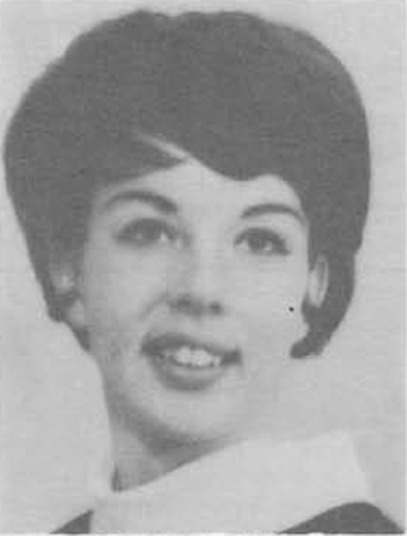
Betty Johnson Jones. Source: UAD Bulletin, Fall-Winter, 1970-71
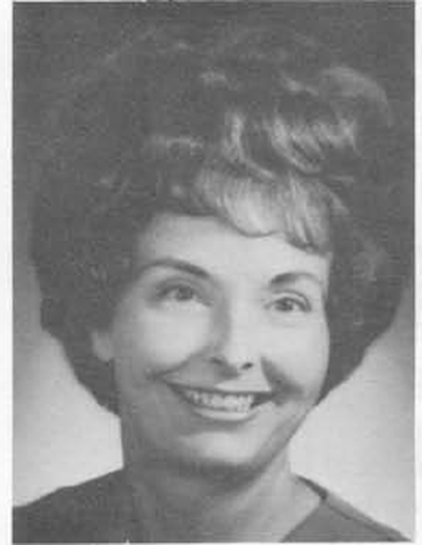
Madeleine Burton Perkins. Source: UAD Bulletin, Fall-Winter, 1970-71
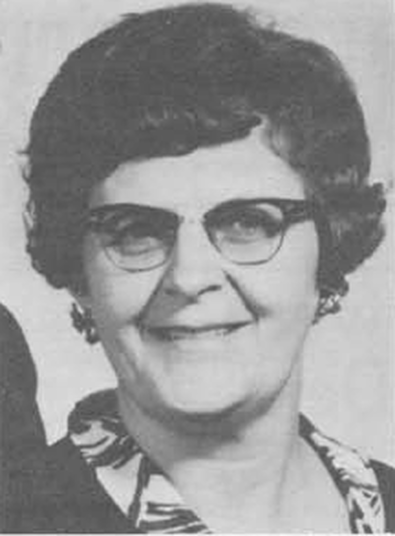
Lucy McMills Greenwood. Source: UAD Bulletin, Fall-Winter, 1970-71
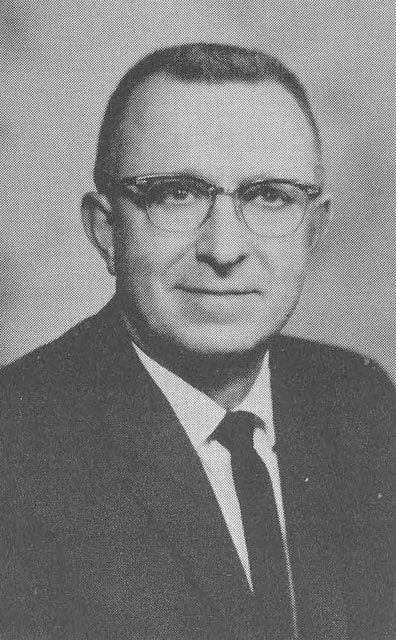
Dr. Robert G. Sanderson. Source: The UAD Bulletin, Winter 1965

W. David Mortensen. Photo courtesy of David and Shanna Mortensen
The Establishment of the Utah Registry
of Interpreters for the Deaf in Provo, Utah
Following the establishment of the Utah Registry of Interpreters for the Deaf (URID) in Salt Lake City in 1968, interpreting services continued to expand throughout Utah. As the demand for qualified interpreters increased, additional opportunities emerged to organize and support interpreters in other regions of the state.
In 1975, the Utah Registry of Interpreters for the Deaf established a chapter in Provo, Utah. The chapter began with 23 members and elected Emil Bussio as its first president (UAD Bulletin, June 1975). The creation of the Provo chapter reflected the growing importance of interpreting services and demonstrated the expanding influence of the interpreting profession beyond the Salt Lake Valley.
The Provo chapter provided interpreters in Utah County with opportunities for professional development, networking, and collaboration while supporting communication access for Deaf individuals throughout the region. Its establishment further strengthened the statewide efforts of the Utah Registry of Interpreters for the Deaf to promote professionalism, training, and quality interpreting services.
Although the Provo chapter contributed to the growth of interpreting services in Utah, it was eventually dissolved. The reasons for its closure remain unknown (UAD Bulletin, June 1975).
Despite its relatively brief existence, the chapter represented another step in the continuing expansion of interpreting services and professional interpreter organizations throughout Utah. Its formation reflected the growing recognition of the importance of qualified interpreters and communication access for Utah's Deaf community.

Lucy McMills Greenwood, left interpret for Rosie Losee. Source: Unknown newspaper
The Reestablishment of the
Utah Registry of Interpreters for the Deaf
for the State of Utah
Since its establishment in 1968, the Utah Registry of Interpreters for the Deaf (URID) has played a central role in the professional development of interpreters throughout Utah. One of its primary objectives was to provide educational opportunities and training programs that would prepare interpreters for state certification and improve the quality of interpreting services available to Utah's Deaf community.
To achieve this goal, URID sponsored annual workshops and training programs designed to expand interpreters' knowledge, skills, and professionalism. These workshops covered a wide range of topics related to interpreting and Deaf culture, including the Code of Ethics, preparation for the State Certification Examination, reverse interpreting, the role and function of interpreters, interpreting complexities, and the emerging field of oral interpreting. Additional workshops addressed communication access, certification standards, and other professional issues relevant to interpreters working with Deaf and hard-of-hearing individuals (UAD Bulletin, July 1976).
These training opportunities helped establish consistent professional standards and encouraged interpreters to continue developing their skills throughout their careers. They also strengthened the partnership between interpreters and the Utah Deaf community by promoting ethical conduct, professional responsibility, and cultural understanding.
The commitment to interpreter education established during the early years of URID continues today. Interpreters regularly participate in professional development activities, workshops, conferences, and continuing education programs to maintain certification and stay informed about changes in the profession. Ongoing training remains essential to ensuring that interpreters possess the knowledge, skills, and cultural competence necessary to meet the communication and accessibility needs of Utah's Deaf community.
The continued growth of interpreter education reflects the vision of URID's founders, whose efforts helped transform interpreting from a largely volunteer service into a respected profession dedicated to providing effective communication access for Deaf and hard-of-hearing individuals throughout Utah.

Utah Registry of Interpreters for the Deaf in the 1980s. Courtesy of the Kenneth C. Burdett Bulletin Board
The Role of the Utah Association for the Deaf
in the Interpreting Services
The Utah Association for the Deaf (UAD) has played a vital role in the development and expansion of interpreting services throughout Utah. Through its advocacy, leadership, and commitment to communication access, the organization has helped ensure that Deaf individuals have greater access to educational, professional, governmental, and community services.
W. David Mortensen, commonly known as Dave, continued and expanded the work initiated by Dr. Robert G. Sanderson. As president of the Utah Association for the Deaf and a respected leader within the Deaf community, Dave strongly supported interpreters and the interpreting profession. His leadership helped shape the relationship between interpreters and the Deaf community and reinforced the importance of providing high-quality interpreting services.
Because of Dave's vision and dedication, interpreters gained a deeper understanding of the responsibility that accompanies their work. Longtime interpreters often welcomed opportunities to collaborate with him and learn from his experiences. During meetings and workshops, Dave frequently provided valuable guidance, mentoring interpreters and encouraging them to maintain high professional standards while remaining responsive to the needs of the Deaf community.
His dedication also helped create additional opportunities for interpreter education and professional development throughout Utah. By promoting cooperation between interpreters and Deaf community members, Dave strengthened the partnership that continues to support effective communication access today.

W. David Mortensen. Photograph by Robert Bonnell
In 1982, Dave secured funding from the Salt Lake Area Community Council for an interpreting project sponsored by the Utah Association for the Deaf. The funding enabled the UAD to employ two full-time interpreters based at the Utah Community Center for the Deaf. These interpreters provided services throughout Utah, representing a significant step forward in the professionalization of interpreting services statewide (UAD Bulletin, July 2003).
Although the project demonstrated the growing need for professional interpreting services, the Salt Lake Area Community Council eventually determined that interpreting was a statewide concern rather than a local one. As a result, the UAD was forced to discontinue the program.
Despite this setback, Dave remained steadfast in his commitment to improving interpreting services. He continued advocating for communication access, working with legislators, serving on committees, and promoting policies related to sign language and interpreting services throughout Utah (UAD Bulletin, July 2003).
Dave's efforts helped lay the foundation for many of the interpreting services available in Utah today. His leadership demonstrated the important role that the Utah Association for the Deaf has played in advancing interpreter training, communication access, and equal opportunities for Deaf individuals across the state.
Through the work of leaders such as Robert G. Sanderson and W. David Mortensen, the Utah Association for the Deaf became one of the driving forces behind the growth and professionalization of interpreting services in Utah. Their advocacy helped transform interpreting from a largely volunteer service into an essential profession that continues to benefit Utah's Deaf community.

Doris Wastlund interprets the classroom at the University of Utah. Source: UAD Bulletin, February 1972
The First Training Program
for Interpreters and the Enactment of the
'Interpreters for the Deaf' Bill in 1983
Despite challenges involving the Salt Lake Area Community Services Council, the Utah Association for the Deaf remained committed to improving interpreting services throughout Utah. Their determination led to significant progress during the early 1980s.
In 1983, the Utah Association for the Deaf (UAD), working in partnership with the Utah Registry of Interpreters for the Deaf (URID), played a pivotal role in advancing the interpreting profession. Together, they established Utah's first interpreter training program and developed the state's first interpreter testing and certification procedures. These efforts represented a major step forward in professionalizing interpreting services and improving communication access for Deaf individuals throughout Utah (Sanderson, UAD Bulletin, September 1996, pp. 1-3; Sanderson, UAD Bulletin, October 1999).
The 1983 legislative session also marked a historic achievement for the Utah Deaf community. Through the advocacy efforts of the Utah Association for the Deaf, the Utah State Legislature passed the groundbreaking "Interpreters for the Deaf" bill. This legislation formally recognized the use of qualified interpreters in a variety of settings and strengthened communication access for Deaf individuals.
The law helped ensure that qualified interpreters would be available in critical situations, including courtroom proceedings, medical appointments, hospital visits, and other public services. An equally important provision protected the confidentiality of interpreted communications, establishing legal recognition of the professional responsibilities and ethical obligations of interpreters.
Passage of the legislation represented a significant victory for Deaf advocacy in Utah. It acknowledged the essential role interpreters play in providing equal access to information and services while reinforcing the rights of Deaf individuals to communicate effectively in legal, medical, educational, and governmental settings (UAD Bulletin, June 1995, p. 3; Sanderson, UAD Bulletin, October 1999; UAD Bulletin, January 2003, p. 3).
The interpreter training program and the enactment of the "Interpreters for the Deaf" bill together marked a turning point in Utah's interpreting history. These achievements helped transform interpreting from a largely volunteer service into a recognized profession, laying the foundation for the accessibility services and professional standards that continue to benefit Utah's Deaf community today.
The Utah Interpreting Program is Formed
The Utah Division of Rehabilitation played an important role in the development and oversight of interpreting services in Utah. Through its support of the Utah Registry of Interpreters for the Deaf, the division helped strengthen interpreter training, referral services, and certification efforts throughout the state (Stewart, UAD Bulletin, September 1990).
By 1985, Deaf individuals in Utah generally obtained interpreting services through one of two agencies. The first service operated through the Utah Community Center for the Deaf in Bountiful, while the second was provided through Salt Lake County Mental Health in Salt Lake City. Deaf individuals who needed interpreters for court appearances, medical appointments, job interviews, and other situations were typically responsible for arranging interpreting services themselves in advance (UAD Bulletin, February 1985).
Initially, the Utah Division of Rehabilitation supervised interpreter training, referral services, and certification. In 1990, these responsibilities were transferred to the Division of Services for the Deaf and Hard of Hearing (DSDHH), creating a more centralized system for coordinating interpreting services throughout Utah (Gene Stewart, UAD Bulletin, September 1990).
In May 1992, the DSDHH established the Utah Interpreting Program (UIP) under the leadership of newly hired supervisor Mitch Jensen. The program was created to coordinate interpreter scheduling and provide interpreting services for Deaf and hard-of-hearing individuals throughout Utah (UAD Bulletin, June 1992).

Mitch Jensen. Source: Facebook
The passage of the Americans with Disabilities Act (ADA) in 1990 also contributed to the growth of interpreting services statewide. The law's requirement for effective communication increased demand for qualified interpreters and encouraged the development of additional interpreting agencies. Over time, agencies such as InterWest Interpreting Agency, ASL Communication Interpreting Agency, and Five Star Interpreting Agency emerged to help meet the communication needs of Utah's Deaf community.
The ADA transformed interpreting services nationwide by requiring auxiliary aids and services when necessary to ensure effective communication. As a result, Deaf individuals gained greater access to services in education, healthcare, business, government, and other public settings.
The ADA transformed interpreting services nationwide by requiring auxiliary aids and services when necessary to ensure effective communication. As a result, Deaf individuals gained greater access to services in education, healthcare, business, government, and other public settings.

The Impact of the
Americans with Disabilities Act
For many years, Deaf individuals often faced barriers when seeking communication access. Qualified interpreters were not consistently available, and service providers were generally under no legal obligation to provide them. This changed dramatically with the passage of the Americans with Disabilities Act (ADA) in 1990.
The ADA strengthened accessibility by requiring effective communication between service providers and individuals with disabilities. For Deaf individuals, this often meant access to qualified sign language interpreters during medical appointments, legal proceedings, educational activities, public meetings, and other important interactions. The law significantly improved communication access and expanded opportunities for full participation in society.
Although the ADA represented a major advancement, implementation was not without challenges. In 1992, Mitch Jensen, director of the Utah Interpreting Program, anticipated that the new law would significantly affect interpreting services throughout Utah. The ADA required both public and private entities, including doctors, attorneys, and other professionals, to provide interpreting services when necessary for effective communication (Stewart, UAD Bulletin, May 1992).
Resistance emerged quickly. Mitch reported that 19 to 21 physicians he contacted indicated they might stop serving Deaf patients rather than pay for interpreting services. In November 1992, Utah Interpreter Services informed medical providers that they would be expected to pay for interpreters, whose fees generally ranged from $10 to $25 per hour. Mitch emphasized that refusing services because of a patient's disability would violate the ADA (Wilson, The Salt Lake Tribune, December 25, 1992).
Mitch stressed that healthcare providers were responsible for ensuring effective communication with Deaf patients. Medical offices were required to provide interpreters upon request at no cost to the Deaf individual. Tamara Wharton, ADA specialist for the Governor's Council for People with Disabilities, similarly emphasized that refusing services because of interpreting costs constituted discrimination. She also noted that auxiliary aids and services, including interpreters, could qualify as tax-deductible business expenses and were intended to eliminate communication barriers and provide equal access for individuals with disabilities (Wilson, The Salt Lake Tribune, December 25, 1992).

The issue remained controversial in early 1993, when some healthcare providers continued resisting their responsibilities under the ADA. Many Deaf individuals wondered whether the new law would truly improve their lives. In response, Mitch reassured the Utah Deaf community that the ADA had the potential to significantly expand opportunities and access.
In the February 1993 issue of the UAD Bulletin, Mitch outlined several ways the ADA could benefit Deaf individuals:
Mitch also informed the Deaf community that the Utah Interpreting Program was actively educating doctors, attorneys, and other service providers about their legal responsibilities under the ADA. While resistance remained, he expressed optimism that increased awareness would eventually lead to broader acceptance and improved communication access. He emphasized that the ADA would succeed only if Deaf individuals continued advocating for their rights and educating others about their needs (UAD Bulletin, February 1993).
By April 1993, positive changes were already becoming visible. Increasing numbers of businesses and public entities were arranging interpreters when requested by Deaf individuals. The Utah Interpreting Program noticed a decline in calls from Deaf consumers seeking assistance and a corresponding increase in calls from hearing businesses and organizations requesting interpreters. This shift represented an important change in responsibility: rather than Deaf individuals being expected to locate communication accommodations themselves, service providers were increasingly assuming that obligation under the ADA. Mitch viewed these developments as evidence that the law was beginning to achieve its intended purpose (DSDHH Newsletter, April 1993).
The creation of the Utah Interpreting Program and the implementation of the ADA marked a turning point in Utah Deaf history. Together, they expanded communication access, increased public awareness, strengthened interpreter services, and advanced the civil rights of Deaf and hard-of-hearing individuals throughout Utah.
In the February 1993 issue of the UAD Bulletin, Mitch outlined several ways the ADA could benefit Deaf individuals:
- It allows Deaf individuals to attend classes that might otherwise be inaccessible because no interpreter is available.
- It allows Deaf individuals to communicate with doctors, dentists, attorneys, and other professionals through interpreters or other communication accommodations.
- It allows Deaf individuals to participate in legislative and governmental processes from which they may previously have been excluded.
- It allows Deaf individuals to serve on juries and participate more fully in civic life on an equal basis with hearing individuals.
Mitch also informed the Deaf community that the Utah Interpreting Program was actively educating doctors, attorneys, and other service providers about their legal responsibilities under the ADA. While resistance remained, he expressed optimism that increased awareness would eventually lead to broader acceptance and improved communication access. He emphasized that the ADA would succeed only if Deaf individuals continued advocating for their rights and educating others about their needs (UAD Bulletin, February 1993).
By April 1993, positive changes were already becoming visible. Increasing numbers of businesses and public entities were arranging interpreters when requested by Deaf individuals. The Utah Interpreting Program noticed a decline in calls from Deaf consumers seeking assistance and a corresponding increase in calls from hearing businesses and organizations requesting interpreters. This shift represented an important change in responsibility: rather than Deaf individuals being expected to locate communication accommodations themselves, service providers were increasingly assuming that obligation under the ADA. Mitch viewed these developments as evidence that the law was beginning to achieve its intended purpose (DSDHH Newsletter, April 1993).
The creation of the Utah Interpreting Program and the implementation of the ADA marked a turning point in Utah Deaf history. Together, they expanded communication access, increased public awareness, strengthened interpreter services, and advanced the civil rights of Deaf and hard-of-hearing individuals throughout Utah.

Betty Johnson Jones interprets the speeches in American Sign Language as Utah Governor Mike Leavitt announces Deaf Appreciation and Awareness Day. Source: The Salt Lake Tribune, 1993. Photo: Tim Kelly
The Establishment of the
Utah Registry of Interpreters for the Deaf
Two years after the passage of the Americans with Disabilities Act (ADA) in 1990, a pivotal meeting took place on September 26, 1992, at the Utah Community Center for the Deaf in Bountiful, Utah. The purpose of the gathering was to address challenges facing the interpreting community following the dissolution of the Utah Registry of Interpreters for the Deaf (URID). According to Beth Ann Stewart Campbell, the organization had dissolved because of internal conflicts, personal rivalries, and disagreements within the interpreting community (Beth Ann Stewart Campbell, e-mail message to Jodi Christel Becker, July 18, 2024).
Recognizing the growing demand for interpreting services and the need for a unified professional organization, interpreters and Deaf community members came together to create a new organization: the Utah State Chapter of the Registry of Interpreters for the Deaf (UTRID). The transition from URID to UTRID marked a fresh start and reflected a renewed commitment to professionalism, collaboration, and communication access within Utah's Deaf community.
The establishment of UTRID came at a particularly important time. The recent passage of the ADA had increased demand for qualified interpreters in healthcare, education, employment, government services, and public accommodations. As a result, the interpreting profession in Utah required stronger organization, leadership, and professional standards.
The primary mission of UTRID was to unite Utah's interpreter community while promoting professionalism, continuing education, ethical conduct, and collaboration with Deaf consumers. The organization also sought to strengthen relationships between interpreters and the Deaf community, recognizing that effective communication access depends on partnership, mutual respect, and shared goals.
The inaugural board of directors consisted of:
Under the leadership of its first board, UTRID entered a new era focused on interpreter education, professional development, certification support, and advocacy for communication access. The organization worked closely with the Deaf community to ensure that interpreting services continued to improve as the demand created by the ADA expanded throughout Utah.
Today, UTRID remains an important professional organization serving interpreters across the state. Its ongoing commitment to education, ethical standards, leadership development, and collaboration with the Deaf community continues the vision established by its founders in 1992. The organization's success demonstrates the lasting impact of those early efforts to rebuild and strengthen Utah's interpreting community following the dissolution of URID.
Recognizing the growing demand for interpreting services and the need for a unified professional organization, interpreters and Deaf community members came together to create a new organization: the Utah State Chapter of the Registry of Interpreters for the Deaf (UTRID). The transition from URID to UTRID marked a fresh start and reflected a renewed commitment to professionalism, collaboration, and communication access within Utah's Deaf community.
The establishment of UTRID came at a particularly important time. The recent passage of the ADA had increased demand for qualified interpreters in healthcare, education, employment, government services, and public accommodations. As a result, the interpreting profession in Utah required stronger organization, leadership, and professional standards.
The primary mission of UTRID was to unite Utah's interpreter community while promoting professionalism, continuing education, ethical conduct, and collaboration with Deaf consumers. The organization also sought to strengthen relationships between interpreters and the Deaf community, recognizing that effective communication access depends on partnership, mutual respect, and shared goals.
The inaugural board of directors consisted of:
- Chris Wakeland, President
- Catherine Spaulding, Vice President
- Alli Robertson, Secretary
- Jennifer Forsgren, Treasurer
- Annette Thorup Tull, Salt Lake Region Representative
- Dan Parvz, Provo Region Representative (Wakeland, UAD Bulletin, November 1992)
Under the leadership of its first board, UTRID entered a new era focused on interpreter education, professional development, certification support, and advocacy for communication access. The organization worked closely with the Deaf community to ensure that interpreting services continued to improve as the demand created by the ADA expanded throughout Utah.
Today, UTRID remains an important professional organization serving interpreters across the state. Its ongoing commitment to education, ethical standards, leadership development, and collaboration with the Deaf community continues the vision established by its founders in 1992. The organization's success demonstrates the lasting impact of those early efforts to rebuild and strengthen Utah's interpreting community following the dissolution of URID.

Chris Wakeland. Source: Deseret News, Nov 8, 2009. Photo by Kristin Murphy
The Enactment of Senate Bill 41:
Mandating Certification for American Sign
Language Interpreters and Senate Bill 42:
Recognizing ASL as an Official Language
Jean Greenwood Thomas, a Child of Deaf Adults (CODA) and interpreter, was a pioneer in establishing American Sign Language (ASL) as a foreign language in Utah's high schools. Her vision and advocacy inspired educators, administrators, legislators, and members of the Deaf community. Through her efforts, Utah became the first state to offer ASL courses in high schools in 1987. This groundbreaking initiative gained national attention and encouraged other states to implement similar programs.
Jean's advocacy also contributed to the passage of legislation that strengthened the recognition and support of ASL throughout Utah. In 1994, the Utah State Legislature passed Senate Bill 41, which mandated certification standards for ASL interpreters. This legislation helped ensure that individuals providing interpreting services possessed the necessary qualifications and training, representing a major step forward in improving communication access for Utah's Deaf community.
At the same time, Senate Bill 42 officially recognized American Sign Language as a foreign language within Utah's secondary and postsecondary educational institutions. This recognition acknowledged the linguistic and cultural significance of ASL while promoting greater accessibility, inclusion, and educational opportunities for Deaf individuals. It also fostered a broader understanding and appreciation of Deaf culture within schools and communities across the state.
By passing these bills, Utah lawmakers demonstrated their commitment to accessibility, language equity, and Deaf rights. The legislation provided a model for other states and reflected Utah's leadership in recognizing ASL as a legitimate language and supporting qualified interpreter services. The positive effects of these laws continue to benefit Deaf individuals and the interpreting profession today.
The effort to establish an ASL class at Ogden High School began in the fall of 1986. Earlier that year, Jean joined the Ogden City School District as an interpreter for a Deaf student who faced social challenges because classmates were unable to communicate using sign language.

Jean Greenwood Thomas. Photo provided by Jean Greenwood Thomas
As the 1986-1987 school year began, Jean worked with members of the Deaf community and administrators within the Ogden School District to create a more communication-friendly environment for Deaf students. Their efforts included developing an ASL curriculum and increasing awareness of Deaf culture and effective communication strategies.
In the fall of 1986, Jean met with Dr. Robert G. Sanderson to discuss whether the Deaf community would support an ASL course and whether he believed she was qualified to teach it. After receiving his endorsement, she approached Dr. Cyrus Freston, Director of Special Education for the Ogden City School District. Notably, both of Cyrus's parents, Cyrus and Lillian Freston, were Deaf. Jean proposed teaching an ASL course that would help Deaf students feel more included at Ogden High School.
Cyrus agreed to support the idea and permitted Jean, along with a Deaf student, to teach a sign language class designed to foster positive interactions between Deaf and hearing students. Jean then presented the proposal to Larry Leatham, assistant principal of Ogden High School, who oversaw junior-level coursework. Larry enthusiastically supported the idea and shared it with Principal Santiago Sandoval. Both administrators recommended that the course be approved as an elective.
The proposal was then presented to the Ogden City School District Board of Education, which approved the course on a trial basis for the spring quarter of the 1986-1987 school year. Enrollment quickly surpassed expectations, with more than 200 students applying for the trial class. The program proved highly successful, prompting students and administrators to advocate for its continuation.
During the 1987-1988 school year, ASL classes were added to each trimester schedule and held in the ROTC building across from the main school building. Jane Rendstrom, public relations representative for the Ogden City School District, enthusiastically promoted the program.
During one classroom visit, Jane observed Jean introducing students to Deaf-Blind issues through an interactive activity. Using earplugs and blindfolds, students alternated roles as guides and Deaf-Blind individuals, helping them better understand communication barriers and accessibility issues.
Jane's husband, Darrell Rendstrom, served in the Utah Legislature. Through Jane's efforts, media representatives were invited to observe the ASL program. The resulting publicity attracted statewide attention.
Following this media coverage, Annette Thorup Tull, who grew up with Deaf parents, congratulated Jean and praised her efforts to raise awareness of ASL. The success of the Ogden High School program also generated support for a future state-funded interpreter training program. As a result, discussions began with Salt Lake Community College regarding the possibility of establishing an Interpreter Training Program during legislative study group meetings in 1993.

Annette May Thorup Tull. Source: FamilySearch.org
Jean developed a curriculum that included Deaf history, Gallaudet University, types of hearing loss, hereditary deafness, Deaf-Blind education, educational methodologies, and the Milan Conference. She also invited Deaf community members into the classroom to share their experiences with students.
The class quickly became so popular that discussions began about adding additional ASL courses at Ogden High School and Ben Lomond High School. Although funding limitations prevented implementation at Ben Lomond High School, the success of the program continued to generate interest throughout the state.
In 1988, as ASL courses gained popularity, Winnifred Ospitale, Vocational Education Director for the Ogden School District, worked to secure state recognition and funding for ASL as a vocational education course. She encountered significant opposition from administrators who feared losing funding for existing programs. Winnifred later described the effort as one of the toughest funding battles she had ever faced (Jean Greenwood Thomas, e-mail message to Jodi Christel Becker, May 1, 2026).
Ultimately, her persistence paid off. ASL was approved as a state-funded vocational education course and received funding during the 1988-1989 school year.
As support for ASL continued to grow, many school districts began recognizing its educational value. This growing acceptance culminated in the passage of Senate Bill 42 in 1994, officially recognizing ASL as a foreign language. Following its passage, Ogden High School expanded the program by offering two-semester ASL courses. Cathy Platt was hired to provide interpreting services to Deaf students, allowing Jean to focus exclusively on teaching ASL.
The legislative efforts of the 1993 State Legislature Study Group also helped secure funding for Salt Lake Community College's Interpreter Training Program. Jean's efforts contributed significantly to both initiatives (Jean Greenwood Thomas, e-mail message to Jodi Christel Becker, May 1, 2026).
In 1993, the Utah Legislature established a study group to examine interpreter certification standards and ASL instruction. The group focused on interpreter qualifications, certification enforcement, educational standards, and interpreter recruitment. Members also developed standards for interpreters working in elementary schools, secondary schools, colleges, community settings, and medical and legal environments. Another important objective was the recognition of ASL as a foreign language within Utah's educational system (Jensen, DSDHH Newsletter, May 1993).
Jean played an important role in the study group's efforts. She advocated for qualified ASL instructors and emphasized that only individuals with appropriate language skills and cultural knowledge should teach ASL. Her leadership helped elevate the status of ASL within Utah education and contributed significantly to its eventual recognition as a foreign language (Jean Greenwood Thomas, e-mail message to Jodi Christel Becker, May 1, 2026).
In addition to Jean, prominent Deaf community leaders, including W. David Mortensen, Kristi Lee Mortensen, W. David Samuelsen, and Dr. Robert G. Sanderson, actively lobbied for Senate Bills 41 and 42 (W. David Samuelsen, e-mail message to Jodi Christel Becker, December 14, 2024).

Kristi Lee Mortensen. Source: UAD Bulletin
To secure passage of Senate Bill 42, Jean worked closely with educators and administrators, including Cyrus Freston, Santiago Sandoval, and Larry Leatham. During the 1994 legislative session, she also collaborated with Senator Joseph Hull, Representative John Arrington, and Representative Darrell Renstrom.
In her testimony before legislative committees, Jean emphasized the increasing popularity of ASL and the critical need for qualified instructors. She warned against allowing unqualified individuals to teach ASL, arguing that poor instruction could lead to misinformation and hinder student learning. She advocated for pathways that would allow high school ASL students to continue their studies, become certified interpreters, and eventually teach ASL at secondary and postsecondary institutions. Her long-term goal was to increase opportunities for Deaf individuals to teach ASL at all educational levels (Jean Greenwood Thomas, e-mail message to Jodi Christel Becker, May 1, 2026).
Jean was an early and influential advocate for Senate Bill 41, which established interpreter certification requirements and secured funding for interpreter training at Salt Lake Community College. The efforts of Dave Mortensen, president of the Utah Association for the Deaf, and Annette Thorup Tull, an instructor in the Interpreter Training Program, were instrumental in guiding the legislation through the legislative process. Without the advocacy of Utah's Deaf community, Senate Bill 41 would not have become law.
Senate Bill 42 officially recognized American Sign Language as a foreign language in Utah's secondary and postsecondary educational institutions. Together, Senate Bills 41 and 42 significantly advanced the recognition of ASL and strengthened communication access for Deaf individuals throughout Utah.
Although Senate Bill 41 passed by a narrow margin, it greatly improved the quality and availability of interpreting services in Utah, particularly following the passage of the Americans with Disabilities Act in 1990 (Mortensen, UAD Bulletin, February 1994; Kinney, UAD Bulletin, April 1994).
During the 1994 legislative session, the Utah Association for the Deaf and the Utah Registry of Interpreters for the Deaf also collaborated in supporting House Bill 161, sponsored by Mel Brown. Their advocacy helped establish the State Legislature Task Force and further advanced interpreter certification and ASL recognition efforts (Jean Greenwood Thomas, e-mail message to Jodi Christel Becker, May 1, 2026).
The Utah State Board of Education quickly appointed a committee to implement the newly approved legislation. Members included educators, language specialists, certification experts, Deaf representatives Bruce Eyre and W. David Samuelsen, and interpreter Dale Boam (W. David Samuelsen, e-mail message to Jodi Christel Becker, December 14, 2024).
In 1995, the Foreign Language Department of the Utah State Office of Education, under the direction of Joan Patterson, convened high school teachers to establish a standardized ASL curriculum. Participants included Jean Greenwood Thomas, Annette Thorup Tull, Sandra Link, Susan Perkins, Tammy Moon, and others.
During the meeting, concerns were raised that ASL had negatively affected enrollment in Ogden High School's French program. Jean clarified that the decline in French enrollment was unrelated to ASL and stemmed from other factors affecting the program between 1992 and 1994 (Jean Greenwood Thomas, e-mail message to Jodi Christel Becker, May 1, 2026).
Without the efforts of Dave Mortensen, Kristi Lee Mortensen, W. David Samuelsen, Dr. Robert G. Sanderson, Jean Greenwood Thomas, and Annette Thorup Tull, Salt Lake Community College's Interpreter Training Program likely would not exist today. Their collective efforts helped establish legal requirements for interpreter training and certification while expanding educational opportunities related to ASL (Mortensen, UAD Bulletin, April 1994).
Utah made history by becoming the first state to enact legislation both requiring interpreter certification and officially recognizing American Sign Language as a foreign language. Governor Michael O. Leavitt signed Senate Bills 41 and 42 into law on March 2, 1994 (Mortensen, UAD Bulletin, April 1994).
According to View Magazine, Utah remained the only state requiring state certification for interpreters as of 2015. This requirement helped ensure that the Utah Deaf community received services from highly qualified professionals and reinforced the state's commitment to communication access.
Reflecting on these accomplishments, Jean noted that many individuals contributed to the success of these efforts. While Dave Mortensen and Kristi Lee Mortensen focused on legislation, Dr. Robert Sanderson advocated for state and national recognition of ASL. Annette Thorup Tull worked to establish a lasting interpreter training program. Jack Rose trained missionaries in ASL, Bill Vicars developed community ASL courses, and Jean focused on preparing high school students to create Deaf-friendly environments and consider careers in interpreting.
The success of the Ogden High School ASL program generated widespread public interest through television and newspaper coverage, contributing significantly to the eventual passage of Senate Bills 41 and 42 (Jean Greenwood Thomas, e-mail message to Jodi Christel Becker, May 1, 2026).
Looking back in 2011, Dr. Robert Sanderson expressed great satisfaction with the progress that had been achieved, stating:
"By the year 2000, colleges and universities all over the United States finally recognized that sign language is a legitimate language" (Trotter, Ogden Standard-Examiner, January 2, 2011).
That recognition led to increased support for ASL programs throughout the country and helped create more inclusive educational environments for both Deaf and hearing students, reinforcing ASL's place among the world's languages.
Meet Jean Greenwood Thomas, a Pioneer Interpreter and ASL Teacher in the Utah Deaf Community
On August 5, 2024, Jean Greenwood Thomas, age 71, participated in an interview with Cody Simonsen, a Child of Deaf Adults (CODA), interpreter, and co-founder of Five Stars Interpreting. During the interview, Jean shared her remarkable family history, focusing particularly on her mother, Lucy Pearl McMills Greenwood, using American Sign Language. She also reflected on her experiences as an interpreter and ASL teacher, which have profoundly shaped her personal and professional advocacy for Utah's Deaf community. In addition, Jean provided valuable insight into the interpreting profession during a time when its dynamics were significantly different from those of today.
Jean's family has deep roots in Utah's Deaf community. She is a pioneer interpreter, American Sign Language teacher, and CODA. Her father, Virgil Rogers Greenwood, was Deaf, and her mother, Lucy Pearl McMills Greenwood, was a CODA. Lucy's parents, John Wallace McMills and Pearl Ault McMills, were both Deaf. Jean's aunt, Eva Alice McMills Prudence Fowler, was also a CODA and one of Utah's early interpreters. This rich family heritage helped shape Jean's lifelong commitment to Deaf advocacy, ASL education, and interpreting services.
Through her work as an interpreter, educator, and advocate, Jean has made significant contributions to the recognition and advancement of American Sign Language, interpreter training, and communication access for Deaf individuals throughout Utah. Her experiences offer a unique perspective on the history of interpreting and Deaf education in the state.
We extend our heartfelt gratitude to Jean for generously sharing her family history, experiences, and insights. We also sincerely thank Cody Simonsen for conducting such an engaging and informative interview. Their efforts have helped preserve an important part of Utah Deaf history for future generations.
Thank you, Jean, for your lifelong dedication to the Utah Deaf community, American Sign Language, and the interpreting profession.
Jodi Christel Becker
W. David Mortensen Contributes
to the Expansion of Interpreting Services
In 1994, W. David Mortensen, president of the Utah Association for the Deaf (UAD), demonstrated exceptional leadership and perseverance while lobbying the Utah State Legislature to recognize American Sign Language (ASL) as a foreign language through Senate Bill 42. His advocacy helped secure passage of the legislation, marking a significant milestone in the recognition and legitimacy of ASL within Utah's educational system.
That same year, Dave worked alongside Deaf community advocates and supporters to achieve another landmark victory with the passage of Senate Bill 41, which, for the first time in Utah, required the certification of sign language interpreters. They also successfully supported Senate Bill 42, which recognized ASL as a foreign language in both secondary and postsecondary education (Bryson, The Salt Lake Tribune, March 4, 1994, B3). Together, these legislative achievements demonstrated the power of collaboration in advancing communication access and educational equality for Deaf Utahns.
Dave also played a pivotal role in establishing the Interpreter Training Program at Salt Lake Community College. He initiated discussions with the Salt Lake City Community Councils and the United Way of Salt Lake City, advocating for the creation of a comprehensive interpreter-training program. His efforts helped lay the foundation for the Utah Association for the Deaf's Interpreter Service, which coordinated interpreting services for medical appointments, legal consultations, public meetings, and other essential events.
The Utah Community Center for the Deaf and Hard of Hearing, now known as the Robert G. Sanderson Community Center of the Deaf and Hard of Hearing, housed the Utah Interpreter Program under the direction of Mitch Jensen. Through this program, Deaf individuals gained greater access to qualified interpreters and expanded communication opportunities throughout the state.
As a result of Dave's leadership, Utah experienced significant growth in the availability and quality of interpreting services. Colleges and universities expanded interpreter-training programs, while freelance and agency-based interpreting services emerged to meet the increasing demand for qualified professionals. This growth reflected a broader recognition of the essential role interpreters play in ensuring effective communication access.
Dave was also a strong advocate for ensuring that healthcare providers complied with accessibility requirements by providing qualified sign language interpreters for Deaf patients and clients. Through his efforts, many medical professionals gained a better understanding of their responsibilities and the importance of effective communication with Deaf individuals (UAD Bulletin, October 2007).
Dave's commitment to the interpreting profession and the Utah Deaf community significantly expanded communication access throughout the state. His efforts not only increased the availability of qualified interpreters but also fostered greater awareness and appreciation of Deaf culture, American Sign Language, and the rights of Deaf individuals. His legacy continues to influence interpreting services and Deaf advocacy in Utah today.

W. David Mortensen. Photograph by Robert L. Bonnell
The First Deaf Reverse
Interpreters in Utah
The establishment of the National Registry of Interpreters for the Deaf (RID) in 1964 marked a significant milestone in the development of the interpreting profession. The organization helped establish professional standards, certification procedures, and greater recognition for both hearing and Deaf interpreters.
In 1975, Dr. Robert G. Sanderson and W. David Mortensen made Utah history when they became the first Deaf individuals in the state to receive certification as reverse interpreters (UAD Bulletin, April 1975). At the time, the term reverse interpreter referred to a Deaf individual who assisted in the interpreting process by working between Deaf and hearing communicators, particularly in situations involving unique signing styles, limited language skills, or complex communication needs.
Today, reverse interpreters are known as Certified Deaf Interpreters (CDIs). A CDI is a Deaf or hard-of-hearing individual who has earned nationally recognized certification and possesses specialized skills in facilitating communication between Deaf and hearing individuals. CDIs often work alongside hearing interpreters to ensure accurate and effective communication, particularly in complex situations.
In 2006, Trenton Marsh became the first Deaf person in Utah to receive national CDI certification. His achievement reflected the rigorous standards required to earn this professional credential and marked another important milestone in Utah's interpreting history. Shortly thereafter, Trenton began providing training and information about the CDI profession at the Robert G. Sanderson Community Center of the Deaf and Hard of Hearing.
Trenton's accomplishments inspired other Deaf individuals throughout Utah to pursue CDI certification and become active participants in the interpreting profession. His leadership helped increase awareness of the valuable role Deaf interpreters play in providing communication access and strengthened the presence of Certified Deaf Interpreters within Utah's Deaf community.
The achievements of Robert G. Sanderson, W. David Mortensen, and Trenton Marsh highlight the important contributions Deaf individuals have made to the interpreting profession. Their pioneering efforts helped expand opportunities for Deaf interpreters and improved communication access for Deaf and hard-of-hearing individuals throughout Utah.

Trenton Marsh. Photo courtesy of the Sanderson Community Center
House Bill 371 Would Penalize ASL
Interpreters Working Without Certification
In 2013, Utah's interpreting community advocated for changes to the state's interpreter law, Senate Bill 41. Over time, several loopholes had emerged that allowed some hospitals and service providers to avoid using certified interpreters by asking Deaf individuals to bring their own signer. As a result, many members of Utah's Deaf community lacked adequate legal protections and access to qualified interpreting services.
To address these concerns, Utah lawmakers introduced House Bill 371, which strengthened interpreter certification requirements and imposed penalties on individuals who provided American Sign Language interpreting services without proper state certification. The bill's purpose was to ensure that Deaf individuals received services from qualified interpreters and to improve communication access in critical settings (Leonard, KSL.com, March 2, 2013).
Mitch Jensen, director of the Utah Interpreter Program, explained that House Bill 371 would close existing loopholes and give the Division of Services for the Deaf and Hard of Hearing (DSDHH) the authority to enforce interpreter certification laws (Mitch Jensen, e-mail message to Jodi Christel Becker, March 11, 2013).
Dale Boam, former professor of Deaf Studies at Utah Valley University, attorney, and experienced ASL interpreter, expressed concern that some individuals were providing interpreting services without proper certification. He believed that this practice placed Deaf individuals at a disadvantage because unqualified interpreters could compromise the quality and accuracy of communication. Dale argued that enforcement of certification requirements would help ensure high-quality interpreting services for Utah's Deaf community (Leonard, KSL.com, March 2, 2013).

Dale Boam. Source: Facebook
On March 13, 2013, the Utah Legislature passed House Bill 371. The legislation provided greater protection for Deaf and hard-of-hearing individuals by requiring the use of certified sign language interpreters in situations where interpreting services were necessary. The bill represented an important step toward ensuring equal access to communication and services throughout Utah.
Not everyone supported the legislation. Some physicians opposed the bill because they did not want to assume responsibility for hiring certified interpreters. According to Mitch Jensen, several medical professionals visited Capitol Hill and urged Senator Aaron Osmond to amend the legislation so that healthcare providers would not be required to obtain certified interpreters (Mitch Jensen, e-mail message to Jodi Christel Becker, March 14, 2013).
Despite this opposition, Representative Menlove insisted that the bill remain intact and be passed as originally written (Leonard, KSL.com, March 2, 2013). At the same time, Marilyn Tiller Call, director of the Division of Services for the Deaf and Hard of Hearing, devoted many hours to educating legislators about the importance of qualified interpreting services and advocating for passage of the bill.
The passage of House Bill 371 represented another significant milestone in Utah's history of Deaf advocacy. By strengthening interpreter certification requirements and closing existing loopholes, the legislation helped ensure that Deaf individuals would have greater access to qualified interpreters and effective communication in medical, legal, educational, and other public settings. The bill also reflected broader discussions within Utah's Deaf community regarding language access, Deaf education, and the right of Deaf individuals to receive services from qualified professionals.
This issue was particularly important because the broader dispute centered on the future of Deaf education in Utah. The Utah Deaf Education Core Group sought to protect and strengthen the ASL/English bilingual program, while then-Superintendent Steven Noyce advocated for a listening-and-spoken-language approach. Representative Menlove's husband, Dr. Martell Menlove, served as Utah Superintendent of Public Instruction during this period. The debate reflected differing educational philosophies and raised important questions about language access, educational choice, and the preservation of bilingual Deaf education. For more information about this issue, visit the "The Deaf Education History in Utah" webpage.
It is also noteworthy that Representative Menlove's support for House Bill 371 may have been influenced by her personal connection to the Deaf community. She is the grandmother of a Deaf child, and her daughter, Sara Menlove Doutre, served as president of the Utah Hands & Voices chapter. This background provided her with firsthand exposure to issues affecting Deaf and hard-of-hearing individuals and their families.
Ultimately, the Utah Legislature approved House Bill 371, granting the Division of Services for the Deaf and Hard of Hearing (DSDHH) the authority to enforce interpreter certification requirements and strengthening protections for Utah's Deaf community (Mitch Jensen, e-mail message to Jodi Christel Becker, March 14, 2013).

Representative Ronda Menlove, R-Garland. Source: Ogden Standard-Examiner, March 11, 2014
The First Utah
Certified Deaf Interpreter
The establishment of the National Registry of Interpreters for the Deaf (RID) in 1964 marked a significant milestone in the development of the interpreting profession. The organization helped establish professional standards and certification processes for both hearing and Deaf interpreters. In 1975, Dr. Robert G. Sanderson and W. David Mortensen made Utah history by becoming the first Deaf individuals in the state to receive certification as reverse interpreters, now known as Deaf interpreters (UAD Bulletin, April 1975).
Today, reverse interpreters are known as Certified Deaf Interpreters (CDIs). CDIs are Deaf or hard-of-hearing individuals who have earned nationally recognized certification and possess specialized skills in facilitating communication in a variety of settings. They often work alongside hearing interpreters to ensure effective and accurate communication.
Trenton Marsh, who succeeded Mitch Jensen as manager of the Utah Interpreter Program, played an important role in strengthening Utah's interpreter certification system. Under his leadership, three levels of interpreter certification were established: Novice, Professional, and Utah Certified Deaf Interpreter (UCDI). In the fall of 2019, Trenton introduced the Utah Certified Deaf Interpreter credential, which included both performance and knowledge examinations.
On July 20, 2021, Adam Janisieski made history by becoming the first Deaf individual to successfully pass both examinations and earn the prestigious Utah Certified Deaf Interpreter (UCDI) certification. His achievement represented another important milestone in Utah's interpreting history and reflected the continued growth and professionalization of Deaf interpreting services within the state.
The accomplishments of Robert G. Sanderson, W. David Mortensen, Trenton Marsh, and Adam Janisieski demonstrate the vital role Deaf individuals have played in the interpreting profession. Their contributions have helped expand communication access, strengthen professional standards, and create new opportunities for Deaf interpreters throughout Utah.

Adam Janisieski and Trenton Marsh. Source: Facebook
Dr. Robert G. Sanderson's Reflections on the
History of the Interpreting Community
On May 12, 2005, during his keynote address at the Utah Registry of Interpreters for the Deaf Conference, Dr. Robert G. Sanderson reflected on the evolution of the interpreting profession and the significant impact of Section 504 of the Rehabilitation Act of 1973 and the Americans with Disabilities Act (ADA) on communication access for Deaf individuals.
Bob explained that these landmark laws empowered Deaf individuals to advocate for their rights and increased their access to interpreting services in education, employment, healthcare, government, and public life. As awareness of these rights grew, so did the demand for qualified interpreters. Educational institutions, government agencies, and businesses were increasingly expected to provide communication access. However, many organizations initially resisted these requirements because of the rising costs associated with interpreting services.
In response to these challenges, Deaf advocates and interpreting professionals worked together to establish stronger certification requirements, training programs, and state regulations. Their efforts ultimately led to the Utah State Board of Education receiving authority to regulate interpreters through the Office of Rehabilitation and the Division of Services for the Deaf.
Bob acknowledged that his team encountered many of the challenges commonly faced by emerging professions. Through experience, they learned that interpreter testing, certification, and training standards needed to become more rigorous. He believed that higher standards were essential to preparing interpreters to meet the increasingly complex communication needs of Deaf individuals.
He stressed that Deaf people deserve the highest quality interpreting services because important decisions affecting their education, employment, healthcare, legal rights, and personal freedoms often depend upon effective communication. For this reason, interpreter preparation, certification, and continuing education remained critical priorities throughout his career.
In concluding his remarks, Bob reflected on the tremendous progress that had been made since the historic Interpreting for the Deafworkshop held at Ball State Teachers College in 1964. He noted that workshops, seminars, conferences, certification programs, professional publications, and interpreter training opportunities had all contributed significantly to the growth and professionalization of the field.
At the same time, Bob emphasized that continued collaboration among Deaf leaders, interpreters, educators, and advocates remained essential. While much progress had been achieved, ongoing efforts were still needed to improve communication access, strengthen interpreter training, expand educational opportunities, and address emerging challenges facing the Deaf community (Robert G. Sanderson, May 12, 2005).
Bob's reflections highlighted how far the interpreting profession had progressed during his lifetime. From a time when most interpreters were volunteers and formal training programs did not exist, interpreting evolved into a recognized profession supported by certification standards, ethical guidelines, educational programs, and legal protections. His observations also served as a reminder that the ongoing partnership between the Deaf community and the interpreting profession remains essential to ensuring equal access and opportunity for future generations.

The Expansion of the
Interpreter Training Programs
The growth of interpreter training programs represents one of the most important developments in Utah's history of communication access for Deaf individuals. From the early days when Children of Deaf Adults (CODAs) and community members volunteered their services without compensation, the interpreting profession has evolved into a highly specialized field supported by formal education, certification standards, professional organizations, and state laws.
As the demand for qualified interpreters has increased, interpreter training programs have become essential in preparing professionals to meet the communication needs of Deaf and hard-of-hearing individuals. These programs provide interpreters with the linguistic skills, cultural knowledge, ethical principles, and professional competencies necessary to work effectively in educational, medical, legal, governmental, and community settings. Their continued expansion strengthens communication access and promotes greater understanding between Deaf and hearing communities.
Today, Utah is home to several respected interpreter-training and professional-development programs. Organizations and institutions such as the Division of Services for the Deaf and Hard of Hearing (DSDHH), the Utah Interpreter Program, Salt Lake Community College, Utah Valley University, and Utah State University provide educational opportunities for individuals pursuing careers in interpreting. The growth of these programs reflects the increasing recognition of the interpreting profession and demonstrates a continued commitment to communication accessibility.
The Utah Deaf community is also fortunate to benefit from laws and policies that establish professional standards for interpreting services. These protections help ensure that Deaf individuals receive services from qualified interpreters and have access to effective communication in educational, medical, legal, and public settings. Such safeguards provide a foundation for accessibility, equality, and inclusion.
The progress achieved over the past several decades reflects the dedication and perseverance of many individuals who worked tirelessly to improve interpreting services in Utah. Pioneers such as Dr. Robert G. Sanderson, W. David Mortensen, Beth Ann Stewart Campbell, Betty Johnson Jones, Lucy McMills Greenwood, Eva Alice McMills Prudence Fowler, Jean Greenwood Thomas, Annette Thorup Tull, Mitch Jensen, Trenton Marsh, and many others helped build the interpreting system that serves Utah's Deaf community today.
Their efforts transformed interpreting from a largely volunteer service into a respected profession supported by training, certification, ethical standards, and legal protections. Because of their dedication, Deaf individuals in Utah enjoy greater communication access, educational opportunities, civic participation, and independence than ever before.
The history of interpreting in Utah is ultimately a story of advocacy, collaboration, perseverance, and progress. As interpreter training programs continue to expand and evolve, they carry forward the legacy of those who worked to ensure that Deaf individuals have equal access to communication and full participation in society.
Thank you to everyone who has contributed to Utah's interpreting community and helped make communication access a reality for generations of Deaf Utahns.
Personal Communication
Beth Ann Stewart Campbell, personal communication with the author, July 1, 2007.
Beth Ann Stewart Campbell, e-mail message to Jodi Christel Becker, October 15, 2010.
Beth Ann Stewart Campbell, e-mail message to Jodi Christel Becker, September 18, 2012.
Beth Ann Stewart Campbell, e-mail message to Jodi Christel Becker, July 18, 2024.
Betty Johnson Jones, e-mail message to Jodi Christel Becker, October 15, 2024.
Betty Johnson Jones, e-mail message to Jodi Christel Becker, October 16, 2024.
Betty Johnson Jones, e-mail message to Jodi Christel Becker, February 3, 2025.
Betty Johnson Jones, e-mail message to Jodi Christel Becker, June 10, 2025.
Betty Johnson Jones, e-mail message to Jodi Christel Becker, July 4, 2025.
Jean Greenwood Thomas, e-mail message to Jodi Christel Becker, October 24, 2012.
Jean Greenwood Thomas, e-mail message to Jodi Christel Becker, August 5, 2024.
Jean Greenwood Thomas, e-mail message to Jodi Christel Becker, May 1, 2026.
Mitch Jensen, e-mail message to Jodi Christel Becker, March 11, 2013.
Mitch Jensen, e-mail message to Jodi Christel Becker, March 14, 2013.
Robert G. Sanderson, personal communication to the author, October 21, 2006.
Valerie G. Kinney, e-mail message to Jodi Christel Becker, November 4, 2013.
W. David Samuelsen, e-mail message to Jodi Christel Becker, December 14, 2024.
Sources
“20 Years Ago…” UAD Bulletin, vol. 26, no. 8 (January 2003): 3.
“A Sunday School Organized for the Deaf Mutes.” The Daily Enquirer, February 11, 1892. Transcribed and proofread by David Grow, August 2006. Laron Pratt Organization History.
Baldwin, Stephen C. “Mainstreaming in Retrospect: A Deaf Perception.” National Association of the Deaf, 1990, pp. 14-16.
Becker, Jodi Christel. “Robert G. Sanderson: Utah's Deaf Community Advocate.” Scholarly Publishing Collection, vol. 94, no. 3, July 1, 2026, pp. 221-236.
Beth Ann Stewart Campbell. Utah Deaf History Channel. YouTube, October 15, 2010.
Bitter, Grant B. A Summary Report for Tenure. Grant B. Bitter Papers, Accn. #1072, Manuscripts Division, J. Willard Marriott Library, University of Utah, Salt Lake City, Utah, March 15, 1985.
Bitter, Grant B. "Utah's Hearing Impaired Children…At High Risk." Grant B. Bitter Papers, Accn #1072. Manuscripts Division, J. Willard Marriott Library, University of Utah, Salt Lake City, Utah, October 22, 1986.
"Boyce R. Williams, Visionary Leader.” Celebrating 150 Years: Fifteen Extraordinary Gallaudet Alumni. Gallaudet University, November 2014. Visionary Leader.
Bryson, Bob. "The Deaf," Salt Lake Tribune, March 4, 1994, B3.
Campbell, Jay. “Beth Ann Reminisces.” UAD Bulletin, vol. 15, no. 11 (April 1992): 4.
“Communication: First Step to Cooperation.” UAD Bulletin (Spring 1961): 2.
“Council Releases Report.” UAD Bulletin, vol. 3, no. 1 (Fall 1963): 1–7.
Curtis, Leon. “The President’s Corner.” UAD Bulletin, vol. 3, no. 6 (Spring 1965): 2.
“Deaf Are to Have Banquet.” Ogden Examiner-Standard, October 3, 1912, p. 4.
“Deaf Commercial Club Banquets Salt Lake Business Men and Press.” The Salt Lake Herald Republican, October 6, 1912, p. 7.
Emery, Michelle. “Campbell Earns Award.” Ogden Standard-Examiner, July 25, 1990, p. 5.
“From the Minutes...” UAD Bulletin, vol. 2, no. 10 (Summer 1963): 3–13.
“Handicapped Folk Carry on Activity.” Deseret News, April 24, 1954, p. 31.
Humphrey, Janice, and Bob Alcorn. So You Want to Be an Interpreter? An Introduction to Sign Language Interpreting. Amarillo, TX: H & H Publishing Company, 2001.
“Interpreters Needed for Deaf.” Davis County Clipper, September 27, 1968.
“Interpreters Workshop Planned.” UAD Bulletin, vol. 3, no. 3 (Spring 1964): 4.
“Interpreters Workshop Held at Muncie, Ind.” UAD Bulletin, vol. 3, no. 4 (Summer 1964): 4.
“Interpreter’s Workshop Held on May 6th.” UAD Bulletin, vol. 8, no. 1 (June 1972): 1.
Jensen, Mitch. “Does ADA Work?” DSDHH Newsletter (February 1993): 3.
Jensen, Mitch. “News from the Utah Interpreter Services.” DSDHH Newsletter (April 1993): 2.
Jensen, Mitch. “News from Utah Interpreter Services.” DSDHH Newsletter (May 1993): 3.
Kinney, Valerie G. “Highlights of the February Board Meeting.” UAD Bulletin, vol. 17, no. 10 (April 1994): 2.
“Leaders of the ‘Eloquent Hands’ Convention. They supervise at the 1936 UAD Convention... seated Fern Player, Eula Pusey, and E. Ross Thurston. George L. Laramie, the recently elected president, and Joseph Taylor stand together.” Telegram, August 22, 1936.
Lewis, Hannah P. “Forum: Letters from Our Readers.” Deseret News, November 24, 1977, p. A4.
Mark, Nicholas Paul. “When I Was a Boy.” FamilySearch.org.
Mortensen, Dave. “Deaf Citizens Day a Big Success.” UAD Bulletin, vol. 17, no. 9 (February 1994): 1.
Mortensen-Nelson, Kristi. “Legislative Issues.” UAD Bulletin, vol. 17, no. 10 (April 1994): 1.
“Mrs. Harvey Pusey Lends a Hand.” The Salt Lake Tribune, April 25, 1963.
“National Registry of Professional Interpreters and Translators for the Deaf Established.” The Silent Worker, vol. 16, no. 11 (July-August 1964): 17.
“Organization of Utah Registry of Interpreters for the Deaf.” UAD Bulletin, vol. 5, no. 3 (Fall 1968): 1.
“Organization Proposed for Deaf Interpreters.” The Tooele Transcript, September 27, 1968.
Porter, Donald. “Robert G. Sanderson.” Ogden Standard-Examiner, October 17, 1986.
“Provo URID.” UAD Bulletin, vol. 10, no. 2 (June 1975): 7.
“Relief Society Bazaars.” Deseret News, November 16, 1957.
“Registry of Interpreters Established.” UAD Bulletin, vol. 3, no. 6 (Spring 1965): 2.
Robert G. Sanderson, keynote presentation at the Utah Registry of Interpreters for the Deaf Conference, May 12, 2005.
“Salt Shaker.” UAD Bulletin, vol. 7, no. 4 (February 1972): 4.
“Sanderson Deserves His Due.” Deseret News, September 26, 2003.
Sanderson, Robert G. “The UAD Is Many Things.” UAD Bulletin, vol. 20, no. 4 (September 1996): 1-3.
Sanderson, Robert G. “UAD Lists Accomplishments.” UAD Bulletin, vol. 22, no. 8 (January 1999): 1-2.
Sanderson, Robert G. A Brief History of the Origins of the Robert G. Sanderson Community Center of the Deaf and Hard of Hearing. 2004.
Stewart, Beth Ann. “URID News...” UAD Bulletin, vol. 8, no. 3 (June 1973): 4.
Stewart, Gene. “Utah Registry of Interpreters for the Deaf (URID) Transfers Responsibilities to the Division of Services for the Deaf and Hard of Hearing.” UAD Bulletin, vol. 14, no. 4 (September 1990): 4.
Stewart, Gene. “Robert G. Sanderson ‘Sandie.’” DSDHH Newsletter (April 2012): 2-3.
Storrer, Jennifer. “Getting to Know UTRID.” UAD Bulletin, vol. 31, no. 12 (May 2008): 4.
“The History of UAD.” UAD Bulletin, vol. 23, no. 5 (October 1999): 1, 3.
Trotter, R. J. “Dr. Sanderson: An Advocate for the Deaf.” Ogden Standard-Examiner, January 2, 2011.
“Two Locations to Call for UAD Interpreting Services.” UAD Bulletin, vol. 8, no. 9 (February 1985): 4.
“URID... Utah Registry of Interpreters for the Deaf.” UAD Bulletin, vol. 6, no. 2 (Winter 1970): 2-4.
“URID.” UAD Bulletin, vol. 8, no. 4 (November 1973): 6.
“URID Certifies Interpreters in Workshop.” UAD Bulletin, vol. 10, no. 1 (April 1975): 1.
“URID Plans Workshop Series.” UAD Bulletin, vol. 11, no. 2 (July 1976): 8.
“Utah Association for the Deaf.” UAD Bulletin, vol. 19, no. 1 (June 1995): 3.
“Utah Security Chief Speaks at Deaf Meet: Hayward Describes Work; Members ‘Hear’ Full Program.” The Salt Lake Tribune, September 3, 1938.
“USDB’s Awards Banquet.” UAD Bulletin, vol. 27, no. 2 (July 2003): 6.
Wilson, Anne. “Utah Doctors Balk at Bankrolling Deaf Interpreters.” The Salt Lake Tribune, December 25, 1992.
“Workshop on Interpreting.” UAD Bulletin, vol. 4, no. 6 (Spring-Summer 1967): 3.
Wakeland, Chris. “The New UtRID.” UAD Bulletin, vol. 17, no. 6 (November 1992): 2.
