Utah and Gallaudet University:
A Share History
Compiled & Written by Jodi Christel Becker
Published in 2012
Updated in 2026
Published in 2012
Updated in 2026
Author's Note
As a Deaf individual, I graduated from Gallaudet University with a Bachelor of Social Work degree in 1998 and a Master of Social Work degree in 2000. Throughout my career, I have been committed to Deaf education, accessibility, advocacy, and promoting greater opportunities for Deaf individuals through education and public policy.
My experiences at Gallaudet significantly influenced both my academic development and personal growth. The university provided opportunities to deepen my understanding of advocacy, leadership, and Deaf culture while fostering relationships that continue to inspire and shape my work today.
I have always been fascinated by Utah's connection to Gallaudet University. Historical publications such as The Utah Eagle, The Eaglet, and the UAD Bulletin document the many connections between the early faculty, students, and graduates of the Utah School for the Deaf and Gallaudet. These relationships illustrate the important role Utah Deaf leaders and educators have played in the broader history of Deaf education in the United States.
Founded in 1864 as the National Deaf-Mute College in Washington, D.C., Gallaudet University occupies a unique place in Deaf history as the world's premier institution of higher education for Deaf and hard-of-hearing students. The institution was later renamed Gallaudet College in honor of Thomas Hopkins Gallaudet, a pioneer in Deaf education. In 1986, President Ronald Reagan signed the Education of the Deaf Act, officially changing the institution's name to Gallaudet University.

The 10th Anniversary of Gallaudet's Deaf President Now on March 4, 1998. Photo from the private collection of Jodi Christel Becker
I have long been interested in both the Deaf President Now (DPN) movement of 1988 and the Unity for Gallaudet movement of 2006, both of which are highlighted on this webpage.
In 1988, I was a 14-year-old Deaf student attending oral and mainstream educational programs while living in Montgomery, Alabama. At the time, I did not fully understand the significance of the Deaf President Now movement until I watched a special edition of ABC's Nightline on March 9, 1988. During the program, Greg Hlibok, president of the Gallaudet Student Body Government and one of the student leaders of the DPN movement, appeared alongside Dr. Elisabeth Ann Zinser and Deaf actress Marlee Matlin. Although following the discussion in American Sign Language was challenging for me at the time, the closed captions helped me understand the issues being discussed. That program became an important introduction to a movement that would have a lasting impact on the Deaf community.
Several years later, while studying sociology at Gallaudet University in 1995, I conducted research on the Deaf President Now movement for a class project. The experience deepened my understanding of the protests and the events that led to the appointment of Dr. I. King Jordan as Gallaudet's first Deaf president. In my senior year, I participated in the tenth anniversary commemoration of the DPN movement on March 4, 1998. The event left a lasting impression on my educational journey and reinforced the importance of advocacy, leadership, and community involvement.

Celebrating the 10th Anniversary of Gallaudet University's Deaf President Now at the U.S. Capitol Building on March 4, 1998. Photo from the private collection of Jodi Christel Becker

Gallaudet University's 10th Deaf President Now Anniversary, March 4, 1998. L-R: Kimberly Solomon Crites, _____, Jodi Christel Becker, Pamela Mower, and Chris Palaia. Photo from the private collection of Jodi Christel Becker

Gallaudet University's 10th Deaf President Now Anniversary, March 4, 1998. Back Row L-R: David Lance Pickett, ______, Aaron Bullock, Daniel "Lee" Frame. Front Row L-R: Steven Snow, Davina Snow, Pamela Mower, Jodi Christel Becker, Duane Kinner, Susan Frame. Photo from the private collection of Jodi Christel Becker
|

Gallaudet University's 10th Deaf President Now Anniversary, March 4, 1998. Top Row: Chris Palaia. 2nd Row L-R: Davina Snow, Jodi Christel Becker, Duane Kinner. Bottom Row: Pamela Mower. Photo from the private collection of Jodi Christel Becker

Dr. I. King Jordan, the Gallaudet's forst Deaf president, is standing at the U.S. Capitol Building, celebrating the 10th Anniversary of Gallaudet University's Deaf President Now on March 4, 1998. Photo from the private collection of Jodi Christel Becker
|
The March 9, 1988 ABC's "Nightline interview featuring Greg Hlibok, Elisabeth Zinser, and Marlee Matlin remains an important historical record of the Deaf President Now movement. Special thanks to Joey Bear, Deaf advocate and ASL vlogger, for helping preserve and share this significant moment in Deaf history.

Gallaudet's 1988 Deaf President Now on ABC's Nightline Special Interview on March 9, 1988. Source: YouTube.com
In 2006, I was unable to participate directly in the Unity for Gallaudet movement because I had already graduated, was working as an accessibility advisor at a local college, and was raising two young children. Nevertheless, I closely followed the movement through blogs and vlogs, which offered a new way for Deaf communities across the country to stay informed and engaged.
In Utah, supporters organized a local "Tent City" as a symbolic expression of solidarity with the Unity for Gallaudet movement. Community members gathered to share information, discuss current events, and show support for Deaf leadership and representation. Even from a distance, these activities demonstrated the strength and unity of the Deaf community.
In 2017, Ben Jarashow, former professor of Deaf Studies at Utah Valley University, presented "Unity for Gallaudet: The Second Social Movement" at Gallaudet University. His firsthand perspective provided valuable insight into the events, challenges, and significance of the movement. The presentation offered an important historical examination of Deaf leadership, advocacy, and community engagement.
I would also like to thank the UVU Deaf Studies & ASL Interpreting Department for helping make this presentation available to a wider audience. Resources such as these contribute to a deeper understanding of Deaf history and the experiences of the Deaf community.
Below is a brief history of the Deaf President Now and Unity for Gallaudet movements. These events played important roles in advancing Deaf leadership, representation, and self-determination at Gallaudet University. Their influence extended beyond the university, shaping discussions about Deaf rights, ASL/English bilingual education, accessibility, and inclusion throughout the United States. Their legacy continues to provide valuable historical context for ongoing conversations about Deaf education and advocacy.

Ben Jarashow, a former professor of Deaf Studies at Utah Valley University, delivered a presentation in 2017 titled "Unity for Gallaudet: The Second Social Movement" at Gallaudet University. Source: YouTube.com
In my historical work, I use first names for everyone, including men, women, and LGBTQ+ individuals, to recognize their contributions and challenge the patriarchal tradition of identifying women primarily through their spouses' surnames. This approach acknowledges individual achievements while respecting personal identity. Using first names helps make each person feel valued and recognized while highlighting the important roles women and other underrepresented individuals have played in our community's history.
Thank you for taking an interest in this topic.
Enjoy!
Jodi Christel Becker
Thank you for taking an interest in this topic.
Enjoy!
Jodi Christel Becker
Did You Know?
In 1988, during the Deaf President Now movement, students from the Gallaudet University community marched to the U.S. Capitol carrying a banner that read, "We Still Have a Dream." This powerful symbol, on loan from the Crispus Attucks Museum in Washington, D.C., represented the struggle for Deaf civil rights and echoed the broader American civil rights movement. The banner had previously been carried by Dr. Martin Luther King Jr. and his supporters during the 1963 March on Washington, symbolizing the ongoing pursuit of justice, equality, and freedom. By carrying the same banner, the Gallaudet community honored Dr. King's legacy while demonstrating the power of unity, advocacy, and collective action in the fight for equality and inclusion.
On March 4, 1998, the Gallaudet community celebrated the tenth anniversary of the Deaf President Now movement by marching beneath the same banner once again. The event reaffirmed the community's commitment to advocacy, equity, accessibility, and inclusion. The banner served as a reminder that progress requires continued effort and that the pursuit of justice remains an ongoing responsibility.
The history of the Deaf President Now and Unity for Gallaudet movements demonstrates the importance of Deaf leadership and representation in higher education and beyond. These historic protests inspired advocacy efforts throughout the United States, transforming public perceptions of Deaf people, increasing awareness of American Sign Language and Deaf culture, and advancing the civil rights of Deaf individuals. Their legacy continues to inspire new generations to promote accessibility, inclusion, and equal opportunity.

The "We Still Have a Dream" banner was used during the 10th Anniversary of Gallaudet University's Deaf President Now celebration in March 1998
The Establishment of Gallaudet University
Thomas Hopkins Gallaudet, a pioneer in Deaf education in the United States, and Laurent Clerc, a distinguished Deaf educator from Paris, France, demonstrated extraordinary dedication in establishing the first permanent school for Deaf students in Hartford, Connecticut. Their collaborative efforts and shared vision transformed educational opportunities for Deaf Americans. Through his work, Thomas became a trusted friend, teacher, and advocate of the Deaf community, leaving a lasting legacy that continues to influence Deaf education today (Burdett, The Utah Eagle, December 1954).

Thomas Hopkins Gallaudet. Source: Gallaudet University Archives
|

Laurent Clerc. Source: Gallaudet University Archives
|
Edward Miner Gallaudet, the son of Thomas Hopkins Gallaudet, continued his father's mission and dedication to Deaf education. In 1857, he became the first superintendent of the Columbia Institution for the Instruction of the Deaf, which was established through the support of Amos Kendall, a prominent advocate for Deaf education. Together, Edward and Amos envisioned creating a college where Deaf students could pursue higher education.
After Edward presented a detailed proposal to Congress, lawmakers approved legislation establishing a national college for Deaf students. President Abraham Lincoln signed the Act into law on April 8, 1864, creating the collegiate division of the Columbia Institution (Elstad, The Utah Eagle, December 1954). The institution later became known as the National Deaf-Mute College, marking a historic milestone in Deaf education.
After Edward presented a detailed proposal to Congress, lawmakers approved legislation establishing a national college for Deaf students. President Abraham Lincoln signed the Act into law on April 8, 1864, creating the collegiate division of the Columbia Institution (Elstad, The Utah Eagle, December 1954). The institution later became known as the National Deaf-Mute College, marking a historic milestone in Deaf education.

Edward Miner Gallaudet. Source: Gallaudet University Archives
|

Amos Kendall. Source: Wikipedia
|
As the world's only liberal arts university designed specifically for Deaf and hard-of-hearing students, the National Deaf-Mute College provided educational opportunities for students who often faced barriers at other colleges and universities. Its mission was to prepare graduates for productive, independent lives and successful professional or vocational careers (Elstad, The Utah Eagle, December 1954).

Gallaudet University. Source: Gallaudet.edu
Students could pursue Bachelor of Arts or Bachelor of Science degrees and specialize in various disciplines during their junior and senior years. Academic offerings included mathematics, chemistry, biology, history, political science, economics, sociology, English, art, education, home economics, and library science. This broad curriculum provided students with a comprehensive liberal arts education.
During the first three years of study, all students were required to complete courses in English composition and communication. These courses emphasized speech, speech reading, and other communication methods commonly used by Deaf individuals at that time (Elstad, The Utah Eagle, December 1954).
In 1891, the National Deaf-Mute College established a teacher-training program exclusively for hearing students, initially excluding Deaf individuals who aspired to become teachers. Despite this limitation, many Deaf graduates demonstrated remarkable perseverance by teaching and leading schools for the Deaf throughout the United States. By the twenty-first century, Gallaudet University's Department of Education had become open to both Deaf and hearing students. This evolution reflected the growing recognition of Deaf educators and marked significant progress toward greater inclusion and equality within the profession (US History Encyclopedia: Gallaudet University).

Thomas Hopkins Gallaudet. Source: The Utah Eagle, December 1954
The First Students from the
Utah School for the Deaf to Attend
the National Deaf-Mute College
Their enrollment at Gallaudet College on September 15, 1897, marked a significant milestone in Utah Deaf history. Elizabeth DeLong and John H. Clark became the first students from the Utah School for the Deaf to attend the national college for Deaf students in Washington, D.C. Their achievement opened new educational opportunities for future generations of Deaf Utahns (The Ogden Standard-Examiner, September 15, 1897; Biennial Report of the Trustee & Superintendent of the Utah State School for the Deaf, Dumb, and Blind, 1901-1902; Banks & Banks).

Elizabeth DeLong. Source: FamilySearch.org
The support and encouragement of Frank M. Driggs, superintendent of the Utah School for the Deaf and Blind, played a vital role in their success. Driggs assisted with their transition to college and enrolled in a one-year teacher-training program at Gallaudet himself. His commitment to Deaf education helped strengthen the support system available to Elizabeth and John during this important period of their lives (The Ogden Standard-Examiner, September 15, 1897).
The accomplishments of Elizabeth DeLong and John H. Clark demonstrated that Deaf students from Utah could achieve academic success at the highest levels of higher education. Their pioneering efforts paved the way for generations of Utah students who would later follow in their footsteps and contribute to the rich legacy shared between Utah and Gallaudet University.
The accomplishments of Elizabeth DeLong and John H. Clark demonstrated that Deaf students from Utah could achieve academic success at the highest levels of higher education. Their pioneering efforts paved the way for generations of Utah students who would later follow in their footsteps and contribute to the rich legacy shared between Utah and Gallaudet University.

John H. Clark at Gallaudet Ole Gym. Photo courtesy of Bonnie Clark
Elizabeth DeLong's
Leadership at Gallaudet College
During her senior year at Gallaudet College, Elizabeth DeLong was elected president of the O.W.L.S., a secret society for women that is known today as Phi Kappa Zeta (The Buff and Blue, October 1901). The O.W.L.S. was founded in 1892 by Agatha Tiegel Hanson, an early advocate for Deaf rights and women's rights, to address barriers facing women in the predominantly male environment at Gallaudet College. Although women were admitted to Gallaudet in 1887, they continued to experience discrimination. Female students could join clubs and organizations only when invited by male students and were often excluded from debating activities. The O.W.L.S. provided a supportive space where women could engage in debate, study literature and poetry, and develop lasting bonds of sisterhood (This Week in 19th Amendment History: Agatha Tiegel Hanson).
Elizabeth DeLong later became the first woman to serve as president of the Utah Association of the Deaf, holding office from 1909 to 1915. She was also the first Deaf woman to lead a state association affiliated with the National Association of the Deaf in the United States. During her second term as UAD president, she delivered a speech at the 1915 convention advocating for women's suffrage. Her leadership experiences at Gallaudet College, particularly her presidency of the O.W.L.S., likely helped shape her educational, civic, political, and spiritual aspirations.
Today, Elizabeth's accomplishments continue to inspire generations of Deaf women and community leaders. As a pioneer who broke numerous barriers, she left a lasting impact on both the Utah Deaf community and the broader movement for Deaf women's leadership.

Elizabeth DeLong at Gallaudet College. Source: The DeLong Family Saga

Elizabeth DeLong, a student at Gallaudet College, about 1902. Source: The DeLong Family Saga
Elizabeth DeLong and
her Classmates at Gallaudet College

Elizabeth Delong is shown in the center of the photograph while attending Gallaudet College. Photo courtesy of Gallaudet University Archives
A photograph of Elizabeth DeLong was later discovered in the Gallaudet University Archives by Dr. Karen Christie, professor emeritus at the National Technical Institute for the Deaf at Rochester Institute of Technology. Elizabeth is featured on Dr. Christie's Herstories of Deaf Women website, which highlights the lives and achievements of notable Deaf women throughout history.
Elizabeth DeLong and John H. Clark
work for Gallaudet University's
Buff and Blue Newspaper
While attending Gallaudet College, John H. Clark's exceptional English skills enabled him to contribute numerous articles and stories to The Buff and Blue, the college's student newspaper. His significant contributions led to his election as editor-in-chief during his senior year, one of the highest honors awarded to a student at the college (Runde, The Silent Worker, May 1956). Elizabeth DeLong, his cousin and fellow senior, served as associate editor and worked closely with him on the publication (The Ogden Standard-Examiner, June 19, 1901; Dr. Thomas C. Clark, e-mail message to Jodi Christel Becker, November 13, 2008). Contemporary newspaper accounts noted that serving as editor-in-chief of the college newspaper was considered among the highest honors at Gallaudet.

John H. Clark (right) at Gallaudet campus. Photo courtesy of Bonnie Clark
John H. was an outstanding student who was known for his professionalism and strong academic abilities. Although he did not participate extensively in athletics, he enjoyed tennis and maintained a regular gymnasium routine (Runde, The Silent Worker, May 1956). He also served as assistant coach of the Gallaudet football team (The Silent Worker, December 1900).

John H. Clark, an assistant coach of the Gallaudet College 1900 Football team. Source: FamilySearch.org
In 1902, Elizabeth DeLong became the first Deaf woman in Utah to earn a bachelor's degree, a remarkable achievement at a time when few women, Deaf or hearing, had access to higher education. She was also the first member of her family to receive a college degree. After returning to Ogden, Utah, from Washington, D.C., on September 3, 1902, she began teaching at her alma mater, the Utah School for the Deaf, where she served for 15 years (Banks & Banks). Her dedication to education and community service helped shape the lives of countless Deaf students.

Elizabeth DeLong. The UAD Bulletin, Summer 1963
John H. Clark also graduated from Gallaudet College in 1902, becoming one of Utah's earliest college-educated Deaf citizens. During his studies, his exceptional talent in mathematics attracted the attention of Professor Percival Hall, Gallaudet's second president and a graduate of Harvard University. Under Hall's mentorship, John developed a strong interest in surveying and engineering, laying the foundation for his future professional success (Runde, The Silent Worker, May 1956; Dr. Thomas C. Clark, e-mail message to Jodi Christel Becker, November 13, 2008).

Elizabeth DeLong and John H. Clark are shown with their Gallaudet students between 1897 and 1902. Elizabeth is on the right in the second row, while John H. is in the front row on the right, marked by the blue arrow. Photo courtesy of Bonnie Clark

Elizabeth DeLong and John H. Clark, Class of 1902, Gallaudet College Graduation. Source: FamilySearch.org
Following the enrollment of Elizabeth DeLong and John H. Clark, other students from Utah and the American West began attending Gallaudet College. Among them were Lillian Swift of Salt Lake City and Elmo V. Kemp of Safford, Arizona. Over time, many graduates of the Utah School for the Deaf followed their example and pursued higher education at Gallaudet, strengthening the relationship between Utah and the nation's premier university for Deaf students (The Utah Eagle, June 1906).
John H. Clark Receives an
Honorary Degree from Gallaudet College
In June 1924, Gallaudet College awarded John H. Clark an honorary Master of Science degree in recognition of his accomplishments and expertise in civil engineering and surveying (Runde, The Silent Worker, May 1956).

John H. Clark surveying. Source: FamilySearch.org
Utahns at Gallaudet College in 1937

Utahns at Gallaudet College, 1937. Front Row (L-R): Verl Thorup, Joseph Burnett, Dolores Atkinson, Rodney Walker and Earl Jones. Back Row (L-R): John Glassett, Ned Wheeler, Earl Rogerson, Bob Sanderson, Robert Lewis and Kyle Workman. Photo courtesy of Rodney W. Walker
Rodney W. Walker, a 1939 Gallaudet graduate, documented the experiences of Utah students at Gallaudet College in his memoir, My Life Story. According to Walker, enrollment from Utah peaked at eleven students during the fall of 1936, a number that had not been surpassed at the time of his writing (Walker, 2006).
Utah students and alums played an important role in Gallaudet's history. Influential graduates included Dr. Robert G. Sanderson, Kenneth C. Burdett, Ray Wenger, Arthur Wenger, Ned C. Wheeler, Joseph B. Burnett, and Rodney W. Walker. Their achievements continue to inspire members of the Utah Deaf community today.
Utah students and alums played an important role in Gallaudet's history. Influential graduates included Dr. Robert G. Sanderson, Kenneth C. Burdett, Ray Wenger, Arthur Wenger, Ned C. Wheeler, Joseph B. Burnett, and Rodney W. Walker. Their achievements continue to inspire members of the Utah Deaf community today.
Did You Know?
From its founding in 1864 until 1887, Gallaudet College did not admit Deaf women (US History Encyclopedia: Gallaudet University). This exclusion reflected broader societal attitudes toward gender and disability during that era. The admission of women in 1887 marked a significant step toward greater educational equality and opened opportunities for Deaf women such as Agatha Tiegel Hanson and Elizabeth DeLong, whose leadership and accomplishments would help shape the future of the Deaf community.

Agatha Tiegel Hanson. Source: Gallaudet University Press
The Gallaudet College Admission Process
Many parents of Deaf students at the Utah School for the Deaf were concerned about their children's future and hoped they would attend Gallaudet College to earn a college degree. The Utah School for the Deaf encouraged all qualified students to pursue higher education.
In 1946, more than 150 students from across the United States took the Gallaudet College entrance examinations, but only forty met the admission requirements. To gain acceptance, applicants needed a strong understanding of mathematics and proficiency in English.
Teachers in the 11th-and-12th-grade classrooms at the Utah School for the Deaf evaluated students' readiness for the entrance examinations. The completed examinations were then reviewed by Gallaudet College administrators, who made the final admission decisions. Only a small number of high school graduates met the academic requirements for college admission. Most students instead received vocational training designed to prepare them for employment and independent living (Louriteen, The Utah Eagle, February 1947).
Kate Orr Keeley,
a Standout Athlete at Gallaudet College
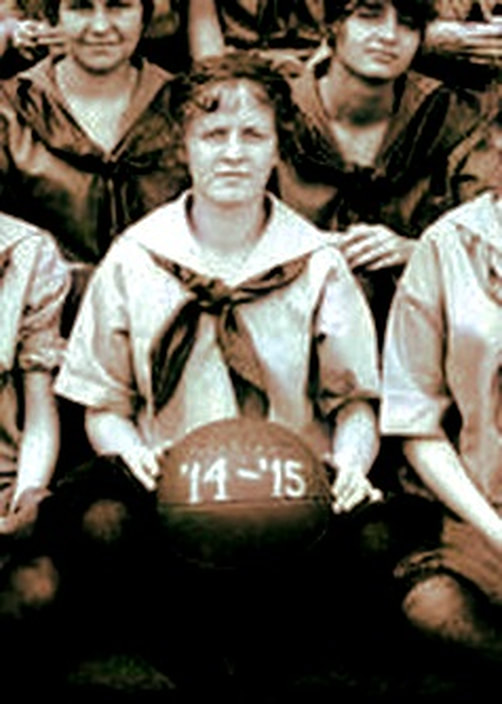
Kate Orr Keeley. Photo courtesy of Gallaudet University Archives
Dr. Karen Christie, an amateur historian and professor emeritus at NTID/RIT, researched and documented the life of Utah native Kate Orr Keeley. Kate, who never married, attended the Utah School for the Deaf from 1898 to 1908 and graduated from Gallaudet College in 1916.
While at Gallaudet, Kate distinguished herself as an outstanding athlete, participating in gymnastics, tennis, basketball, and swimming. Her accomplishments demonstrated the growing opportunities for Deaf women in athletics during the early twentieth century. Additional information about her life and achievements is available through Dr. Christie's Herstories of Deaf Women project, which highlights the contributions of Deaf women throughout history.
While at Gallaudet, Kate distinguished herself as an outstanding athlete, participating in gymnastics, tennis, basketball, and swimming. Her accomplishments demonstrated the growing opportunities for Deaf women in athletics during the early twentieth century. Additional information about her life and achievements is available through Dr. Christie's Herstories of Deaf Women project, which highlights the contributions of Deaf women throughout history.
Utah School for the Deaf Alums Participate in
Athletics at Gallaudet College
Three Deaf students from the Utah School for the Deaf, Alfred Charles Keeley, Arthur Winter Wenger, and Ray Grayson Wenger, attended Gallaudet College and participated in collegiate athletics during the 1910s, as shown in the photographs below.

Alfred Charles Keeley, Arthur Winter Wenger, and Ray Grayson Wenger at Gallaudet College. Source: FamilySearch.org

The Gallaudet basketball team. Front L-R: Arthur Wenger, Ray Wenger, Benjamin Schowe. Rear L-R: Charles Marshall, Kenneth William, John K. Cloud, and Coach Haas. Source: FamilySearch.org

Gallaudet Basketball Team. Arthur Winter Wenger, Alfred Charles Keeley, and Ray Grayson Wenger. Source: FamilySearch.org

The 1914 Gallaudet Basketball Team. Arthur Winter Wenger, Ray Grayson Wenger, and Alfred Charles Keeley. Source: FamilySearch.org

The 1914 Gallaudet Football Team. Alfred Charles Keeley can be seen standing on the third left. He and his team are at the White House to meet President Thomas Woodrow Wilson. Source: FamilySearch.org

Class of 1916, Gallaudet College Graduation. Front Row L-R: Ray G. Wenger (visitor), Alfred Charles Keeley, Kate Orr Keeley, and Arthur W. Wenger (visitor). Source: FamilySearch.org
Ray and Arthur Wenger Receive
an Honorary Doctorate of Science
Degrees from Gallaudet College
At Gallaudet College's 109th commencement on May 21, 1973, twin brothers Ray Grayson Wenger and Arthur Winter Wenger, both 80, received honorary Doctor of Science degrees for their distinguished contributions to bacteriology and biochemistry (Deseret News, May 8, 1973).
The Wenger brothers were known as Utah's Famous Twin Team" in science, education, and community service, earning admiration throughout the Deaf community (The Deaf American, January 1974; Kinney, UAD Bulletin, January 2002).
The Wenger brothers were known as Utah's Famous Twin Team" in science, education, and community service, earning admiration throughout the Deaf community (The Deaf American, January 1974; Kinney, UAD Bulletin, January 2002).

DOING THE HONORS. During the Gallaudet College commencement on May 21, 1973, Frank B. Sullivan (left), Grand President of the National Fraternal Society and a member of the college's Board of Directors, handed an honorary doctorate to Ray Wenger. Arthur received an honorary doctorate from Professor Francis Higgins on the right. Dr. Gilbert Deigado, the Graduate School's dean, is in the middle. Source: Petersen, The Deaf American, January 1974
Their accomplishments were particularly noteworthy because careers in scientific research were often difficult for Deaf individuals to pursue during the twentieth century. Through perseverance, intelligence, and professional excellence, the Wenger brothers established themselves as respected scientists in the fields of bacteriology and biochemistry.
When presenting the honorary degrees, Gallaudet University President Edward C. Merrill Jr. praised the brothers' achievements, noting that their success served as a "model and inspiration to other Deaf people" (UAD Bulletin, June 1973).
Although the Wenger brothers are best known for their work in chemistry-related fields, their unique distinction as identical twin brothers pursuing successful careers in the same scientific disciplines was later noted by Dr. Robert G. Sanderson and Valerie G. Kinney (e-mail message to Jodi Christel Becker, July 8, 2011).

Still Going Strong...Utah's Twins-The Doctors Wenger. Ray (left) and Arthur, are shown in their Salt Lake City laboratory with Barbara Wagner, their assistant. Source: The Deaf American, January 1974
A Controversial Decision
Ends the Gallaudet Banquet
In 1944, graduates of Gallaudet College living in Utah came together for the first time to establish what became known as the Gallaudet Banquet. The annual gathering provided alums with an opportunity to reconnect, share memories, and celebrate their common bond as graduates of their alma mater.
On December 5, 1946, approximately 20 Gallaudet alums and their spouses gathered at the Hotel Newhouse in Salt Lake City for the Third Annual Gallaudet Banquet. One of the featured speakers was Boyd E. Nelson, superintendent of the Utah Schools for the Deaf and the Blind, who presented a talk titled "Bushnell and Its Relation to Our School."
During a brief business meeting, Superintendent Nelson surprised attendees by proposing that future Gallaudet banquets be discontinued. Many alums believed the matter had not been fully discussed before the vote was taken. Before they had sufficient time to consider the proposal, the members voted and approved the plan.
Kenneth C. Burdett, affectionately known as "KB," a member of Gallaudet College's Class of 1934, expressed his disappointment over the decision. Reflecting on the banquet's cancellation, he wrote:
"It is disheartening, and Gallaudetians wonder why some people cannot be satisfied with a simple gathering without turning it into a subject of speculation, distorting the original idea of the first feast until it loses its intended purpose" (Burdett, The Utah Eagle, January 1947).
Like many Gallaudet graduates, KB held a deep affection for his alma mater and looked forward to the annual banquet as an opportunity to reconnect with old friends and relive cherished memories. Although not everyone shared his enthusiasm, he understood the importance of preserving opportunities for fellowship among alums.

Kenneth C. Burdett. Photo courtesy of Ronald C. Burdett
The Utah Deaf community already had a social organization known as the University Club. However, KB observed that the Gallaudet Banquet served a different purpose. It provided alums with a unique opportunity to celebrate their shared educational experiences and maintain connections with fellow graduates. KB noted that Gallaudet alums sought to respect differing viewpoints while preserving unity within the community. At the same time, they treasured memories of what many considered some of the happiest years of their lives (Burdett, The Utah Eagle, January 1947).

Kenneth C. Burdett. 1931 Gallaudet College Football Squad. Photo courtesy of Ronald C. Burdett

Joseph B. Burnett and Kenneth C. Burdett, the 1934 Gallaudet Kappa Kama. Photo courtesy of Ronald C. Burdett

Kenneth C. Burdett, 1934 Gallaudet Graduation. Photo courtesy of Ronald C. Burdett
Although the annual banquet was discontinued, interest in maintaining ties among Utah's Gallaudet graduates remained strong. In 1972, Utah alums established the Utah Beehive Chapter of the Gallaudet College Alumni Association (BCGUAA). The organization was founded to honor Gallaudet College as their alma mater, strengthen friendships among alums, and create additional opportunities for fellowship and community involvement. Rodney W. Walker, a member of Gallaudet's Class of 1939, later discussed the chapter's formation in his memoir, My Life Story (Walker, 2006).

Rodney W. Walker, a 1939 graduate of Gallaudet College. Source: The UAD Bulletin, April 1955
Old Dormitory at Gallaudet
Uncovers Surprises
Dr. Robert "Bob" G. Sanderson, a 1941 graduate of Gallaudet College and later a member of the university's Board of Trustees, shared a remarkable discovery in the UAD Bulletin in February 1992. While attending the fiftieth reunion of the Class of 1941, held October 21-26, 1991, Bob joined a Board of Trustees delegation touring College Hall, one of Gallaudet's oldest buildings.
As the group toured the historic dormitory, Bob suddenly left and headed directly to a room on the second floor where he had once studied as a student. There, he found a message he had engraved in a windowpane fifty years earlier. The inscription, "Sandie, '41," was still visible, preserving a personal connection to his college years (Sanderson, UAD Bulletin, February 1992).
As the group toured the historic dormitory, Bob suddenly left and headed directly to a room on the second floor where he had once studied as a student. There, he found a message he had engraved in a windowpane fifty years earlier. The inscription, "Sandie, '41," was still visible, preserving a personal connection to his college years (Sanderson, UAD Bulletin, February 1992).

Robert G. Sanderson, a 1941 Gallaudet College Senior. Photo courtesy of Barry Sanderson
The renovation of College Hall later revealed many hidden treasures from the building's 114-year history, including decorative pedestals, domed ceilings, stained-glass windows, and personal mementos left behind by generations of students. Recognizing the historical significance of Bob's inscription, renovation supervisor John Dunn removed the engraved windowpane, framed it using original wood from College Hall, and presented it to Bob. He subsequently donated the framed piece to Gallaudet's Office of Alumni Relations, where it was displayed in "Ole Jim," a space dedicated to preserving the university's history and honoring distinguished alums (Sanderson, UAD Bulletin, February 1992).

Robert G. Sanderson at the Gallaudet campus. Photo courtesy of Barry Sanderson
The First Tower Clock Yearbook
During his senior year at Gallaudet College, Bob served as president of the Class of 1941. Under his leadership, the class produced the first edition of the Tower Clock yearbook, establishing a tradition that continues today. The publication marked an important milestone in Gallaudet's history and reflected the class's commitment to preserving student memories and campus life (Gallaudet Daily Digest, "Board of Trustees Emeritus Robert 'Sandie' Sanderson Passed Away," 2012).
Over the years, the iconic Tower Clock image has appeared in yearbooks, artwork, photographs, posters, and other university publications. Bob took great pride in his class's accomplishment, recognizing the yearbook as a lasting contribution to Gallaudet University's heritage.
Over the years, the iconic Tower Clock image has appeared in yearbooks, artwork, photographs, posters, and other university publications. Bob took great pride in his class's accomplishment, recognizing the yearbook as a lasting contribution to Gallaudet University's heritage.

The Tower Clock 1941 Yearbook.
Courtesy of Gallaudet University Archives

The Tower Clock 1941 Yearbook.
Courtesy of Gallaudet University Archives
|

The Tower Clock 1941 Yearbook.
Courtesy of Gallaudet University Archives
|
Dr. Robert G. Sanderson Receives an Honorary Doctorate from Gallaudet University
In 2010, Gallaudet University awarded Dr. Robert G. Sanderson, 90, an honorary degree in recognition of more than 60 years of dedicated service to the Deaf community in Utah and across the nation. A lifelong supporter of his alma mater, Dr. Sanderson exemplified leadership, advocacy, and public service throughout his career (Coogan, Office of the President, May 3, 2010; UAD Bulletin, June 2010).
As president of the Class of 1941, a member of the university's Board of Trustees, and an advocate for Deaf rights, Dr. Sanderson left a lasting impact on both Gallaudet University and the Deaf community. His life reflected his deeply held belief:
"Deafness does not prevent a person from accomplishing what he sets out to do if he really wants to do it" (UAD Bulletin, March 2000, p. 1).
His words continue to inspire future generations of Deaf leaders, educators, and advocates.

Dr. Robert G. Sanderson Gallaudet Honored. Source: UAD Bulletin, June 2010, p. 1
Barbara Schell Bass,
Gallaudet President of
the Student Body Government

Barbara Schell Bass. Photo courtesy of Gallaudet University Museum
Barbara Schell Bass, who later taught at the Utah School for the Deaf, graduated from the Idaho School for the Deaf in 1956 and earned her degree from Gallaudet University in 1960.
During her senior year, Gallaudet held its first Student Body Government (SBG) election in which all students were eligible to vote, reflecting the university's commitment to student participation and representative leadership. In 1959, Barbara made history by becoming the first woman elected president of the Student Body Government (Source: Gallaudet University Museum).
Her election represented an important milestone not only for Gallaudet University but also for Deaf women in higher education. Utah and Idaho can proudly claim Barbara as a trailblazer whose achievement opened new leadership opportunities for future generations of women.
Gallaudet Deaf President Now
Movement of 1988
In March 1988, students at Gallaudet University launched the historic Deaf President Now (DPN) movement. Their goal was simple yet groundbreaking: to have a Deaf person lead the world's only university designed specifically for Deaf and hard-of-hearing students.
On March 6, 1988, the Gallaudet University Board of Trustees announced the appointment of Dr. Elisabeth Ann Zinser, a hearing candidate, as the university's seventh president. The board selected her over two highly qualified Deaf finalists, Dr. I. King Jordan and Dr. Harvey J. Corson. Many students, alumni, faculty, and staff viewed the decision as a profound injustice and a clear indication that Deaf individuals were still not considered capable of leading their own institution (Christiansen & Barnartt, 1995).
The board's decision sparked immediate protests that quickly grew into one of the most significant civil rights movements in Deaf history. Students, faculty, staff, and alumni united in demanding that the university be led by a Deaf president who understood the language, culture, and experiences of the Deaf community.
The Deaf President Now movement became a defining moment for Gallaudet University and the Deaf community. It demonstrated the importance of representation and self-determination while inspiring Deaf people throughout the United States and around the world. The movement also helped strengthen broader disability rights efforts and laid important groundwork for future advocacy initiatives.
"The Duck" Organizes a Rally
for a Gallaudet Deaf President
for a Gallaudet Deaf President
Gallaudet College officially became Gallaudet University in 1986. The following year, on August 24, 1987, university president Jerry C. Lee announced his resignation. A national search began to identify his successor, attracting sixty-seven applicants, including nine Deaf candidates. By February 1988, the Board of Trustees had narrowed the field to three finalists: Dr. Elisabeth A. Zinser, Dr. Harvey J. Corson, and Dr. I. King Jordan (Christiansen & Barnartt, 1995).
In response to the ongoing presidential search, a group of young alumni formed a committee known as "The Duck." On March 1, 1988, the organization sponsored a rally on Gallaudet University's football field to encourage the selection of a Deaf president. More than 1,500 students, alumni, faculty, and staff attended the event.
Flyers distributed at the rally emphasized that other institutions had long selected leaders who reflected their communities. They noted that Notre Dame had elected a Roman Catholic president, Wellesley College had elected a woman president, Yeshiva University had elected a Jewish president, and Howard University had elected a Black president. The flyers argued that Gallaudet University should likewise be led by a Deaf president (Christiansen & Barnartt, 1995).
According to historian Jack R. Gannon, the rally helped many students recognize the importance of Deaf leadership and the power of collective action. For many participants, it marked the beginning of a movement that would soon transform Deaf history.
Nan Nix, a 1983 graduate of the Utah School for the Deaf and a 1988 graduate of Gallaudet University, actively participated in the Deaf President Now movement. Like many students, she advocated passionately for the appointment of a Deaf president. In the photographs below, a blue circle identifies Nan, highlighting Utah's connection to this historic event.

Nan Hix, a 1988 graduate of Gallaudet University. Photo provided by Nan Hix

Nan Nix, a 1983 Utah School for the Deaf and 1988 Gallaudet College graduate, attended the rally on Gallaudet's football field on March 1, 1988. Photo courtesy of Nan Hix
As public interest in the presidential search grew, national media outlets such as The Washington Times and The Washington Post closely followed developments at Gallaudet. Between March 2 and March 5, 1988, the university received hundreds of letters from politicians, alumni, organizations, and community members urging the Board of Trustees to select a Deaf president.
Greg Hlibok, president of the Student Body Government and one of the future leaders of the Deaf President Now movement, even wrote to Dr. Zinser asking her to withdraw from consideration because students would not support her presidency (Christiansen & Barnartt, 1995).
Greg Hlibok, president of the Student Body Government and one of the future leaders of the Deaf President Now movement, even wrote to Dr. Zinser asking her to withdraw from consideration because students would not support her presidency (Christiansen & Barnartt, 1995).

Four student leaders of the Deaf President Now protest L-R: Tim Raurus, Bridgetta Bourne-Firl, Greg Hlibok, and Jerry Covell—leading protestors at Gallaudet University in March of 1988. Photo: Photo courtesy of Gallaudet University Archives
Announcement of Appointment as New Hearing
President of Gallaudet University
President of Gallaudet University
On March 5, 1988, the Board of Trustees met at the Mayflower Hotel in Washington, D.C., to interview the three finalists and select the university's next president. Students, faculty, staff, and alumni eagerly awaited the outcome, hoping the university would finally elect its first Deaf president.
Instead, the board selected Dr. Elisabeth Zinser. She received ten votes, while Dr. I. King Jordan received four. All Deaf members of the Board of Trustees voted for Dr. Jordan (Christiansen & Barnartt, 1995). One of those Deaf trustees was Dr. Robert G. Sanderson, a respected Utah educator and advocate.
Instead, the board selected Dr. Elisabeth Zinser. She received ten votes, while Dr. I. King Jordan received four. All Deaf members of the Board of Trustees voted for Dr. Jordan (Christiansen & Barnartt, 1995). One of those Deaf trustees was Dr. Robert G. Sanderson, a respected Utah educator and advocate.

Nan Nix, a 1983 Utah School for the Deaf and 1988 Gallaudet College graduate, participated in the event on March 3, 1988. Photo courtesy of Nan Hix
Although Dr. Zinser possessed strong academic credentials and administrative experience as vice chancellor for academic affairs at the University of North Carolina, she had no experience with Deaf issues and did not know sign language. The decision shocked students, faculty, staff, and alumni, particularly because two highly qualified Deaf candidates had been overlooked (Christiansen & Barnartt, 1995).
The controversy intensified when Jane Bassett Spilman, chair of the Board of Trustees, reportedly stated:
"Deaf people are not ready to function in the hearing world" (Sacks, 1988).
The statement outraged the Deaf community and reinforced concerns that the board fundamentally misunderstood the capabilities and aspirations of Deaf people.

Jane Bassett Spilman. Source: British Deaf News
Gallaudet's Deaf President Now Protest Has Begun
On March 7, 1988, students launched a week-long protest that became known as Deaf President Now. Students occupied the campus, barricaded entrances, and effectively shut down university operations in support of their demands. Faculty, staff, alumni, and members of the national Deaf community soon joined their efforts (Christiansen & Barnartt, 1995).
The movement drew national attention. News organizations across the country covered the protests, and members of Congress expressed concern because the federal government provided approximately 75 percent of Gallaudet University's funding.
Several Deaf members of the Board of Trustees publicly supported the protesters' goals, including Dr. Robert G. Sanderson, Dr. Frank Sullivan, and Phil Bravin. Together, they reaffirmed their belief that it was time for Gallaudet University to be led by a Deaf president (UAD Bulletin, April 1988).

Gallaudet students rally at the U.S. Capitol Building on March 11, 1988. Photo courtesy of Gallaudet University Archives
March to the U.S. Capitol
The students refused to reopen the university until the Board of Trustees agreed to four demands:
When the board initially rejected the demands, hundreds of determined protesters continued their campaign. More than 1,000 students, alumni, faculty, and supporters marched to the U.S. Capitol, led by the four principal student leaders of the movement: Greg Hlibok, Jerry Covell, Tim Rarus, and Bridgetta Bourne.
Despite opposition and uncertainty, the protesters remained united and continued pressing for change (Christiansen & Barnartt, 1995).
- The resignation of Dr. Elisabeth Zinser and the appointment of a Deaf president.
- The resignation of Board Chair Jane Bassett Spilman.
- An increase in Deaf representation on the Board of Trustees to at least 51 percent.
- No reprisals against students, faculty, staff, or alumni who participated in the protest.
When the board initially rejected the demands, hundreds of determined protesters continued their campaign. More than 1,000 students, alumni, faculty, and supporters marched to the U.S. Capitol, led by the four principal student leaders of the movement: Greg Hlibok, Jerry Covell, Tim Rarus, and Bridgetta Bourne.
Despite opposition and uncertainty, the protesters remained united and continued pressing for change (Christiansen & Barnartt, 1995).

Nan Nix, a 1983 Utah School for the Deaf and 1988 Gallaudet College graduate, joined the 'Deaf President Now' march to the Capitol on March 11, 1988. Photo courtesy of Nan Hix

Nax Hix, a 1983 Utah School for the Deaf and 1988 Gallaudet College graduate, joined the 'Deaf President Now' protest, along with her friend, Holly Parker Jensen (right) of Idaho, on March 11, 1988. Photo courtesy of Nan Hix
Dr. I. King Jordan Becomes the First
Deaf President of Gallaudet University
On March 13, 1988, the Board of Trustees convened at the Embassy Row Hotel to address the crisis. Students and supporters waited outside for nearly nine hours while the board deliberated.
At the conclusion of the meeting, Phil Bravin, a Deaf trustee, used a TTY to notify Greg Hlibok that all four demands had been met. Jane Bassett Spilman had stepped down as board chair, Deaf representation on the Board of Trustees would increase to 51 percent, and there would be no reprisals against protesters. Most importantly, Dr. I. King Jordan had been selected as the first Deaf president of Gallaudet University (Christiansen & Barnartt, 1995).
The victory marked a historic turning point. For the first time since the university's founding in 1864, Deaf people had successfully secured leadership of their own institution.

Irving King Jordan. Source: Wikipedia
The Deaf President Now movement demonstrated the power of collective action and self-advocacy. Students, alumni, faculty, staff, politicians, labor organizations, and members of the national Deaf community united to demand equality and representation. Their success showed that Deaf people did not need others making decisions on their behalf and could effectively shape their own future (Christiansen & Barnartt, 1995).
Among those advocating for change was Dr. Robert G. Sanderson of Utah. As a Deaf member of the Board of Trustees, he strongly supported the appointment of a Deaf president and helped advance the goals of the movement (UAD Bulletin, April 1988). His advocacy represented the culmination of decades of leadership, service, and commitment to the Deaf community.
Reflecting on his experiences at Gallaudet, Dr. Sanderson later stated:
"I not only value the academic learning that took place, but also the personal relationships I formed as a student. I encountered various cultures, interacted with diverse individuals, and welcomed fresh perspectives. I learned not to take myself too seriously and discovered my strengths, as well as, more importantly, my weaknesses. I don't believe this could have occurred anywhere else. Gallaudet served as a uniquely tailored environment that allowed me to develop into the person I am today. Now that I am in a position to give back, I am excited to contribute my time, energy, and resources to help enhance this exceptional institution for future generations" (Turk, From Oaks to Acorns, 2019, pp. 63-64).
His words reflect the deep appreciation many graduates feel for Gallaudet University and its enduring influence on the lives of Deaf people.
Learn More About Deaf President Now
If you are interested in learning more about the Deaf President Now movement, Deaf Legacy has produced a documentary that explores this watershed moment in Deaf history. The film features participants and leaders who reflect on the progress achieved through the movement and the challenges that remain today.
You may also wish to watch Deaf President Now!, the documentary produced by Nyle DiMarco and Davis Guggenheim. The film recounts the dramatic eight days of protests that transformed Gallaudet University and elevated Deaf civil rights onto the national stage.
The documentary features interviews with the "Gallaudet Four" student leaders, Greg Hlibok, Bridgetta Bourne-Firl, Tim Rarus, and Jerry Covell, as well as Dr. I. King Jordan. Through archival footage and a narrative style designed to immerse viewers in the Deaf experience, the film tells the story of how a group of determined students changed history and helped pave the way for greater equality and inclusion throughout the United States.

Apple TV's Deaf President Now! Documentary. Source: tv.apple.com
Dr. Robert G. Sanderson Meets
President Bill Clinton During Gallaudet
University's 1994 Commencement

At the Gallaudet University commencement in 1994, Dr. Robert G. Sanderson shook hands with U.S. President William "Bill" Clinton. Photo courtesy of Barry Sanderson
During Gallaudet University's 1994 commencement ceremony, Dr. Robert G. Sanderson, a member of the university's Board of Trustees and one of Utah's most distinguished Deaf leaders, had the opportunity to meet and shake hands with President William "Bill" Clinton.
President Clinton's participation in the commencement ceremony reflected the growing national recognition of Gallaudet University's contributions to higher education and the advancement of Deaf people. For Dr. Sanderson, who had dedicated decades of service to the Deaf community at the local, state, and national levels, the occasion represented a memorable moment in his long association with the university.
The meeting also symbolized the increasing visibility of Deaf leaders within American society. Following the success of the 1988 Deaf President Now movement, Gallaudet University had become an internationally recognized symbol of Deaf leadership, accessibility, and educational opportunity. Dr. Sanderson's presence as a trustee at the ceremony demonstrated the important role Deaf individuals continued to play in shaping the university's future and advocating for the needs of the Deaf community.
As both a Gallaudet graduate and Board of Trustees member, Dr. Sanderson helped strengthen the university's mission of providing equal educational opportunities for Deaf and hard-of-hearing students while promoting leadership, academic excellence, and public service.
Dr. I. King Jordan, Gallaudet University
President Visits Dr. Robert G. Sanderson's
Naming Honorary Ceremony on October 4, 2003
Dr. Robert G. Sanderson played an important role in the Deaf President Now movement of 1988 as a member of Gallaudet University's Board of Trustees. Along with other Deaf trustees, he advocated for the appointment of a Deaf president, contributing to the historic selection of Dr. I. King Jordan as Gallaudet University's first Deaf president (UAD Bulletin, April 1988).
Over the years, Dr. Jordan and Dr. Sanderson developed a close professional relationship through their service to Gallaudet University and the Deaf community. In recognition of Dr. Sanderson's lifelong contributions to Deaf education, advocacy, and public service, Dr. Jordan traveled to Utah to participate in the naming ceremony of the Dr. Robert G. Sanderson Community Center on October 4, 2003. His presence highlighted Dr. Sanderson's national reputation and the profound impact he had on both Utah and the broader Deaf community.
Over the years, Dr. Jordan and Dr. Sanderson developed a close professional relationship through their service to Gallaudet University and the Deaf community. In recognition of Dr. Sanderson's lifelong contributions to Deaf education, advocacy, and public service, Dr. Jordan traveled to Utah to participate in the naming ceremony of the Dr. Robert G. Sanderson Community Center on October 4, 2003. His presence highlighted Dr. Sanderson's national reputation and the profound impact he had on both Utah and the broader Deaf community.

Dr. I. King Jordan and his wife, Linda Kephart King visit Dr. Robert G. Sanderson's honorary ceremony on October 4, 2003. Photo courtesy of the Sanderson Community Center

Dr. I. King Jordan and his wife, Linda Kephart King visit Dr. Robert G. Sanderson's honorary ceremony on October 4, 2003. Photo courtesy of the Sanderson Community Center

Dr. I. King Jordan and Dr. Robert G. Sanderson at the Sanderson Honorary ceremony on October 4, 2003. Photo courtesy of the Sanderson Community Center
|

L-R: Dr. I. King Jordan, and Dr. Robert G. Sanderson at the Sanderson Honorary ceremony on October 4, 2003. Photo courtesy of the Sanderson Community Center

Dr. I. King Jordan and Dr. Robert G. Sanderson at the Sanderson Honorary ceremony on October 4, 2003. Photo courtesy of the Sanderson Community Center

Dr. I. King Jordan and his wife, Linda Kephart King visit Dr. Robert G. Sanderson's honorary ceremony on October 4, 2003. Photo courtesy of the Sanderson Community Center
|
A Principle of Fair Representation
In June 1989, Ronald "Ron" J. Nelson, the great-nephew of Boyd E. Nelson, former superintendent of the Utah Schools for the Deaf and the Blind, published an influential article in the UAD Bulletin under the pseudonym "Mabel Bell." Inspired by the Deaf President Now movement at Gallaudet University the previous year, Ron examined the principle of fair representation and its importance to the Utah Deaf community (Bell, UAD Bulletin, June 1989).
The successful outcome of the Deaf President Now movement demonstrated that collective action could bring about meaningful change. For Ron, the movement raised an important question: if Deaf individuals were capable of leading Gallaudet University, why were Deaf people so often excluded from leadership positions in programs and agencies serving the Deaf community in Utah?
Ron argued that many hearing administrators, educators, and policymakers made decisions affecting Deaf individuals without actively consulting the Deaf community. Although many intended to help, their actions often reflected what Dr. Harlan Lane described in When the Mind Hears as the "hearing mother" mentality, a paternalistic belief that hearing people knew what was best for Deaf individuals. According to Ron, this approach limited opportunities for Deaf people to develop independence, leadership skills, and self-determination (Bell, UAD Bulletin, June 1989, p. 2).

Ronald J. Nelson. Photo courtesy of the Sanderson Community Center
Reflecting on the events at Gallaudet University, Ron observed that the Board of Trustees' decision to appoint a hearing president over qualified Deaf candidates reflected the same mindset. He noted that some decision-makers viewed themselves as benevolent benefactors while failing to consider the perspectives and experiences of Deaf individuals. The Deaf President Now movement challenged those assumptions and demonstrated that Deaf people were fully capable of leading their own institutions (Bell, UAD Bulletin, June 1989, p. 2).
Ron emphasized that effective programs should empower Deaf individuals to develop their talents, pursue leadership opportunities, and shape policies affecting their lives. He believed that programs serving the Deaf community would be most successful when Deaf people played meaningful roles in planning, administration, and decision-making (Bell, UAD Bulletin, June 1989, p. 2).
The Deaf President Now movement also prompted Ron to ask a challenging question of educational and rehabilitation agencies throughout Utah. If Deaf students were receiving education and training, why were qualified Deaf individuals not being prepared to assume leadership positions within those same agencies? He questioned why more Deaf people were not being hired to oversee programs that directly affected the Deaf community and future generations of Deaf students (Bell, UAD Bulletin, June 1989, p. 3).
At the time, Dennis R. Platt served on the Institutional Council for the Utah Schools for the Deaf and the Blind and was one of the few Deaf individuals holding a state-level leadership position. Ron believed that greater Deaf representation was needed throughout Utah's educational and governmental systems. He cited comments made during the Deaf President Now movement, including those of Dr. Allen Sussman of Gallaudet University, who argued that institutions serving Deaf individuals needed to move beyond the longstanding tradition of hearing people making decisions on behalf of Deaf people. Leonard F. Navrat expressed a similar view, emphasizing that the era of hearing individuals deciding what was "best" for Deaf people should come to an end (Bell, UAD Bulletin, June 1989, pp. 2-3).

Dennis R. Platt. Photo courtesy of Shirley Hortie Platt
Ron viewed Deaf President Now not as the conclusion of a struggle but as the beginning of a larger movement. He encouraged Deaf individuals to continue advocating for themselves and to use the lessons learned at Gallaudet University to promote greater representation and equality in Utah. He believed that many hearing administrators would be reluctant to surrender authority and that meaningful change would require the Deaf community to actively participate in shaping its own future (Bell, UAD Bulletin, June 1989, p. 3).
One of the most powerful statements to emerge from the Deaf President Now movement came from Reverend Jesse L. Jackson, who observed:
"The problem is not that the students do not hear. The problem is that the hearing world does not listen" (Bell, UAD Bulletin, June 1989, p. 3).
Ron believed this statement applied not only to Gallaudet University but also to state and local agencies serving Deaf people. He urged those agencies to learn from the mistakes made at Gallaudet and to ensure that Deaf individuals were included in decisions affecting their lives.

Reverend Jesse Jackson. Source: Wikipedia
Ron pointed to several encouraging developments in Utah. The Utah School for the Deaf had established a Sign Language Committee composed primarily of Deaf members to examine communication practices in the total communication program. In addition, the Institutional Council established a Commission on Education for the Deaf Committee to review and discuss the implementation of recommendations from the national Commission on Education of the Deaf. Four of the committee's sixteen members were Deaf, representing an important step toward greater representation (Bell, UAD Bulletin, June 1989, p. 3).

The Commission on Education of the Deaf Book, February 1988.
Photo from the private collection of Jodi Christel Becker
Looking to the future, Ron hoped to see qualified Deaf individuals serving in leadership positions throughout Utah, including:
Ron emphasized that Deafness alone should not qualify an individual for a position. Rather, qualified Deaf candidates brought unique cultural knowledge, lived experience, and a deep understanding of the needs of the Deaf community. He encouraged members of the Deaf community to become active participants in organizations such as the Utah Association of the Deaf, the Utah Valley Chapter of the Deaf, and Deaf athletic organizations. By becoming involved, Deaf individuals could strengthen their collective voice and advocate effectively for meaningful change (Bell, UAD Bulletin, June 1989, p. 4).
In concluding his article, Ron reminded readers that hearing individuals routinely benefited from fair representation in government, education, and public life. He argued that Deaf people deserved the same opportunity to influence decisions affecting their communities. Fair representation, he believed, was not a privilege but a fundamental right.
Drawing inspiration from Reverend Jesse L. Jackson, Ron ended with a message of hope and determination:
"If your mind can conceive it and your heart can believe it, then you can achieve it" (Bell, UAD Bulletin, June 1989, p. 4).
His message echoed the spirit of the Deaf President Now movement and challenged the Utah Deaf community to continue pursuing leadership, equality, and self-determination for future generations.
- Director of the Utah Community Center of the Deaf
- Director of DSDHI
- Coordinator of Deaf education programs
- Vocational rehabilitation counselor positions
- Membership on state disability committees
- Religious leadership positions
- Membership on the State Board of Education
- Administrative and teaching positions at the Utah School for the Deaf
- Director of a future State Commission on Deafness (Bell, UAD Bulletin, June 1989, p. 3).
Ron emphasized that Deafness alone should not qualify an individual for a position. Rather, qualified Deaf candidates brought unique cultural knowledge, lived experience, and a deep understanding of the needs of the Deaf community. He encouraged members of the Deaf community to become active participants in organizations such as the Utah Association of the Deaf, the Utah Valley Chapter of the Deaf, and Deaf athletic organizations. By becoming involved, Deaf individuals could strengthen their collective voice and advocate effectively for meaningful change (Bell, UAD Bulletin, June 1989, p. 4).
In concluding his article, Ron reminded readers that hearing individuals routinely benefited from fair representation in government, education, and public life. He argued that Deaf people deserved the same opportunity to influence decisions affecting their communities. Fair representation, he believed, was not a privilege but a fundamental right.
Drawing inspiration from Reverend Jesse L. Jackson, Ron ended with a message of hope and determination:
"If your mind can conceive it and your heart can believe it, then you can achieve it" (Bell, UAD Bulletin, June 1989, p. 4).
His message echoed the spirit of the Deaf President Now movement and challenged the Utah Deaf community to continue pursuing leadership, equality, and self-determination for future generations.
Unity for Gallaudet Movement of 2006
Eighteen years after the historic Deaf President Now movement, Gallaudet University once again became the center of a national debate over leadership and representation. In 2006, students, faculty, staff, alumni, and supporters launched the Unity for Gallaudet movement in response to the selection of Dr. Jane K. Fernandes as the university's next president following the retirement of Dr. I. King Jordan.
Critics of the movement often characterized the controversy as a question of whether Jane Fernandes was "Deaf enough." Although she was born Deaf and came from a Deaf family, she did not learn American Sign Language until adulthood. However, many protesters rejected that interpretation and argued that their concerns focused primarily on leadership, governance, communication, and the future direction of the university. They questioned whether Jane possessed the vision, credibility, and community support necessary to lead the world's premier institution of higher education for Deaf students.
The Unity for Gallaudet movement evolved into one of the largest protests in the university's history. Ultimately, the Board of Trustees rescinded Jane's appointment, demonstrating once again the influence of collective action within the Deaf community. The board later appointed Dr. Robert Davila as interim president, ushering in a new chapter in the university's history.
Celia May Laramie Baldwin
Announces the New Gallaudet President
Announces the New Gallaudet President
On May 1, 2006, Celia May Laramie Baldwin, interim chairperson of Gallaudet University's Board of Trustees, announced the selection of Dr. Jane K. Fernandes as the university's ninth president.
Celia May had strong ties to Utah. She graduated from the Utah School for the Deaf in 1965 and later earned a degree from Gallaudet College in 1970. She also taught at the Utah School for the Deaf before becoming involved in national leadership efforts within the Deaf community.
Jane Fernandes was selected from a finalist group that also included Dr. Stephen Weiner and Dr. Ronald Stern. Although the Board of Trustees supported her appointment, opposition emerged almost immediately among students, faculty, staff, alumni, and community members who questioned the presidential selection process and the university's future direction.

Celia May Laramie Baldwin, a Board of Trustees Member at Gallaudet University. Photo provided by Celia May Laramie Baldwin
A Protest Against the Elected Gallaudet President Begins
In 1998, Gallaudet University appointed Celia May Laramie Baldwin to its Board of Trustees. She was a 1965 graduate of the Utah School for the Deaf and a 1970 graduate of Gallaudet College. Announcing her appointment, university president Dr. I. King Jordan praised her extensive experience in Deaf education and expressed confidence that she would be an excellent addition to the board (Kaila, 1998).
Celia May served on the Board of Trustees for approximately seven years. However, following the announcement of Dr. Jane Fernandes as Gallaudet University's next president, she became the target of criticism and personal threats related to the presidential selection process. As tensions increased, Celia May resigned from the board in May 2006.
Opposition to Jane Fernandes' selection quickly emerged on campus. During the presidential announcement ceremony, Gallaudet graduate student and political activist Ryan Commerson openly challenged the decision and was escorted from the auditorium by campus security officers. Ryan later became well known within the Deaf community and served as the plenary speaker at the 2009 Utah Association for the Deaf Conference.
His removal sparked an immediate response from students. Many walked out of the auditorium in protest and began organizing demonstrations calling for Jane Fernandes' appointment to be reversed. The protest lasted approximately a week and a half before subsiding at the end of the academic year when students returned home for the summer break (Unity for Gallaudet, 2007).
What began as opposition to a presidential appointment soon evolved into a larger discussion about leadership, accountability, communication, and the future direction of Gallaudet University.

Ryan Commerson. Photo by D. Scott Clark
The Protest Becomes More Intense
When students returned for the fall semester, demonstrations resumed and quickly escalated. Protesters occupied campus buildings and temporarily shut down university operations for several days (Berke, 2014).
During this period, the Faculty, Students, Staff, and Alumni Association (FSSA) emerged as a unified coalition representing all segments of the Gallaudet community, including several minority organizations that believed their concerns had been overlooked.
The FSSA presented three primary demands:
These demands echoed the spirit of the Deaf President Now movement while reflecting the unique concerns of a new generation of Deaf leaders.
During this period, the Faculty, Students, Staff, and Alumni Association (FSSA) emerged as a unified coalition representing all segments of the Gallaudet community, including several minority organizations that believed their concerns had been overlooked.
The FSSA presented three primary demands:
- The resignation of Dr. Jane Fernandes
- The reopening of the presidential search process
- No reprisals against protest participants (Marsh, UAD Bulletin, November 2006).
These demands echoed the spirit of the Deaf President Now movement while reflecting the unique concerns of a new generation of Deaf leaders.

Dr. Jane Fernandes. Photograph by Chris Hartlove for Boston.com
Faculty, Students, Staff, and Alumni Reject
Jane Fernandes' Presidency
Jane Fernandes' Presidency
As the protests continued, many members of the university community expressed concerns about the administration's performance and the process used to select the next president.
Faculty, staff, students, and alumni cited low graduation rates, concerns regarding academic quality, and dissatisfaction with administrative policies during Dr. Fernandes' tenure as provost (Marsh, UAD Bulletin, November 2006; Berke, 2014).
The faculty had previously passed a vote of no confidence regarding her leadership, while the Gallaudet Student Congress later approved a resolution declaring that it would not recognize Dr. Fernandes as the university's ninth president (Unity for Gallaudet, 2007).
For many participants, the movement had expanded beyond a single individual and become a broader conversation about Gallaudet University's future, governance, and commitment to ASL-English bilingual education.

The Tent Rally in Salt Lake City, Utah, October 14, 2006.
Photo from the private collection of Jodi Christel Becker
"Black Friday:" More than 130 Gallaudet Protestors Arrested
Tensions reached a dramatic turning point on October 13, 2006, later known as "Black Friday."
More than 130 protesters were arrested for acts of civil disobedience after blocking campus entrances. The arrests represented one of the largest protest actions in Gallaudet University's history. At the time, outgoing president Dr. I. King Jordan authorized the university's response to the demonstrations.
Among those arrested was Tim Rarus, one of the four student leaders of the Deaf President Now movement in 1988. According to participants, Rarus famously shouted,
"I helped put you in office; now you're arresting me!"
before being taken into custody (Unity for Gallaudet, 2007).
The arrests illustrated the growing divide between university leadership and members of the campus community who believed fundamental changes were necessary.

Protestors block the main entrance of Gallaudet to protest Dr. Fernandes’s appointment. 134 students are arrested. Photo: Andrew Cutraro for The New York Times
Reflecting on the situation, Trenton Marsh, a Utah resident and a 1991 graduate of the California School for the Deaf in Fremont, observed:
"It is strange that I. King Jordan would begin and end his time as president at Gallaudet with two protests."
Writing in the UAD Bulletin, Trenton argued that the Deaf President Now movement of 1988 represented an important step toward social equality for Deaf people. However, he believed the Unity for Gallaudet protest demonstrated that the struggle for equal representation and meaningful participation in decision-making was still ongoing (Marsh, UAD Bulletin, November 2006).
The event illustrated how deeply divided the community had become and how strongly participants felt about the future of the university.

Trenton Marsh.
Photo from the private collection of Jodi Christel Becker
Tent City Spreads Across the Nation
As support for the movement grew, students established "Tent City" on the Gallaudet campus under the leadership of Chris Corrigan, known as the "Mayor of Tent City."
On October 21, 2006, more than 4,000 supporters marched to Capitol Hill, recalling the historic march during Deaf President Now in 1988. Similar Tent City rallies soon appeared throughout the United States.
Utah was among the states that joined the effort. Support rallies were organized in Salt Lake City and St. George, demonstrating solidarity with the Faculty, Students, Staff, and Alumni Association (FSSA) and the Unity for Gallaudet movement (Marsh, UAD Bulletin, November 2006).

Duane Kinner's tent with Joshua Kinner, age 5 standing to support the FSSA.
Photo from the private collection of Jodi Christel Becker

Tent City in Salt Lake City, Utah.
Photo from the private collection of Jodi Christel Becker
The Henry C. White Educational Council, which later merged its efforts with the Utah Association for the Deaf, organized fundraising activities in Salt Lake City. Volunteers sold hot dogs, chips, and refreshments throughout the day, while members of the local Deaf community contributed additional donations totaling $326.00 for the FSSA (Marsh, UAD Bulletin, November 2006).
Among those attending the Salt Lake City rally was Rodney W. Walker, a member of Gallaudet's Class of 1939. At 88 years of age, he was the oldest participant at the event.
Among those attending the Salt Lake City rally was Rodney W. Walker, a member of Gallaudet's Class of 1939. At 88 years of age, he was the oldest participant at the event.

Rodney W. Walker, 88, graduated from Gallaudet in 1939 and is the oldest 'Tent City' attendee in Utah.
Photo from the private collection of Jodi Christel Becker
In St. George, Ronald C. Burdett and his wife, Joyanne K. Rasmus, both members of Gallaudet College's Class of 1970, organized a local Tent City gathering attended by fourteen supporters. During the event, Joyanne reflected on the lasting impact of Deaf President Now, explaining that the movement had helped make a profound difference for Deaf and hard-of-hearing people throughout the world (Burdett, UAD Bulletin, November 2009).
Ron Burdett, the son of Kenneth C. Burdett, a 1934 Gallaudet graduate, and brother-in-law of Phil Bravin, a member of Gallaudet University's Board of Trustees, presented a brief history of both the Deaf President Now and Unity for Gallaudet movements. Following the gathering, Joyanne described the experience as "both touching and inspiring" (Burdett, UAD Bulletin, November 2009, p. 7).
Unlike the Deaf President Now movement of 1988, participants in 2006 benefited from new communication technologies. Blogs, websites, email, and video blogs enabled supporters across the country to follow events in real time, exchange information, and mobilize support. These technological advances helped unify the Deaf community nationwide and demonstrated the growing power of digital communication in advocacy efforts.

Joyanne K. Rasmus & Ronald C. Burdett. The UAD Bulletin, Winter 1970
Gallaudet University Appoints
an Interim President
After months of protests and growing opposition, the Board of Trustees concluded that Dr. Fernandes could not effectively lead the university without broad community support.
On October 29, 2006, Dr. Fernandes resigned, bringing the protest movement to a successful conclusion.
In December 2006, the university appointed Dr. Robert Davila as interim president. A respected Deaf educator and administrator, Dr. Davila immediately began working to rebuild trust throughout the university community.
Working alongside Provost Stephen Weiner, he helped address campus concerns and strengthened support for ASL-English bilingualism and academic improvement (Berke, 2014).

Dr. Robert R. Davila. Source: Gallaudet.edu
Gallaudet University Selects
Its 10th President
The Unity for Gallaudet movement had a lasting impact on the university.
In 2007, the Middle States Commission on Higher Education placed Gallaudet University on probation, citing concerns involving governance, leadership, academic quality, and institutional effectiveness (Berke, 2014).
Following substantial improvements, the commission reaffirmed Gallaudet University's accreditation on June 27, 2008 (Unity for Gallaudet, 2007).
On January 1, 2010, Dr. T. Alan Hurwitz became Gallaudet University's tenth president. Looking back on the controversy, he noted that many of the disagreements appeared to involve concerns about the presidential selection process and the future direction of the university rather than Deaf identity alone (Durr, 2011).
Like Deaf President Now before it, the Unity for Gallaudet movement demonstrated the willingness of the Deaf community to advocate for representation, accountability, and strong leadership. Together, these two historic movements helped shape modern Gallaudet University and reinforced its role as a symbol of Deaf empowerment and self-determination.

Dr. T. Alan Hurwtiz. Source: Gallaudet.edu
Gallaudet University Selects
Its 11th President
On January 1, 2016, Roberta J. "Bobbi" Cordano became the eleventh president of Gallaudet University. As the university's fourth Deaf president and the first Deaf woman and openly queer person to serve in the position, her appointment marked another historic milestone in Gallaudet's history.
Prior to becoming president, Dr. Cordano was widely recognized for her advocacy of ASL-English bilingual education and her leadership in establishing two charter schools for Deaf students in the Minneapolis-St. Paul area. Throughout her presidency, she has championed educational access, leadership development, and social justice initiatives that have strengthened Gallaudet University's role as a global leader in Deaf education.
Following the worldwide conversations on racial equity sparked by the Black Lives Matter movement in 2020, Dr. Cordano led a comprehensive anti-racism initiative at Gallaudet University. Her administration also supported the creation of the Black Deaf Center for Black Deaf Studies, which promotes awareness, scholarship, and educational resources related to the experiences and contributions of Black Deaf individuals (Georgiadis, 2021).
Under Dr. Cordano's leadership, Gallaudet University has continued to expand its influence as a center of Deaf culture, higher education, research, and advocacy. Her presidency reflects the ongoing evolution of the university and its commitment to diversity, equity, inclusion, and Deaf empowerment.

Roberta J. “Bobbi” Cordano. Source: medium.com
Conclusion
The history of Gallaudet University is closely intertwined with the history of Utah's Deaf community. From pioneering students such as Elizabeth DeLong and John H. Clark to influential leaders including Kenneth C. Burdett, Dr. Robert G. Sanderson, Celia May Laramie Baldwin, and many others, Utahns have played meaningful roles in shaping the university's legacy.
Historic movements such as Deaf President Now in 1988 and Unity for Gallaudet in 2006 demonstrated the importance of representation, self-determination, and leadership within the Deaf community. These events not only transformed Gallaudet University but also inspired advocacy efforts that extended far beyond its campus, influencing Deaf education, civil rights, and community leadership throughout the United States.
Many members of the Deaf community, including those of us in Utah, have felt the lasting impact of these historic achievements. They remind us that progress is possible when people work together to advocate for equal opportunity, accessibility, and inclusion.
As we celebrate Gallaudet University's rich history and Utah's contributions to that story, we also recognize that the work of advancing Deaf education, leadership, and civil rights continues. The legacy of those who came before us inspires future generations to pursue their goals, strengthen their communities, and ensure that Deaf voices continue to be heard.
A Slideshow of the 'Unity for
Gallaudet' Tent City in Salt Lake City, Utah,
October 14, 2006
The following photographs document Utah's participation in the Unity for Gallaudet movement. Community members gathered in Salt Lake City to support the students, faculty, staff, and alumni advocating for change at Gallaudet University. These images serve as a reminder of the strong connection between Utah's Deaf community and the ongoing pursuit of representation, leadership, and equality.
Personal Communication
Thomas C. Clark, e-mail message to Jodi Christel Becker, November 13, 2008.
Robert G. Sanderson and Valerie G. Kinney, e-mail message to Jodi Christel Becker, July 8, 2011.
Robert G. Sanderson and Valerie G. Kinney, e-mail message to Jodi Christel Becker, July 8, 2011.
Sources
Banks, Gladys W., and Douglas W. Banks. The DeLong Family Saga.
Bell, Mabel. "The Deaf Eye." The UAD Bulletin, vol. 12, no. 14 (June 1989): 2-4.
Berke, Jamie. "Gallaudet University: Unity for Gallaudet." June 3, 2014. Available at: About.com Deafness.
Burdett, Joyanne. "Southern News." UAD Bulletin, vol. 30, no. 6 (November 2006): 6-7.
Burdett, Kenneth C. "Lee Shepherd." The Utah Eagle, vol. 58, no. 4 (January 1947): 9.
Christiansen, J. B., and S. M. Barnartt. Deaf President Now! The 1988 Revolution at Gallaudet University. Washington, D.C.: Gallaudet University Press, 1995.
Coogan, Megan. "Utah Native Dr. Robert G. Sanderson to Receive an Honorary Degree from Gallaudet University." Office of the President, May 3, 2010.
"Deaf Twins Honored." Deseret News, May 8, 1973.
"Deaf Utahn Named as President Emeritus of NAD." UAD Bulletin, vol. 23, no. 10 (March 2000): 1.
"DeLong and Clark with Driggs to Gallaudet." The Ogden Standard, September 15, 1897.
"DeLong and Clark on Gallaudet Buff and Blue." Ogden Standard, June 19, 1901, pp. 1-4.
"Dr. Robert G. Sanderson Honored." UAD Bulletin, vol. 34, no. 1 (June 2010): 1.
Durr, Patti. "Chart Comparing DPN and UFG." November 3, 2011.
Elstad, Leonard M. "Streamlined Education for the Deaf." The Utah Eagle (December 1954): 12-13.
"Gallaudet College." The Silent Worker, vol. 13, no. 4 (December 1900): 51.
Gannon, Jack R. The Week the World Heard Gallaudet. Washington, D.C.: Gallaudet University Press, 1987.
Georgiadis, Fotis. "Roberta J. Cordano of Gallaudet University: Why We Should Teach Everyone Sign Language From Birth." January 26, 2021.
"Graduates." Biennial Report of the Trustee and Superintendent of the Utah State School for the Deaf, Dumb, and Blind, 1901-1902, p. 9.
"History of the Deaf." The Utah Eagle, vol. XVI, no. 9 (June 6, 1906): 139.
Kinney, Valerie. "Utah Deaf Trivia." UAD Bulletin, vol. 25, no. 8 (January 2002): 2.
"Locals." The Buff and Blue, vol. 10, no. 1 (October 1901): 29.
Louriteen, Wesley. "Gallaudet College." The Utah Eagle (February 1947): 6.
Marsh, Trenton. "Tent City Rally." UAD Bulletin, vol. 30, no. 6 (November 2006): 6.
"Old Dormitory at Gallaudet Uncovers Surprises." UAD Bulletin, vol. 15, no. 9 (February 1992): 1.
Petersen, Eugene W. "Wenger Twins Honored with Gallaudet Doctorates." The Deaf American, vol. 26, no. 5 (January 1974): 3-4.
"Recipients of Honorary Degrees from Gallaudet College." UAD Bulletin, vol. 8, no. 3 (June 1973): 1.
Roberts, Elaine M. The Early History of the Utah School for the Deaf and Its Influence in the Development of a Cohesive Deaf Society in Utah, Circa 1884-1905. Master's thesis, Brigham Young University, August 1994.
Runde, Winfield S. "A Deaf Civil Engineer." The Silent Worker, vol. 8, no. 9 (May 1956): 2-3.
Sacks, Oliver. "The Revolution of the Deaf." The New York Review of Books, June 2, 1988.
"Selection of New President Sets Off Nationwide Protest." UAD Bulletin, vol. 11, no. 11 (April 1988): 2.
"This Week in 19th Amendment History: Agatha Tiegel Hanson." Arlington Public Library, October 14, 2019.
"Unity for Gallaudet." Wikipedia, 2007.
"US History Encyclopedia: Gallaudet University."
"USDB." Ogden Standard, May 8, 1897, p. 5.
Walker, Rodney W. My Life Story. 2006.
