Welcome to My Journey Through
the Utah Deaf History Project!
the Utah Deaf History Project!
Welcome to my journey through the Utah Deaf History project!
On October 21, 2012, I launched this website with the goal of preserving and sharing the rich history, culture, and experiences of the Utah Deaf community. Through oral histories, documents, photographs, and research, this project seeks to document the people, events, achievements, and challenges that have shaped our community.
This website is a community effort, and your participation is always welcome. Whether you share stories, volunteer, contribute historical materials, or provide feedback, your involvement helps preserve Utah Deaf history for future generations.
Throughout this website and in my Author's Notes, I share my research, experiences, and observations about historical events. By understanding our past, we gain a deeper appreciation for the people and experiences that have shaped the Utah Deaf community.
My journey into Utah Deaf history began in 2006, inspired by my father-in-law, Kenneth L. Kinner, often known as Ken. He graduated from the Utah School for the Deaf in 1954 and had two Deaf children, Deanne and Duane. Ken was a gifted storyteller whose memories and experiences opened my eyes to the rich, untold history of Utah's Deaf community and, in many ways, opened the gate to a world of stories that had long gone untold. His encouragement and support motivated me to begin documenting these stories, and this website is, in part, a tribute to his legacy of opening the "gate" to this remarkable history.

Kenneth L. Kinner. Photo courtesy of Kenneth and Ilene Kinner
On October 21, 2006, during a board meeting of the Utah Association for the Deaf, I had the privilege of interviewing Dr. Robert G. Sanderson, affectionately known as Bob or Sandie. He is one of Utah's most influential Deaf leaders. As I listened to his stories and asked him questions, he looked directly at me and offered a piece of advice that I have never forgotten:
"Do your homework."
He encouraged me to consult UAD Bulletins, newspapers, and other historical sources rather than relying solely on memories and secondhand accounts. Those three simple words became the foundation of my approach to historical research.
Since that day, I have strived to follow his advice by carefully combining archival research, oral histories, UAD Bulletins, Utah Eaglemagazines, newspaper articles, interviews, and personal recollections into a coherent historical record. His words not only shaped my research methods but also instilled in me a deep respect for accuracy, documentation, and preservation.
Whenever I begin a new research project, Bob's reminder still echoes in my mind:
"Do your homework."
Bob Sanderson's well-known motto, "Do Your Homework," is also referenced in a letter written to him by Dr. Kim Burningham, which is included far below.
"Do your homework."
He encouraged me to consult UAD Bulletins, newspapers, and other historical sources rather than relying solely on memories and secondhand accounts. Those three simple words became the foundation of my approach to historical research.
Since that day, I have strived to follow his advice by carefully combining archival research, oral histories, UAD Bulletins, Utah Eaglemagazines, newspaper articles, interviews, and personal recollections into a coherent historical record. His words not only shaped my research methods but also instilled in me a deep respect for accuracy, documentation, and preservation.
Whenever I begin a new research project, Bob's reminder still echoes in my mind:
"Do your homework."
Bob Sanderson's well-known motto, "Do Your Homework," is also referenced in a letter written to him by Dr. Kim Burningham, which is included far below.

Dr. Robert G. Sanderson. Photo courtesy of Gallaudet University Archives
I also wish to express my appreciation for Dr. Sanderson's contributions to preserving Utah Deaf history. His work documenting community events, maintaining historical records, and contributing to the UAD Bulletins has provided invaluable resources for researchers, historians, and community members alike.
Both Ken and Bob profoundly influenced my journey as a historian. Their encouragement, combined with the support of countless members of the Utah Deaf community, gave this project its direction and purpose. I wish to pay tribute to Ken and Bob for opening different "gates" along my journey into Utah Deaf history. Ken opened my eyes to the stories that deserved to be preserved, while Bob taught me how to uncover, verify, and document those stories through careful research. Their influence continues to guide my work to this day.
Both Ken and Bob profoundly influenced my journey as a historian. Their encouragement, combined with the support of countless members of the Utah Deaf community, gave this project its direction and purpose. I wish to pay tribute to Ken and Bob for opening different "gates" along my journey into Utah Deaf history. Ken opened my eyes to the stories that deserved to be preserved, while Bob taught me how to uncover, verify, and document those stories through careful research. Their influence continues to guide my work to this day.

Dr. Kim Burningham's letter about Dr. Robert G. Sanderson, particularly his homework section, was sent on September 25, 2003
In 2008, Eleanor McCowan, an officer of the Utah Association of the Deaf and chair of the 2009 Centennial Conference, asked me to prepare a brief history book for the celebration. What began as a small project led me to discover many fascinating stories and historical events that ultimately evolved into the Utah Deaf History website.
I remain deeply grateful to Eleanor for her confidence, encouragement, and support. Her request set me on a path that connected me with remarkable people, invaluable historical resources, and a deeper understanding of Utah Deaf history.
I remain deeply grateful to Eleanor for her confidence, encouragement, and support. Her request set me on a path that connected me with remarkable people, invaluable historical resources, and a deeper understanding of Utah Deaf history.

Eleanor Birckhead McCowan. Photo courtesy of the Sanderson Community Center
I have a deep interest in Utah Deaf history, particularly the civil rights, educational, and social issues that have shaped the Utah Deaf community. I am also interested in women's history, especially the contributions Deaf women have made to their families, communities, and organizations. In addition, my interest in political history and biography has made this project both meaningful and rewarding.
Since 2006, I have had the privilege of conducting historical research and collecting photographs, films, documents, and other materials for preservation. Through this work, I have gained a greater understanding of the people, events, and decisions that helped shape the Utah Deaf community as we know it today.
As educational options continue to evolve, including the growing use of cochlear implants and mainstream educational settings, I believe it is important to preserve and document Utah Deaf history. Understanding our past helps us appreciate the experiences, achievements, and contributions of those who came before us while providing valuable context for future generations.
By preserving and sharing these stories, photographs, films, and historical records, we help ensure that the rich cultural heritage of the Utah Deaf community remains accessible to researchers, students, families, and community members for years to come.

Jodi Christel Becker. Photograph by Danielle Jonna Kinner
I am also particularly interested in the history of Dr. Grant B. Bitter, a leading advocate of oral and mainstream education whose influence reshaped Deaf education in Utah. Known as the "Father of Mainstreaming," he promoted integrating Deaf students into public schools and using spoken language rather than sign language. His efforts sparked decades of debate within the Utah Deaf community, especially with advocates such as Dr. Robert G. Sanderson and the Utah Association for the Deaf, who championed sign language and Deaf-centered education. This philosophical divide between oralism and sign language significantly shaped the educational experiences of Deaf children in Utah and remains an important part of the state's Deaf history. More information is available in "The Deaf Education History in Utah."

Dr. Grant B. Bitter. Source: The Utah Egale, October 1962
I am grateful that Dr. Grant B. Bitter's papers were preserved and donated to the J. Willard Marriott Library at the University of Utah. These materials provided valuable insight into the oral and sign language debate and helped me better understand one of the most significant chapters in Utah Deaf educational history.
Grant Bitter's documents, together with UAD Bulletins, newspaper articles, meeting minutes, and other historical sources, helped fill gaps in the historical record and allowed me to examine multiple perspectives on the issues that shaped Deaf education in Utah. Access to these resources made it possible to present a more complete and balanced account of this history.
One of the goals of this website is to present an honest and well-documented history, including both achievements and controversies. Not every aspect of history is comfortable to discuss, but understanding difficult topics often provides valuable insight into the decisions, challenges, and experiences that shaped the Utah Deaf community.
I recognize that opinions about Grant Bitter vary widely. Some individuals remember his contributions positively, while others associate his work with policies and educational philosophies they opposed. Both perspectives are part of the historical record and deserve acknowledgment.
The period often referred to as the "Bitter Era" remains an important chapter in Utah Deaf history. Examining this era helps us better understand the educational debates, advocacy efforts, and community responses that influenced later developments in Deaf education and services throughout Utah.
As G. Leon Curtis, president of the Utah Association of the Deaf from 1963 to 1965 and 1967 to 1969, observed:
"The UAD Bulletin serves as our most effective tool."
He also wrote that:
"The pen is mightier than the sword."
(The UAD Bulletin, Fall 1965, p. 6)
His words remain relevant today. Historical records, research, and community knowledge help us understand our past and preserve the experiences of those who came before us. By studying history carefully and thoughtfully, we gain a deeper appreciation for the people, events, and ideas that have shaped the Utah Deaf community.

G. Leon Curtis. Source: The UAD Bulletin, Winter 1964
Have you ever wondered how the Utah Deaf community might have evolved if the Utah Association for the Deaf and other Deaf leaders had not challenged educational policies and practices they believed were harmful to Deaf students? Their advocacy helped lay the foundation for many of the resources and opportunities available today, including ASL/English bilingual education programs, the Robert G. Sanderson Community Center of the Deaf and Hard of Hearing, and expanded interpreting and support services throughout Utah.
One of the community leaders who spoke out during this period was Gene D. Stewart, a Child of Deaf Adults and vocational rehabilitation counselor for the Deaf. Gene was critical of the dominance of oral educational philosophies at the Utah School for the Deaf and the limited educational options available to many Deaf students. His statement, "We're living in the dark ages in Utah" (The Ogden Standard-Examiner, March 26, 1977), resonated with many members of the Utah Deaf community and became associated with a period of significant debate regarding Deaf education in Utah.
In 2000, after completing college, getting married, and moving to Utah, I began hearing references to the "Dark Ages" within the Deaf community. At first, I did not understand the origin of the phrase. Later, while researching Utah Deaf history, I discovered the newspaper article containing Gene Stewart's statement. That discovery helped me better understand the educational controversies and challenges facing the Utah Deaf community during that era.
The phrase "Dark Ages" reflected concerns about educational opportunities, language access, and the preservation of Deaf culture. Understanding this period provides important context for many of the advocacy efforts that followed and helps explain why Deaf leaders worked so diligently to promote educational choice, language access, and community services.
Gene Stewart's willingness to speak publicly about these issues contributed to broader discussions about Deaf education in Utah. His statement remains an important historical reference point for understanding the concerns, debates, and advocacy efforts that shaped the modern Utah Deaf community.

Gene D. Stewart. Photo courtesy of the Sanderson Community Center
The renowned poet and civil rights activist Maya Angelou once said, "The more you know of your history, the more liberated you are." I have always found great meaning in those words.
As a parent, I experienced this truth firsthand while advocating for the educational needs of my two Deaf children, Joshua and Danielle. Learning about the history of Deaf education in Utah helped me better understand the challenges, struggles, and achievements of those who came before us. Their experiences provided valuable insight into the educational system and the advocacy efforts that shaped opportunities for Deaf students.
By studying this history, I gained knowledge that strengthened my ability to advocate effectively for my children and for the Utah Deaf community. Understanding the efforts of earlier generations helped me appreciate the importance of language access, educational opportunity, and community involvement.
Their legacy continues to remind me that knowledge of our history is not only empowering, but also essential for preserving the rights, opportunities, and cultural heritage of future generations.

Maya Angelou. Source: NPR.org
When I explore historical documents, I strive to remain open-minded and objective in evaluating the achievements and contributions of individuals within our community. Over the years, I have encountered people who downplay their accomplishments or prefer that their efforts remain unrecognized. However, history is an important part of our shared story, and it deserves to be documented honestly and respectfully.
While no individual is without flaws, it is important to acknowledge the contributions they made and the dedication they demonstrated. By recognizing both accomplishments and challenges, we create a more complete and accurate understanding of our history.
Preserving these stories not only honors those who came before us, but also helps future generations appreciate the perseverance, leadership, and commitment that have shaped the Utah Deaf community.
In my historical work, I use first names for everyone, including men, women, and LGBTQ+ individuals, to recognize their contributions and challenge the patriarchal tradition of identifying women primarily through their spouses' surnames. This approach acknowledges individual achievements while respecting personal identity. Using first names helps make each person feel valued and recognized while highlighting the important roles women and other underrepresented individuals have played in our community's history.
Furthermore, our organization was previously known as the Utah Association for the Deaf before changing its name to the Utah Association of the Deaf in 2012. Historically, the organization was known as the Utah Association of the Deaf from 1909 to 1962. In 1963, the name changed to the Utah Association for the Deaf, and in 2012 it returned to its original name. To accurately reflect each historical period, I use both "of" and "for" throughout this website when referring to the organization.
This website uses a capital "D" when referring to the Deaf community, whether individuals communicate through sign language, spoken language, or a combination of methods. Similar to the capitalization of terms such as Black, Indigenous, Hispanic, and Asian, the capital "D" recognizes Deaf people as members of a cultural and linguistic community. The Deafhood Foundation emphasizes that the capital "D" promotes inclusion and belonging for all Deaf individuals, regardless of family background, communication preferences, or educational experiences.
I recognize that some topics presented on this website may be challenging, including the debates surrounding oral and sign language education, segregation within Deaf education, and the differing viewpoints of leaders such as Dr. Grant B. Bitter and Dr. Robert G. Sanderson. Nevertheless, these subjects are important parts of Utah Deaf history and help us better understand the educational, social, and cultural developments that shaped the community.
One of my long-term goals is to create a documentary that explores these stories respectfully and accurately, highlighting the experiences, challenges, achievements, and resilience of the Utah Deaf community.
Lastly, I would like to express my sincere appreciation to the many individuals who contributed to this website. I am especially grateful to my father-in-law, Kenneth L. Kinner, for sharing his stories; to Dr. Robert G. Sanderson for inspiring me with his "Do Your Homework" philosophy; and to Eleanor McCowan for encouraging me to begin this journey into Utah Deaf history.
Working on the Utah Deaf History project has been both an enriching and humbling experience. The dedication, leadership, and perseverance of Utah's Deaf leaders have deepened my appreciation for the community's history and accomplishments. I am honored to help preserve and share these stories so they may continue to inform, educate, and inspire future generations.
If you discover inaccuracies or would like to share stories, photographs, documents, or other historical materials, I would be delighted to hear from you. Community contributions play an essential role in preserving and strengthening this historical record.
Thank you for visiting the Utah Deaf History website. I hope you find it informative, educational, and enjoyable.
Enjoy!
Jodi Christel Becker
Background Information
I was born in Germany and grew up as an Air Force brat. My educational background includes attending both oral schools and mainstream educational settings. I later earned Bachelor's and Master's degrees in Social Work from Gallaudet University. After graduating in 2000, I moved to Utah, my spouse's home state, and began working as an ADA Accessibility Advisor at Salt Lake Community College.
Since then, I have served on several boards, committees, and councils, including the Utah Interpreter Certification Advisory Board, JMS Utah Deaf Education and Literacy, Inc. Board, USDB Institutional Council, Utah Deaf Education Core Group, DSDHH Legislative Task Force, and the Utah Association of the Deaf. As the parent of two Deaf children, Joshua and Danielle, I have also advocated for Deaf education and accessibility throughout Utah.
In 2009, I participated in a USDB Legislative Task Force that helped improve access to Deaf schools in four regions of Utah. The effort expanded educational opportunities for Deaf students and represented an important milestone in Deaf education advocacy.
In 2012, I served as a delegate for the Utah Association of the Deaf and participated in the National Association of the Deaf's first Education Advocate Training Program. These experiences strengthened my commitment to promoting educational access and opportunities for Deaf students.
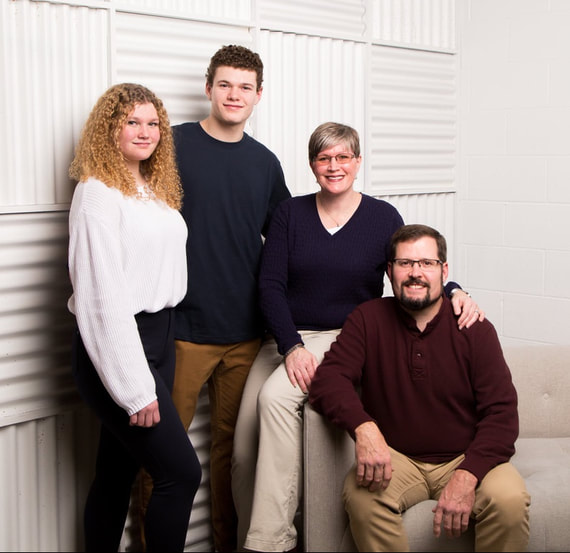
The Kinner Family. L-R: Danielle, Joshua, Jodi, and Duane
My spouse, Duane Kinner, and his family have longstanding ties to the Utah School for the Deaf. His parents, sister, aunts, uncles, and great-uncle all attended the school. In the 1980s, Duane transferred to the Idaho School for the Deaf in eighth grade, where he found improved educational opportunities and greater access to Deaf peers. After graduating from Gallaudet University in 1999, he returned to Utah and became an instructor of American Sign Language at Salt Lake Community College. His family's experiences have contributed significantly to our shared commitment to Deaf education and advocacy.
As a personal choice, I legally changed my name from Jodi Becker Kinner to Jodi Christel Becker. This change has been reflected throughout the Utah Deaf History website and other historical projects to maintain consistency in my published work.
Thank you for your interest in the Utah Deaf History website. I sincerely appreciate your support and your interest in preserving and learning about Utah Deaf history.
Thank you!
Jodi Christel Becker
"If we have no history,
we have no future."
~Tristram Hunt~
we have no future."
~Tristram Hunt~
